A yard can look sound from the gate and still be costing you money every week. Cows baulk at the entry, stock slow down around the trough, and handlers start taking shorter, more careful steps on wet mornings. That is usually where livestock yard surface texture standards stop being a technical idea and start being a farm performance issue.
On working farms, the surface under stock has to do several jobs at once. It needs enough grip to reduce slips, enough drainage to move water and effluent away, and enough consistency to avoid excessive hoof wear or pressure points. If the concrete is too smooth, animals lose confidence and traction. If it is too rough or badly finished, you can create hoof damage, discomfort, and faster surface breakdown. Good texture is not about making concrete aggressive. It is about getting the balance right for the stock, the site, and the way the yard is used every day.
Why livestock yard surface texture standards matter
Surface texture has a direct effect on animal movement. Dairy cows heading into a shed, beef cattle moving through forcing areas, and sheep in high-traffic pens all respond to underfoot confidence. When stock trust the surface, they move more freely and with less stress. When they do not, you see hesitation, bunching, slipping, and extra pressure on both animals and staff.
That matters well beyond a single incident. Loss of traction can contribute to strains, falls, bruising, and lameness costs. It also slows yard flow and increases handling time. On busy farms, those delays add up across every milking, drafting session, washdown, and stock movement.
The human side matters too. A slick yard is not only a livestock risk. It creates a workplace hazard for anyone walking, washing down, or shifting animals through confined spaces. In practical terms, the right surface texture supports safer movement for the whole operation.
What good yard texture actually looks like
When people talk about a non-slip yard, they sometimes imagine the roughest finish possible. That is not the goal. A good livestock surface has texture that grips under hoof without becoming sharp, loose, or punishing under constant traffic.
In most cases, the best-performing yard surface is one with controlled mechanical texture across the full working area. That texture should be even, repeatable, and suited to wet conditions. It should also work with the yard slope and drainage layout, because texture alone cannot fix standing water.
A safe finish usually has three qualities. First, it provides reliable traction in the direction stock travel and turn. Second, it avoids polished sections where repeated traffic has worn the surface smooth. Third, it remains durable enough to keep doing the job after years of manure acids, washdown, machinery, and hoof impact.
That is why surface assessment should never stop at a quick visual check. Concrete can appear rough enough while still being too shallow in profile, too inconsistent across the yard, or too worn in key traffic lanes.
Livestock yard surface texture standards in real farm conditions
The phrase livestock yard surface texture standards can sound more formal than it needs to be. On farm, the standard is simple – the surface should help stock move safely, clean down properly, and hold up under heavy use.
Where it gets more complicated is that not every yard needs the same finish. A collecting yard outside a dairy shed deals with frequent manure, washdown water, tight turns, and repeated hoof traffic. A beef holding area may see heavier point loading and different movement patterns. Sheep yards often demand good footing without creating harsh abrasion on smaller hooves. The right texture depends on species, stocking pressure, drainage, slope, and whether the yard is exposed or under cover.
This is where generic concrete work often falls short. A finish that is acceptable on a footpath, workshop apron, or residential driveway is not automatically suitable for livestock. Farm yards need a surface built around traction and welfare, not just basic durability.
Texture, drainage and slope work together
If a yard holds water, even a decent textured surface can underperform. Effluent, algae, feed residue, and mud all reduce available grip. That is why texture standards have to be considered alongside fall, drainage channels, and cleaning patterns.
A well-textured surface with poor drainage is still a problem. So is a well-drained yard with polished concrete in the turning zone. The best result comes from treating the yard as a system rather than a slab.
Wear patterns tell the real story
Some of the worst slip risks are not across the whole yard. They show up in specific places – corners, entry points, backing gates, trough areas, and spots where stock hesitate or pivot. These zones wear differently from the rest of the concrete and often need targeted treatment.
That is why inspections matter. Surface standards are not only about what was installed on day one. They are also about whether the yard still performs after years of use.
Common problems when texture is wrong
When texture is too smooth, the signs usually show up fast. Animals shorten their stride, handlers notice more near-misses, and high-traffic areas become noticeably slick after washdown. In dairy settings, this often appears around the shed entrance or in collecting yards where manure and water combine.
When texture is too harsh, the problems can take a different form. Excessive abrasion can increase hoof wear, make animals tender on their feet, and create discomfort during repeated daily movement. Overly aggressive finishes can also trap waste, making cleaning harder and hygiene poorer.
Then there is inconsistent texture, which is common in patched or ageing yards. One section grips, the next section skates. That change underfoot can be enough to unsettle stock and break movement flow.
How surface texture is achieved and maintained
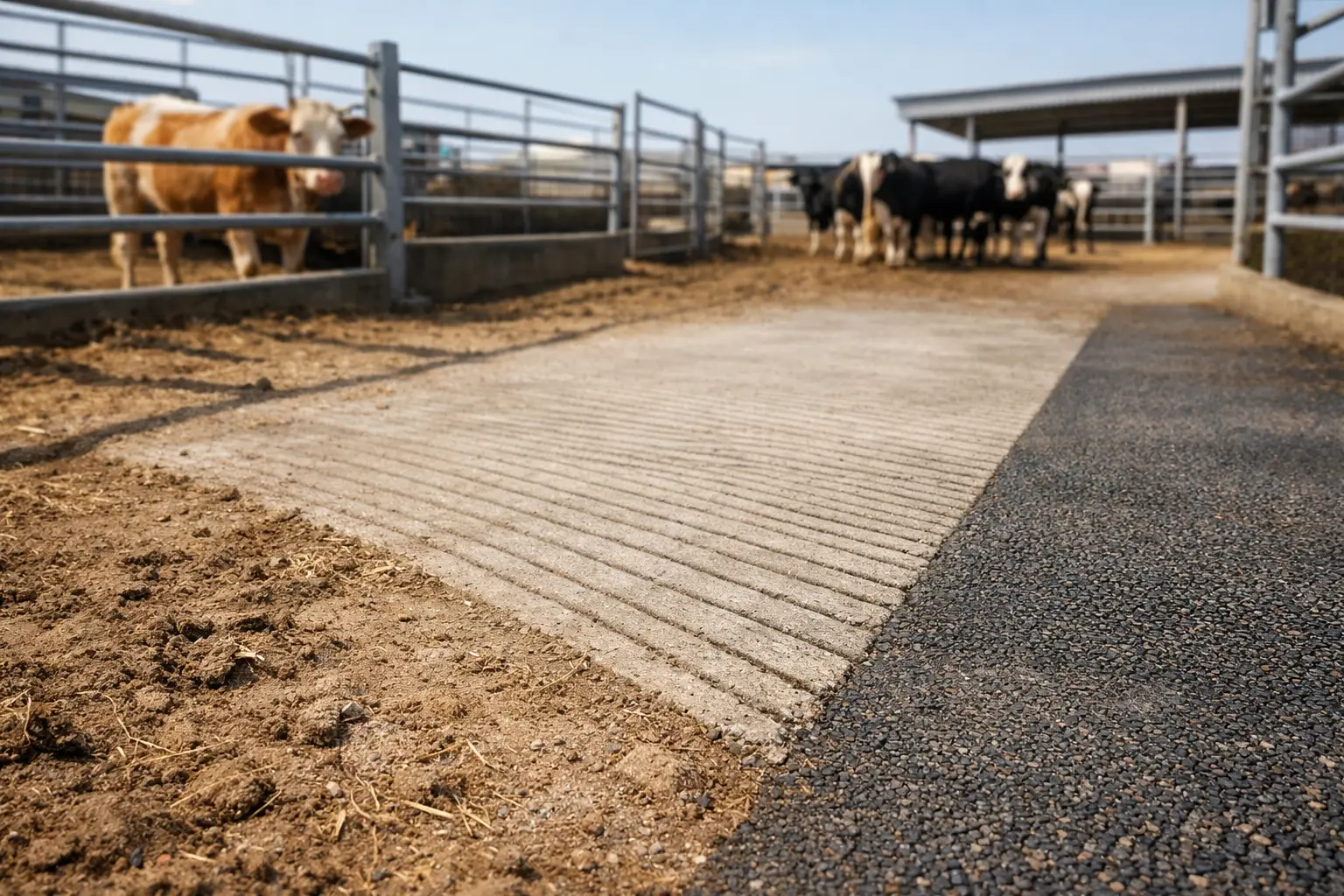
There is no one-size-fits-all method for achieving the right finish. On existing yards, specialist mechanical treatments such as concrete grooving or bush hammering are often used to improve grip without full replacement. The right option depends on the current slab condition, how much cover is already lost, and how the yard is used.
Grooving can be highly effective where controlled traction is needed and drainage direction has been considered. Bush hammering can restore grip across broader areas where the existing surface has polished off. Repairs may also be needed before any texturing work if the slab has spalling, cracking, or broken sections.
The key is precision. Poorly spaced grooves, uneven treatment depth, or rough patch jobs can create a surface that looks improved but does not perform consistently. This is why specialist agricultural concrete work matters. The finish has to suit livestock movement, not just tick a box for roughness.
When to reassess your yard surface
If stock are slipping, slowing, or showing reluctance in the same areas, the yard deserves a closer look. The same applies if the concrete has obvious polished patches, ponding water, surface scaling, or old repairs that are failing. You do not need a major accident to justify action.
A practical assessment should look at the texture profile, drainage behaviour, wear zones, and the age of the slab. It should also consider how often the yard is cleaned and whether stock numbers or yard use have changed over time. A surface that worked ten years ago may no longer suit the current demand on the farm.
For many operators, staged upgrades are the most practical path. High-risk zones can be treated first, followed by broader yard areas as budget and scheduling allow. That approach keeps the farm moving while dealing with the most urgent safety issues.
Choosing a standard that fits the job
Good livestock yard surface texture standards are not about chasing the roughest possible finish or applying the same treatment everywhere. They are about matching the surface to the animals, the traffic, and the conditions on site.
That means asking practical questions. Does the yard stay wet for long periods? Where do stock turn, crowd, or stop? Is the concrete already worn beyond simple texturing? Will a repair and retexture deliver better value than replacement? Getting these answers right saves money because it targets the cause of the problem, not just the symptom.
At Happy Hoof, that is how we approach concrete on farms – as part of animal safety, hoof health, and daily performance rather than just a hard surface underfoot.
A good yard should let stock move with confidence and let your team get on with the job. If the surface is making either of those harder, it is worth treating it like the productivity issue it is.