A cow scrambling at the backing gate or a ewe losing footing near a wet trough is never just a passing issue. When animals lose confidence on concrete, movement slows, stress lifts, and the risk of injury goes up fast. If you want to prevent livestock slips in sheds, the answer usually starts underfoot.
Most shed slip problems are not caused by one dramatic fault. They build over time through polished concrete, poor drainage, manure build-up, worn grooves, and layouts that force stock to turn sharply on wet surfaces. The result is a floor that looks serviceable enough but no longer gives animals the grip they need in real working conditions.
Why livestock slip in sheds in the first place
Concrete in livestock areas takes a hammering. Hooves, effluent, wash-down water, feed traffic, machinery and constant movement all wear away at surface texture. Even a floor that was safe when it was poured can become slick after years of use.
Wetness is the obvious factor, but it is not the only one. Smooth concrete becomes dangerous when moisture, fats, manure or feed residue sit on top. Add a poorly placed slope or a bottleneck near the dairy entrance and animals start bracing, hesitating or rushing. That is when slips happen.
There is also a hoof health angle that matters. A floor that is too smooth can cause slipping, but a floor that is too aggressive or broken up can create hoof wear and discomfort. Good shed flooring is about controlled traction, not roughness for its own sake.
Prevent livestock slips in sheds with the right surface
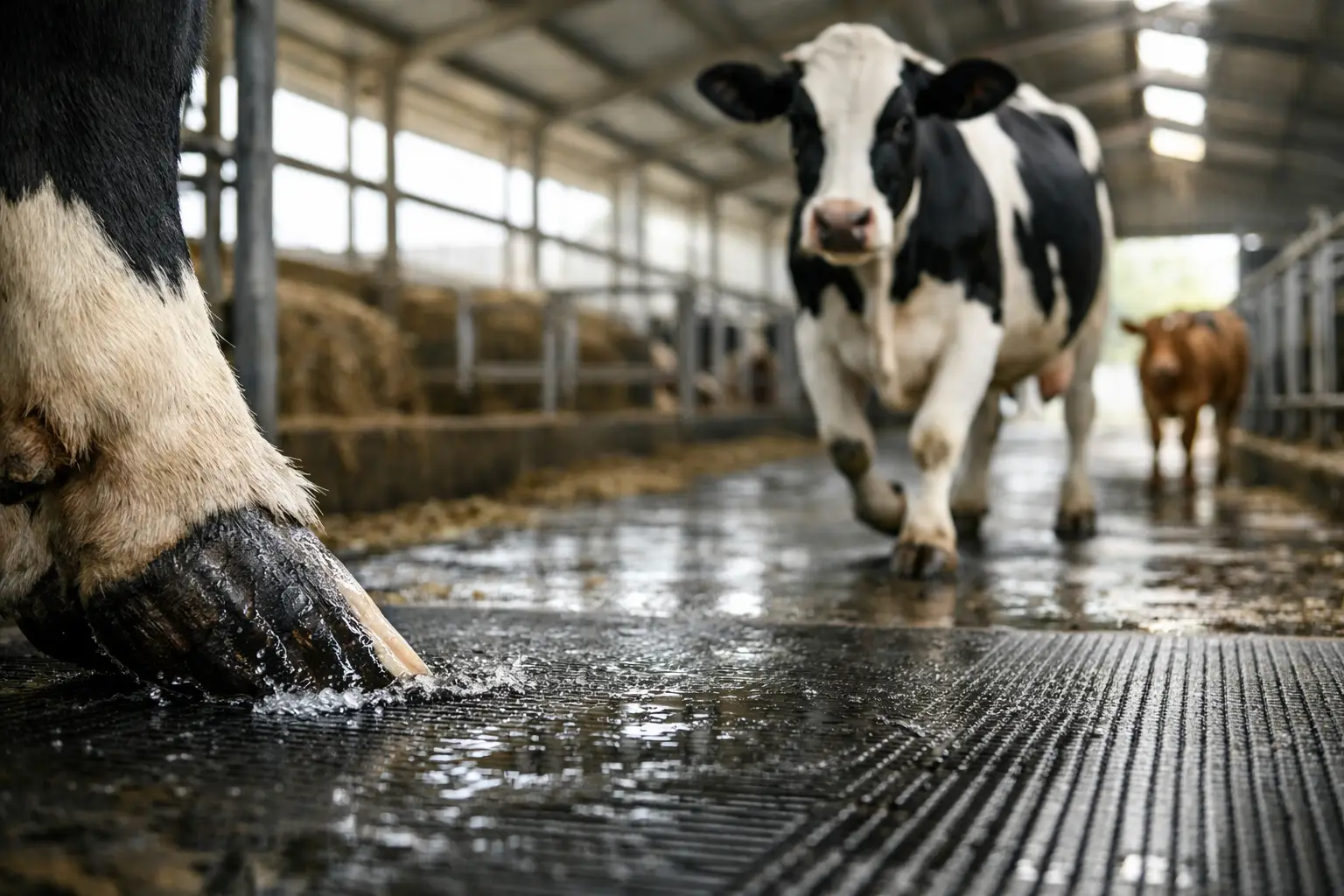
The most effective way to prevent livestock slips in sheds is to make sure the concrete surface is designed for livestock traffic, not just general durability. That means creating a slip-resistant finish that gives hooves purchase in wet, dirty, high-use conditions.
Concrete grooving is one of the most reliable options for this. Properly cut grooves help break surface water, improve grip and give animals more confidence as they walk. In dairy sheds especially, where cows are moving in groups and often under pressure, that confidence matters. Stock that trust the floor move more evenly and with less stress.
Bush hammering can also be a strong solution where a broader textured finish is needed. It roughens the concrete surface to improve traction across larger areas, particularly where existing slabs have become polished. The right treatment depends on the age of the concrete, the condition of the slab and the way the area is used day to day.
This is where generic concrete work often falls short. Livestock flooring is not the same as a standard industrial slab. The spacing, depth and pattern of surface treatment need to suit animal movement, shed design and cleaning routines. Too shallow, and it will not hold. Too deep or too harsh, and you can create a different set of problems.
Drainage matters more than most farms realise
A good surface can only do so much if water and effluent are left sitting on it. Drainage is one of the biggest factors in shed safety, and it is often overlooked because the floor itself gets the blame.
If wash-down water pools in low spots, or if the slab falls the wrong way at entry and exit points, livestock are walking through slick areas every day. Over time, they learn where the risky patches are. You will see it in the way they shorten stride, edge around corners, or bunch up before stepping forward.
Correcting drainage does not always mean ripping out a whole shed floor. In some cases, it is about targeted concrete cutting, reshaping problem areas, or repairing worn sections so water clears properly. The main point is simple – traction and drainage need to work together. One without the other is only half a fix.
Watch the high-risk zones
Not every part of a shed wears the same way. Entry lanes, exits, holding areas, feed zones, backing gates, trough surrounds and turning points usually become slippery first. These are the places where animals stop, pivot, crowd together or move quickly under pressure.
If budget or timing means you cannot address the whole shed at once, start with the highest traffic areas. A targeted upgrade in the worst zones can reduce immediate risk and give you a staged plan for the rest of the site.
Maintenance is part of slip prevention
Even the best surface treatment will not perform well if the floor is poorly maintained. Manure, algae, feed build-up and compacted grime all reduce grip. Regular cleaning is not just about presentation. It is part of keeping the floor safe and functional.
That said, there is a balance to strike. Aggressive cleaning methods or unsuitable machinery can wear down surface texture over time. Some farms also end up with patchy results, where one area stays rough enough but another becomes glazed from repeated traffic and wash-down. Those differences matter because livestock respond to inconsistency underfoot.
Routine inspection helps catch this early. Look for areas where water lingers, where the concrete has gone shiny, where animals are slipping slightly without fully falling, or where movement patterns have changed. Small signs often show up before a serious injury does.
Cracks and surface damage should also be repaired promptly. Broken edges, spalling and uneven patches create instability and can contribute to slips as well as hoof damage. A floor does not need to be falling apart to become a problem. Minor deterioration in the wrong place can be enough.
Shed design and stock flow play a role
Sometimes the floor is not the whole story. Livestock movement through a shed depends on visibility, space, pressure and layout. If cattle are forced into sharp turns, narrow exits or sudden changes in light, they are more likely to rush or baulk. On a wet surface, that can quickly turn into a slip.
Good stock flow reduces panic and helps animals place their feet more naturally. That may mean reviewing gate positions, reducing crowding in holding spaces, or improving the line of movement through the shed. Flooring upgrades work best when the wider layout supports calm, steady traffic.
You also need to account for the type of operation. A dairy shed with twice-daily traffic has different wear patterns from a beef handling area or a sheep yard under intermittent use. The right flooring solution depends on stocking pressure, cleaning frequency, machinery use and how often animals are turning or standing in one spot.
New concrete versus existing concrete
If you are planning a new shed, slip prevention should be built into the floor from the start. It is far easier and more cost-effective to get slope, drainage and surface finish right at construction stage than to retrofit later.
For existing sheds, the decision usually comes down to whether the slab is structurally sound. If it is, surface treatments such as grooving or bush hammering can often restore safe traction without major replacement. If the concrete is badly cracked, poorly laid or draining the wrong way, repairs or partial reconstruction may be the smarter long-term option.
There is no one-size-fits-all answer here. A quick visual check is not enough to judge what a floor needs. The same surface issue can come from very different causes, and the right fix depends on what is happening below and on top of the slab.
The cost of doing nothing is usually higher
Farmers are used to working around problems for longer than they should have to. But slippery shed floors rarely stay at the same level. As surfaces wear further, stock become less confident and incidents become more likely.
The cost is not only in visible injuries. It shows up in lameness, lost milk, slower movement, extra labour, treatment bills and added stress on both animals and staff. A floor that causes hesitation every day chips away at efficiency even when there is no dramatic fall.
That is why surface safety should be treated as an operational investment, not a maintenance afterthought. Better traction supports hoof health, calmer handling and more reliable movement through the shed. It also gives farm teams more confidence when conditions are wet and workloads are high.
At Happy Hoof, that is the thinking behind specialist concrete work for livestock environments. The goal is not just to rough up a slab. It is to create a surface that performs properly for animals, people and the daily reality of farm use.
If you are seeing slips, hesitation, shiny concrete or recurring wet patches, the floor is already telling you something. The sooner you act, the easier it is to turn that shed back into a safer, more reliable working space.