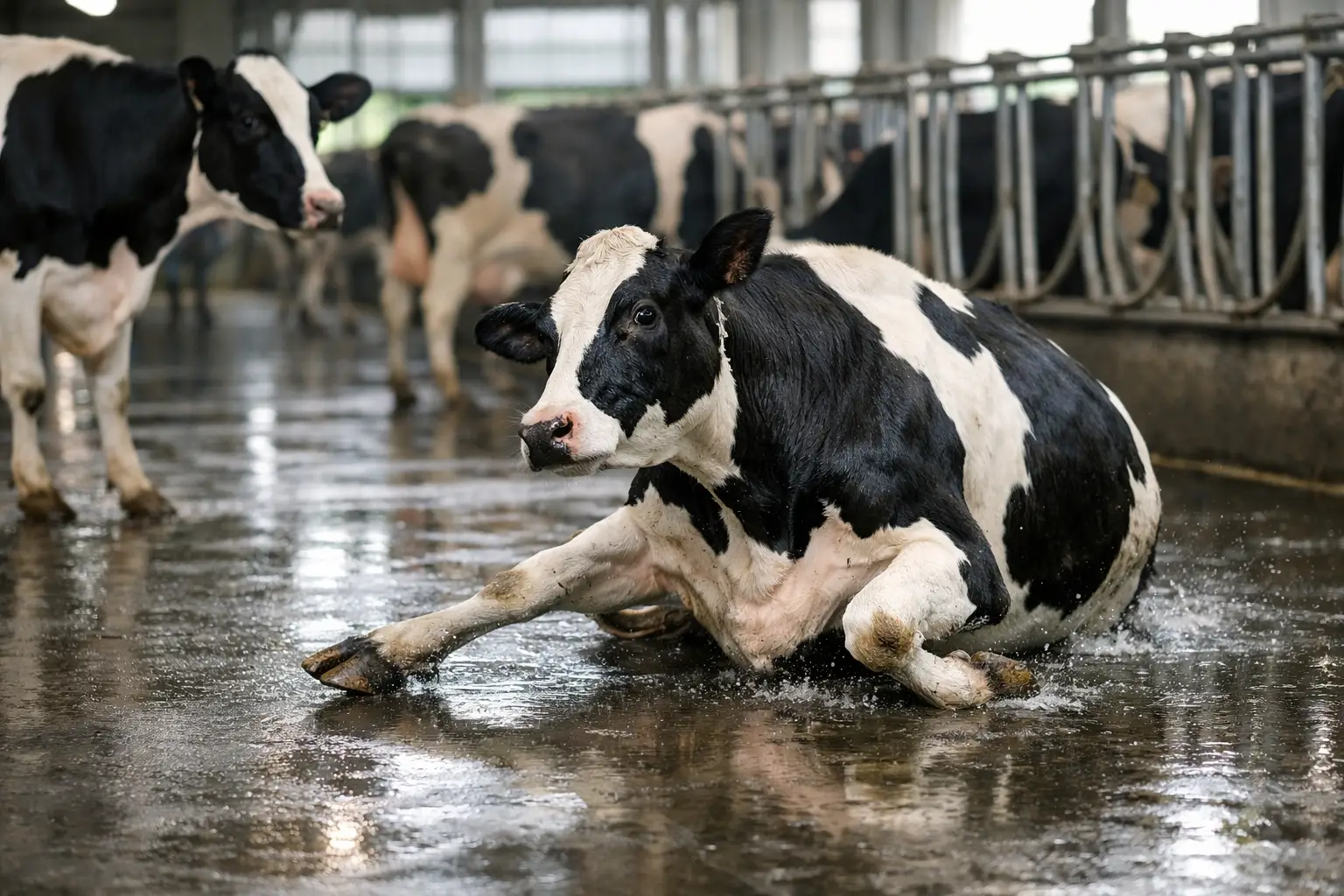
A cow losing her footing in the shed is rarely a one-off. If you’re asking why do cows slip indoors, the answer usually sits under their feet – worn concrete, moisture, slurry, poor drainage, smooth finishing, or a surface that was never designed for heavy livestock traffic in the first place. Slips are a flooring problem first, and an animal health and productivity problem straight after.
Why do cows slip indoors on concrete?
Indoor areas put cows on hard surfaces for longer, often in wetter and dirtier conditions than open yards. Concrete can be durable, but durability is not the same as grip. Once a surface loses texture, or never had enough texture to begin with, cows start compensating in the way they walk. You see shorter strides, hesitant movement, bunching at entries, and animals turning wide or refusing to move freely.
The risk is not just the obvious fall. Small slips matter too. A cow that slides half a step while walking to the dairy still puts extra strain on joints, soft tissue and hooves. Over time, that affects confidence, movement and wear patterns. In practical terms, slipping indoors can contribute to lameness, lower feed and water access, reduced mating performance, and more stress in daily handling.
The main reasons indoor floors become slippery
Moisture and manure reduce traction
Most indoor livestock spaces are exposed to water, effluent, urine and organic build-up every day. Even a well-run shed can have problem areas around feed pads, holding areas, dairy exits, troughs and corners where washdown water settles. When that moisture sits on a smooth or polished concrete surface, traction drops quickly.
This is where farms often get caught out. The floor may look sound enough structurally, but from the cow’s point of view it has become slick. A concrete slab does not need to be broken to be unsafe.
Concrete wears smoother over time
Freshly installed concrete can start with reasonable grip, but heavy stock traffic, scraping, washing and years of use gradually wear away the surface profile. High-traffic lanes and turning points wear fastest. The top can become hard and dense, almost polished, particularly where animals push, pivot or queue.
That wear is one of the biggest reasons sheds that were manageable years ago become risky now. Conditions change slowly, so the issue can sneak up on a farm until slips become common enough to notice.
Poor finishing or the wrong surface profile
Not all concrete is livestock-friendly. A finish that works in a general industrial setting may be too smooth for cows. On the other hand, roughness alone is not the answer either. If the surface is too aggressive, it can increase hoof wear and discomfort.
Good livestock flooring needs the right balance – enough texture for grip, but not so much that it damages claws or creates harsh walking conditions. That is why specialist concrete grooving or bush hammering tends to perform better than generic surface treatment. It is designed around hoof contact, movement patterns and wet farm conditions.
Drainage and slope issues
Even a decent surface can become slippery if water has nowhere to go. Low spots, poor falls, blocked drains and badly planned washdown areas leave moisture sitting where cows walk. The result is predictable: traffic concentrates through wet sections, contamination builds up, and cows lose confidence.
Drainage problems also tend to create repeat trouble zones. If slips are happening in the same corner, near the same entry, or at the same point leaving the dairy, there is often a drainage or slope issue contributing to the problem.
Why cows are vulnerable to slipping indoors
Cows are heavy animals moving on relatively small contact points. Their weight shifts quickly when they turn, stop, crowd together or react to pressure from behind. Indoors, those movements happen on hard surfaces with less room to recover than in a paddock.
A cow also needs confidence in the floor to move properly. When she senses poor grip, she changes her gait. That protective movement might prevent a full fall in the moment, but it creates another problem – awkward loading through the hoof and limb. You can end up with less obvious slipping, but more ongoing hoof stress and lameness.
This is why flooring decisions affect more than accident prevention. Surface grip has a direct link to comfort, movement and welfare.
Where indoor slips usually start
Some areas fail faster than others. Holding yards, dairy entries and exits, feed pads, races under cover, loafing areas and washdown zones all carry a lot of traffic under wet conditions. Tight turns are another common pressure point because cows twist and load the floor differently there.
If one section of the shed feels noticeably smoother under boot than the surrounding slab, that is worth attention. Staff often spot the warning signs before animals go down completely – skittering at corners, reluctance to enter, or cows spreading their legs slightly to steady themselves.
The cost of ignoring slippery indoor flooring
A slippery shed floor costs more than a repair job. Once cows start slipping, the knock-on effects can show up in treatment costs, lower production, delayed movement through the dairy, extra labour and increased culling risk if lameness becomes chronic.
There is also the safety issue for staff. If workers are moving animals across a floor that is slick for cattle, it is usually not much better for people. One poor surface can create daily risk for both stock and the team handling them.
For many farms, the real cost comes from normalising the problem. If hesitant movement becomes part of the routine, it is easy to underestimate how much productivity and welfare are being lost.
How to fix the problem properly
Restore traction, not just appearance
The solution is not cosmetic. Paints, coatings or quick patch jobs rarely hold up in livestock environments, especially where manure, washdown and constant hoof traffic are involved. What matters is restoring a surface profile that gives reliable grip in real working conditions.
Concrete grooving is one proven option where the layout and slab condition suit it. Grooves help channel water and create consistent footing under hoof. Bush hammering can also be effective, particularly where a broader textured finish is needed across worn concrete. The right method depends on the age of the slab, current wear, traffic pattern and how the area is used.
Fix drainage at the same time
If drainage is poor, even a treated surface can underperform. That is why a proper assessment should look at falls, pooling points, effluent movement and traffic flow together. There is no value improving traction in one spot if water continues to sit there every day.
On some farms, small changes in slope or targeted concrete cutting and repairs make a major difference. On others, the issue is more about restoring texture across key movement zones before the whole shed becomes slick.
Match the surface to the animals and the area
Different indoor spaces need different approaches. A holding area, feed pad and dairy exit do not all wear the same way or ask the same thing of the hoof. Young stock, beef cattle and milking cows can also place different demands on flooring.
That is where specialist advice matters. A surface should be treated according to stock type, traffic level, moisture load and existing concrete condition, not handled as a generic building job. Happy Hoof works in that space because farm concrete has to perform for animals first.
Signs it’s time to act
You do not have to wait for a serious fall. If cows are slipping slightly, walking stiffly, rushing awkwardly over certain sections, or resisting movement indoors, the floor is already telling you something. Smooth shine on the concrete, frequent wet patches, hoof scuff marks and repeat problem areas are all practical warning signs.
A useful test is to look at behaviour during normal routines. Where do cows hesitate? Where do they fan out, bunch up or take shorter steps? Those spots usually reveal more than a quick visual check of the slab.
Why prevention pays off
The best flooring work is usually done before the problem becomes expensive. Restoring grip early can reduce pressure on hooves, improve confidence through the shed and make animal flow easier every day. It also helps protect the concrete itself by addressing wear and drainage before damage spreads.
Good indoor traction is not a luxury upgrade. It is part of running a safer, healthier and more efficient livestock operation. When cows can walk naturally and confidently, the whole system works better.
If you are seeing slips indoors, trust what the cows are showing you. Floors do not improve on their own, and neither does hoof stress caused by poor grip. The sooner the surface is assessed properly, the easier it is to turn a risky area back into one that supports sound movement and better farm performance.