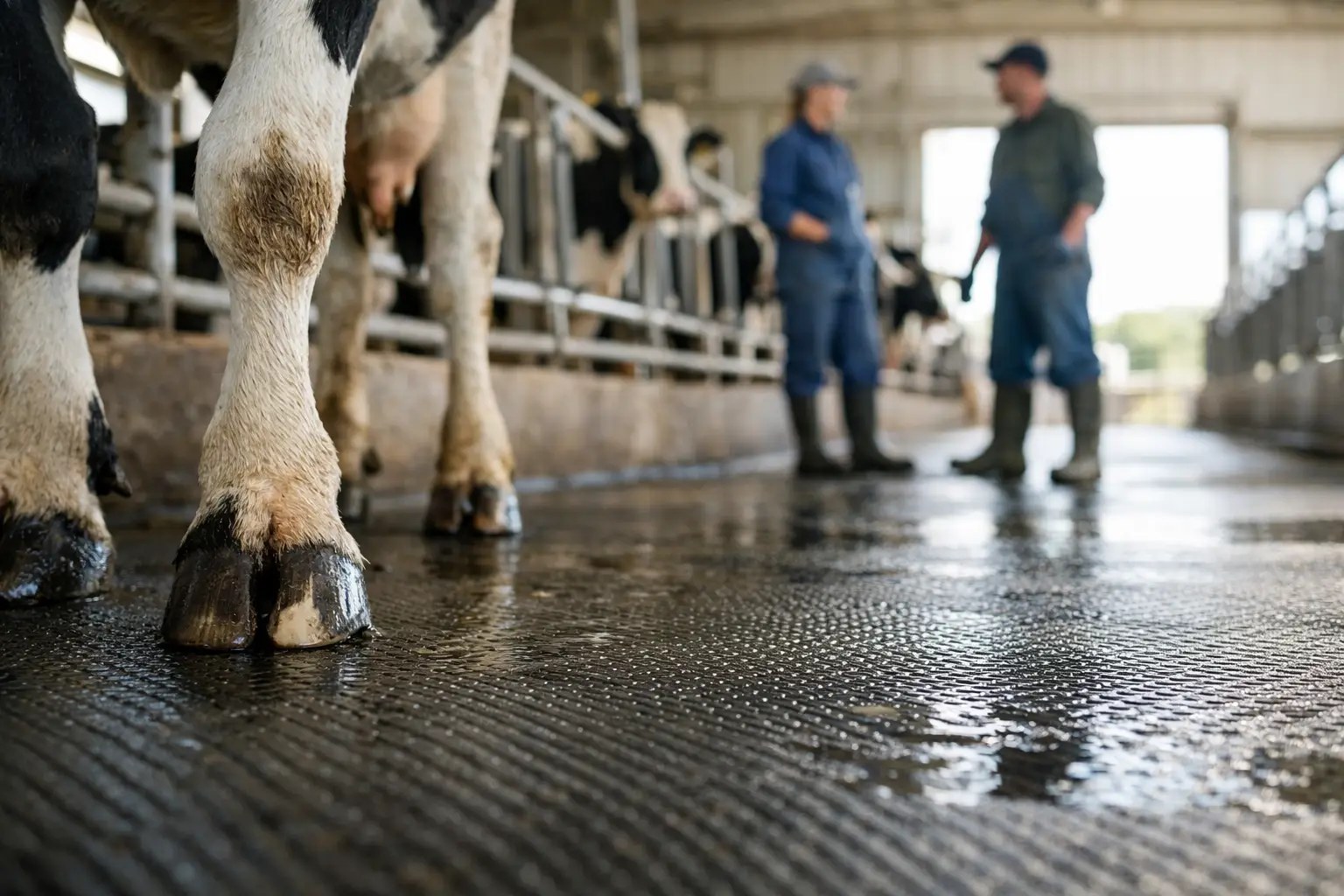
A cow that loses her footing on the way to the shed does not just create a momentary problem. One slip can lead to bruising, hoof damage, reduced confidence in the herd and costly time out of production. Dairy flooring sits underneath some of the most important decisions on farm: animal welfare, staff safety, milk flow and the long-term condition of your concrete.
For dairy farms, flooring must perform when it is wet, dirty and under constant pressure from hooves, machinery and cleaning. A surface that looked acceptable a few seasons ago can become polished, uneven or poorly drained over time. The right response is not always replacing the slab. Often, a tailored surface treatment or repair plan can restore grip and extend the life of existing concrete.
What good dairy flooring needs to do
Good dairy flooring is not simply rough concrete. It is a surface designed around how cattle move through the farm. Cows need reliable footing as they walk, turn, queue, enter the dairy and leave the yard. Staff need the same confidence when moving alongside animals or washing down high-traffic areas.
Traction is central, but it is only one part of the job. A practical flooring system should also shed water, handle manure and effluent, resist wear, and avoid creating sharp edges that can damage hooves. It needs to suit the specific area as well. The best surface for a steep exit lane may not be the best option inside the dairy, where cleaning requirements and standing time are different.
The goal is controlled grip. Too little texture leaves cows vulnerable to slipping, particularly on wet concrete and turning points. Too aggressive a finish can increase wear on claws and make standing less comfortable. Getting that balance right takes an understanding of livestock movement, concrete condition and the way each part of the farm is used.
Where flooring problems usually show up first
Slippery concrete rarely affects every area evenly. Wear tends to concentrate where cows brake, turn or stand for extended periods. These are the places worth inspecting before a small issue becomes a wider welfare and maintenance concern.
Dairy entries, exits and holding areas
Entries and exits take repeated hoof traffic, often with moisture carried out of the dairy. Cows may crowd, hesitate or push through these points, especially at peak milking times. If the surface is smooth, traffic backs up and the risk of slipping rises.
Holding areas are also exposed to long standing periods and regular wash-downs. Water must have somewhere to go. If puddles remain after cleaning, surface texture alone will not solve the problem. Drainage falls, channels and localised concrete repairs may need attention alongside grooving or bush hammering.
Turns, slopes and crossovers
A cow has less grip when turning than when walking straight ahead. Tight turns around yard corners, crossovers and drafting areas are common trouble spots, particularly where the concrete has been polished by years of use.
Slopes add another layer of risk. On a downhill section, cattle need enough grip to slow safely without overloading the front claws. On an uphill approach, they need traction to move forward without scrambling. The right pattern, spacing and direction of surface treatment should reflect the slope and the movement of the herd.
Feed pads and high-traffic lanes
Feed pads, stand-off areas and concrete lanes need to carry heavy use in all weather. Here, the condition of the concrete matters as much as the surface finish. Cracking, spalling, broken edges and worn joints can trap moisture and manure, make cleaning harder and create uneven footing.
A repair completed before traction work is usually the better result. There is little value in adding grip over concrete that is breaking down beneath it. Sound preparation gives the finished surface a better chance of lasting under daily pressure.
Choosing the right concrete treatment
There is no one-size-fits-all answer to dairy flooring. The appropriate treatment depends on the age and strength of the slab, the level of wear, whether the area is flat or sloped, and how cattle and machinery travel through it.
Concrete grooving is a proven option for creating defined channels of grip on suitable existing slabs. Properly planned grooves help hooves find purchase while allowing wash water and effluent to move across the surface. Pattern direction and spacing matter. Grooves should support the direction cattle travel and should not create an awkward or overly abrasive surface.
Bush hammering creates a more uniformly textured finish by mechanically roughening the concrete surface. It can be effective where broad traction is needed across a larger area, or where the existing surface has become smooth and slippery. It is not automatically the answer for every slab. Concrete strength, existing damage and cleaning needs should be assessed first.
In some situations, concrete cutting, localised repairs or drainage adjustments need to come before surface texturing. A consultation that starts with the problem – slips at a particular corner, water pooling by the exit, claw wear in a holding area – produces a more useful plan than choosing a treatment by name alone.
Why drainage and texture must work together
Water changes everything under hoof. A well-textured surface can lose much of its benefit when water, manure or wash-down residue sits on top of it. That is why dairy flooring should always be considered alongside drainage.
Look for water that pools after wash-down, slow-draining low points, effluent that tracks across cow pathways, and areas where cows consistently choose a different line of travel. Those patterns often reveal where footing is compromised. Even a slight fall issue can keep a section wet long enough to affect safety and surface wear.
Drainage improvements do not always mean major reconstruction. Depending on the site, the solution may involve repairing a damaged section, correcting a local low spot or adjusting how water is directed through the yard. The key is to deal with the cause of the wet surface, not just the visible symptom.
Flooring decisions that support hoof health
Lameness has many causes, including nutrition, hygiene, genetics and cow comfort. Flooring is still a major factor because it affects how often cows slip, how confidently they walk and how much stress their hooves take every day.
A cow that is cautious on concrete may shorten her stride, resist moving forward or place weight unevenly. Over time, poor footing can add pressure to an already vulnerable hoof. On the other hand, a surface that is excessively coarse can contribute to claw wear. The best outcome is a durable, slip-resistant finish that supports natural movement without treating the hoof like a grinding surface.
Observe the herd, not only the slab. Hesitation at a doorway, bunching before a turn, cows stepping around a wet patch or repeated slips are all practical signs that flooring needs closer attention. Recording where and when these behaviours occur helps identify whether the issue is traction, drainage, layout or a combination of all three.
Plan the work around the farm, not the other way around
For a working dairy operation, disruption has a cost. Surface work must be planned around milking, cow flow, machinery access and curing or clean-up requirements. The best contractor understands that a technically sound job still needs to fit the rhythm of the farm.
After-hours and night concrete grooving can be a practical option where it reduces interference with daily operations. The right schedule depends on the area being treated, herd movements and whether sections can be safely isolated. Rushing cattle over freshly worked areas or trying to complete work without a traffic plan can undo the benefit of good preparation.
Before work begins, walk the site with the contractor and identify access points, drainage lines, high-risk areas and any sections that need repair. Clear decisions upfront help keep the project focused on the places that will make the greatest difference.
Maintain dairy flooring before it becomes a larger repair
Concrete is tough, but farm concrete is never static. Hoof traffic, skid-steer use, chemical exposure, wash-down and weather all take their toll. Regular checks are far less costly than waiting until a surface is dangerously slick or a damaged area has spread.
Pay attention to polished patches, cracking, chipped edges, loose concrete, blocked drains and recurring puddles. Cleaning also matters. Built-up residue can reduce grip, even on a well-textured surface. Maintenance should protect the traction you have already invested in.
Happy Hoof approaches each surface as a working part of the farm, not a generic concrete job. The right dairy flooring solution should give cattle surer footing, give staff more confidence under pressure and keep performing long after the tools have left the yard.
If cows are hesitating, slipping or avoiding part of the concrete, treat it as useful information. A close look at the surface now can prevent an avoidable injury and help keep the whole farm moving with confidence.