
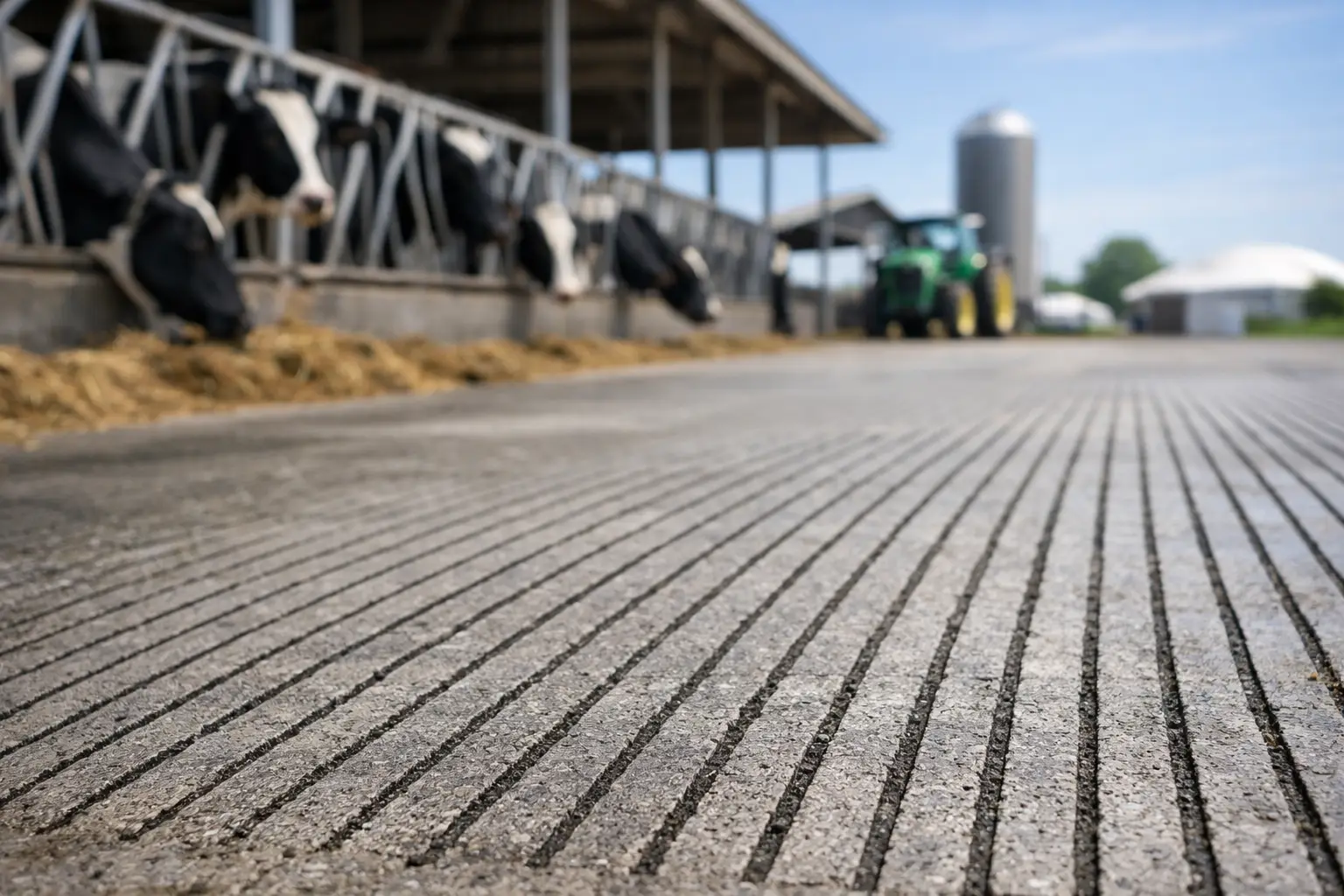
A cow that hesitates at the dairy entrance, braces on a wet backing gate or slips while turning is telling you something about the concrete underfoot. This farm concrete grooving buyer guide is designed to help you assess the surface properly, choose the right treatment and invest where it will make the biggest difference to livestock safety, hoof health and day-to-day flow.
Concrete is built to carry traffic, but plain or worn concrete does not always provide enough grip for animals moving through water, effluent, feed and mud. The right surface treatment gives stock more secure footing without creating an aggressive finish that can contribute to hoof wear. That balance is what separates farm-specific grooving from a generic concrete job.
Start with the areas creating the greatest risk
Not every concrete area needs the same treatment. Walk the farm during normal use, not just when everything is dry and quiet. Look for the places where stock bunch up, turn sharply, stop suddenly or travel on a slope. These are usually the areas where a lack of traction becomes most costly.
Dairy entries and exits, collecting yards, backing gates, feed pads, crossovers, races and wash-down zones deserve close attention. A surface may look acceptable from a distance yet be polished smooth by years of hoof traffic. Green growth, slurry residue, standing water and uneven repairs can make the issue worse.
Watch animal behaviour as well as the concrete itself. Shortened strides, reluctance to move, splayed legs and frequent slipping are practical warning signs. Staff may also alter how they move stock through an area because they know it becomes hazardous in the wet. That lost confidence affects both safety and efficiency.
What good farm concrete grooving should achieve
Concrete grooving cuts a controlled pattern into the existing slab to improve traction. The objective is not simply to make the floor rough. Well-planned grooves give hooves edges to grip while allowing water and contamination to move away from the main contact surface.
The best pattern depends on the direction of livestock travel, expected turning points, drainage, slope and the type of stock using the area. Grooves that work well on a straight dairy exit may not suit a tight turning area or a steep crossover. The contractor should assess how the surface is used before recommending a pattern.
A useful finish should provide consistent traction across the treated area. It should not leave abrupt transitions, loose edges or a surface that is uncomfortable for livestock to walk over. Clean, accurate cuts also make ongoing wash-down easier than a poorly executed finish that traps residue.
For many farms, grooving is the right answer where concrete remains structurally sound but has become too smooth. It is a practical way to improve safety without replacing a full slab.
When bush hammering may be the better option
Bush hammering creates a textured, stippled finish rather than linear grooves. It can be particularly useful where animals turn, where traffic approaches from several directions, or where a uniform texture is more suitable than a directional groove pattern.
There is a trade-off. A more textured surface can provide strong grip, but the finish still needs to be matched to livestock movement and hoof comfort. The goal is dependable footing, not the harshest possible surface. In some layouts, a combination of treatments across different zones delivers the best result.
Check the slab before you book the work
Grooving improves the surface of sound concrete. It does not fix major slab movement, deep cracking, crumbling edges or drainage that continually leaves water pooling. If those problems are present, repairs or concrete cutting may need to be completed first.
Pay particular attention to drainage. A well-grooved surface can still become hazardous if wash water and effluent have nowhere to go. Falls, low points and channels should direct liquid away without forcing animals to negotiate sudden changes in level.
Existing repairs are another consideration. Patches need to be properly bonded and strong enough to take the proposed treatment. A specialist should identify weak sections before cutting begins, rather than discovering them midway through the job.
Questions to ask a concrete grooving contractor
A good contractor will talk about stock movement and farm operations before discussing machinery. Their recommendation should be based on the conditions in your yards, not a one-size-fits-all pattern.
Before accepting a quote, ask these practical questions:
- Which areas need grooving, and which areas would benefit more from bush hammering or repairs?
- How will the groove direction suit animal travel, turning and the slope of the concrete?
- What preparation, cleaning and drainage checks are included before work starts?
- How will livestock access and milking routines be managed while the work is underway?
- Is after-hours or night concrete grooving available to reduce disruption?
- How will the finished surface be checked for consistency and cleaned before stock return?
Clear answers matter because the job affects far more than the appearance of the slab. It affects how safely animals and people can move through one of the busiest parts of the farm.
Plan around farm operations, not just the calendar
The cheapest option is not always the one with the lowest quoted figure. If poor scheduling interrupts milking, blocks a key race or creates an unsafe temporary route, the operational cost can quickly outweigh a small saving.
Discuss access, stock flow and cleaning requirements early. On many farms, night work is the most practical way to complete grooving with less interruption to the daily routine. This can allow the contractor to work after milking, clean down the area and have it ready for the next shift of stock.
Timing also depends on weather, the condition of the slab and the work required. A straightforward grooving job can move quickly, while repairs, drainage corrections or heavily contaminated surfaces may add preparation time. A realistic plan is better than rushing a surface treatment that needs to perform for years.
Consider the return, not only the upfront cost
Farm flooring is an operational asset. Better traction can reduce slips, support more confident animal movement and lessen the risk of injuries during busy periods. Where lameness and hoof damage are linked to poor footing, improving the surface can support wider animal welfare and productivity goals.
There are people benefits too. Staff working around cattle on wet concrete face the same slip risk. Safer footing around yards, dairies and feed areas helps create a more controlled workplace, particularly when moving stock under pressure or carrying out wash-down.
The return will vary between farms. A small area at a dairy exit may deliver a faster benefit than treating an entire yard, especially if it is the main slipping point. Prioritising the highest-risk zones first is often a sensible approach when work needs to be staged.
Keep the surface performing after treatment
Grooving is not a set-and-forget solution. Regular cleaning is still necessary to stop slurry, algae and compacted residue reducing the benefit of the texture. Check high-traffic sections routinely, particularly after winter, heavy wash-down periods or any machinery work that may damage the slab.
If cracks widen, edges break away or water begins to pond in a previously dry area, arrange an inspection before the problem becomes a stock safety issue. Early concrete maintenance is generally simpler and less disruptive than waiting for a damaged section to fail.
Happy Hoof approaches every flooring job with the working conditions of the farm in mind: animal movement, drainage, surface wear and the need to keep operations moving. The right treatment should feel practical from the first wash-down and continue to support safer stock flow well after the machinery has left.
A useful next step is to walk your concrete routes after the next wet milking or wash-down. Mark the places where cows slow, slide or turn cautiously, then use those observations to build a treatment plan around the areas that need help most.