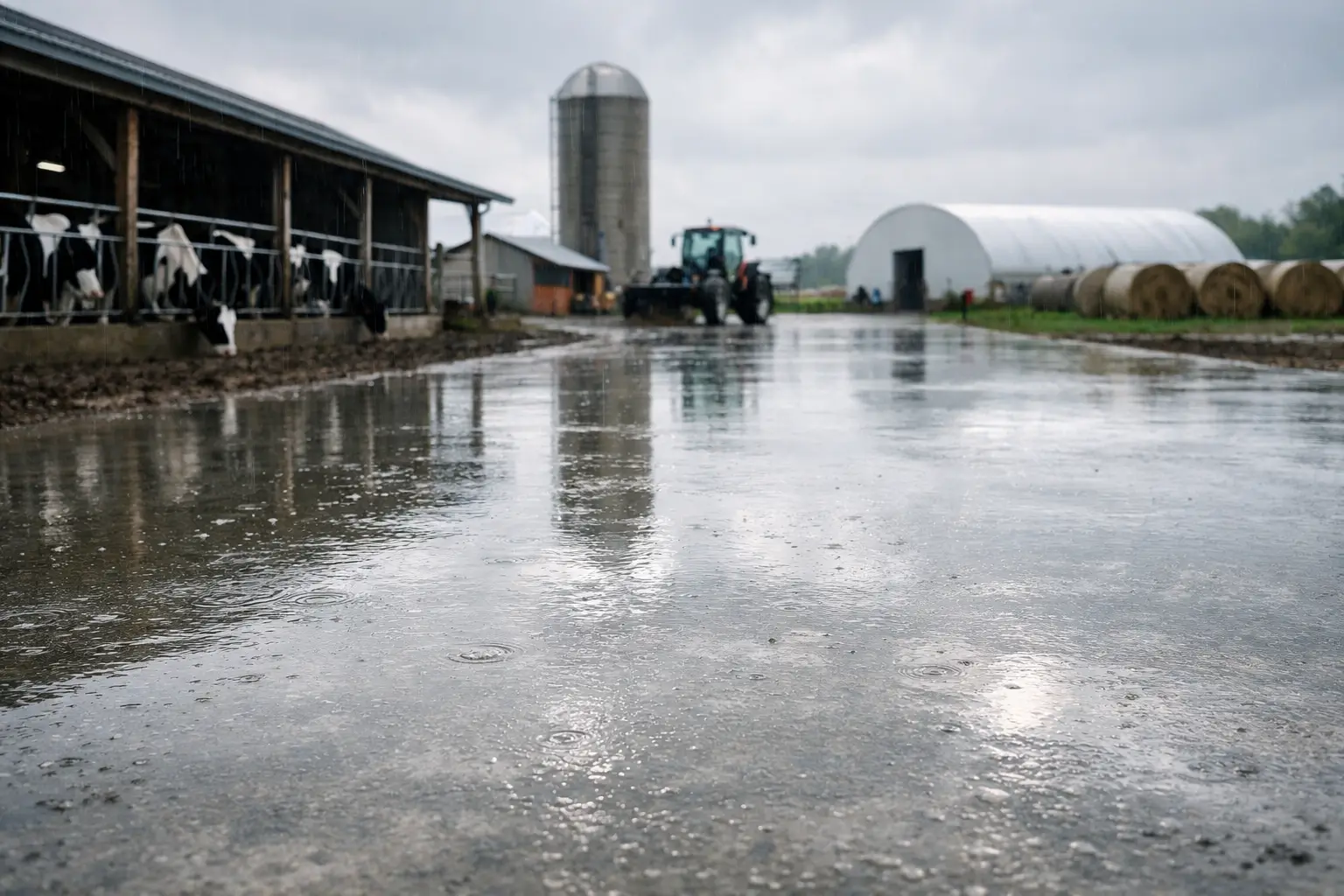
A wet yard changes quickly. One shower can turn a normally manageable dairy exit, feed pad or cattle lane into a surface where cows shorten their stride, workers slow down and the risk of a fall rises. Effective wet weather farm concrete solutions are not about making concrete look new. They are about giving animals secure footing, moving water away and keeping the farm operating when conditions are against you.
For dairy, beef and sheep properties, wet-weather traction is a welfare and productivity issue. A slip can cause immediate injury, but the ongoing effects are often just as costly: hesitant stock movement, bruising, hoof damage, lameness, staff risk and delays through the shed. The right surface treatment needs to suit the traffic, slope, existing concrete condition and the way water travels across the area.
Why concrete becomes dangerous in wet conditions
Concrete is hard-wearing, but it is not automatically safe under livestock traffic. Smooth or worn concrete can lose grip as it becomes wet, particularly where manure, feed residue, algae or fine silt sit on the surface. Areas exposed to regular wash-downs can be just as slippery as yards open to rain.
The highest-risk areas are usually predictable. Dairy exits and entries carry cattle at pace, often when they are eager to return to feed or the paddock. Holding yards experience concentrated traffic and effluent. Feed lanes combine moisture with feed waste. Ramps, turns and sloped transitions add side loading to every hoof. A surface that is acceptable on a dry afternoon may be unsafe on a wet morning.
It is also worth looking beyond the obvious slippery patch. Water commonly pools because the surrounding concrete has settled, a drain is blocked, a joint has failed or a repair has created a low spot. If the underlying drainage issue remains, a traction treatment alone may not deliver the result the farm needs.
Assess the surface before choosing a treatment
There is no single treatment that suits every concrete area. A practical assessment should start with how stock and people use the space, not simply how rough the surface feels by hand.
Look at stock behaviour first. Are cows slipping at a particular turn? Are they bunching before a ramp? Do they favour one route through the yard? Hesitation, shortened steps and wide stances can indicate that animals do not trust the footing, even before a visible slip occurs.
Then assess the concrete itself. Sound, level concrete with poor grip may be a good candidate for grooving or bush hammering. Concrete with cracking, spalling, exposed aggregate or failed joints may need repair before traction work. Where puddles remain after rain or wash-down, drainage, falls and surface levels need attention as part of the job.
The age of the concrete matters, but condition matters more. Older slabs can often be made safer and kept in service. Conversely, a newer slab may still need treatment if it was finished too smooth, has insufficient fall or sits in a high-pressure livestock movement zone.
Wet weather farm concrete solutions for better traction
Concrete grooving for controlled hoof grip
Concrete grooving cuts a consistent pattern into the existing slab to give hooves and boots a reliable point of purchase. It is particularly effective in dairy yards, collecting areas, shed exits, feed pads and concrete lanes where repeated livestock traffic has polished the surface over time.
The direction, spacing and depth of grooves should suit the direction animals travel and the layout of the area. Grooves need to improve grip without becoming harsh underfoot or difficult to clean. Poorly planned cuts can hold debris, create uncomfortable edges or fail to provide traction where stock are turning.
A professionally cut pattern gives a more consistent result than ad hoc texturing. It can also be completed with far less disruption than replacing an entire slab. Where farm routines cannot pause during the day, night concrete grooving can help keep milking and stock movements on schedule.
Bush hammering for broad surface texture
Bush hammering mechanically textures the concrete face, creating an even, rougher finish across the surface. It is useful where a broader traction treatment is needed, particularly on areas where animals and machinery travel in several directions.
This treatment can be a strong option for yards, walkways and transition areas, but it is not automatically the best answer everywhere. The concrete must be structurally sound enough for the process, and the final texture needs to be appropriate for hoof comfort and cleaning requirements. Aggressive texturing may offer grip, but if it is too severe for the setting it can contribute to unnecessary hoof wear.
The aim is not the roughest possible concrete. The aim is dependable traction that works with the way livestock move.
Concrete cutting to improve drainage and manage water
Wet-weather safety depends on where water goes. Concrete cutting can be used to form drainage channels, manage joints or prepare sections for repair where water consistently sits. In some cases, targeted cuts and drainage improvements will solve the main problem more effectively than treating the entire surface.
This is especially relevant at shed entrances, low points in holding yards and areas where wash-down water travels back across a stock route. Water should drain away without creating sharp level changes, hoof-catching gaps or channels that are difficult to clean.
A site-specific approach matters here. The slope of the yard, the location of existing drains, effluent management and vehicle movement all affect what will work over the long term.
Repairs before minor damage becomes a major hazard
Cracks, broken edges and worn sections do more than make a yard look tired. They trap water and muck, create uneven footing and can catch a hoof or boot. Once concrete begins to break down, wet conditions often accelerate the problem.
Timely concrete maintenance and repairs can restore safe transitions and prevent damage spreading into surrounding areas. The right repair needs to match the load and traffic it will carry. A patch that is fine in a low-use walkway may not last in a busy dairy exit or under machinery traffic.
Match the treatment to the farm area
A high-traffic dairy yard should not be treated exactly like a sheep handling area, and a feed pad has different demands from a vehicle crossing. The best result comes from matching the treatment to the risks in that location.
At dairy shed exits, grip is often the priority because cows can move quickly and carry moisture from the shed. In collecting yards, both traction and drainage matter, particularly around turns and low points. Feed pads need a surface that stands up to feed residue, wash-down and machinery while remaining safe for stock. Ramps and sloped lanes require close attention because water increases the risk of sliding under forward and sideways pressure.
For beef and sheep operations, stock density, handling patterns and the time animals spend on concrete should guide the decision. A heavily used loading or drafting area may benefit from improved texture, while a section with persistent ponding may first need drainage correction and repair.
Installation timing matters on a working farm
Concrete work has to fit around stock, staff and daily routines. Blocking a key route at the wrong time can create more pressure than the surface problem itself. Planning the job around milking times, stock movements and weather forecasts reduces disruption and helps protect the finished work.
Preparation is part of quality. The surface needs to be inspected, cleaned where necessary and marked accurately before cutting or texturing begins. Access for equipment, safe separation from livestock and a clear plan for alternative movement routes all need consideration.
After-hours work can be a practical option for dairy farms where daytime access is limited. Happy Hoof can carry out night concrete grooving to help minimise interference with regular operations while delivering the traction improvements the area requires.
Keep wet-weather traction working
Even a well-treated surface needs ongoing attention. Grooves and textured concrete perform best when water, effluent, algae and feed residue are managed consistently. Regular cleaning helps retain the texture that provides grip, while routine inspections identify blocked drains, worn edges and new low spots before they become serious hazards.
Pay close attention after prolonged rain and during the busiest periods of the season. These are the times when small drainage problems show up and livestock traffic places the greatest demand on the concrete. If animals begin to slip or hesitate, treat it as an early warning rather than waiting for an injury.
A safer concrete surface gives stock more confidence to move naturally. That supports better hoof health, protects workers and keeps the farm moving when wet weather arrives. The best time to assess a problem area is often the first rainy day that reveals it.