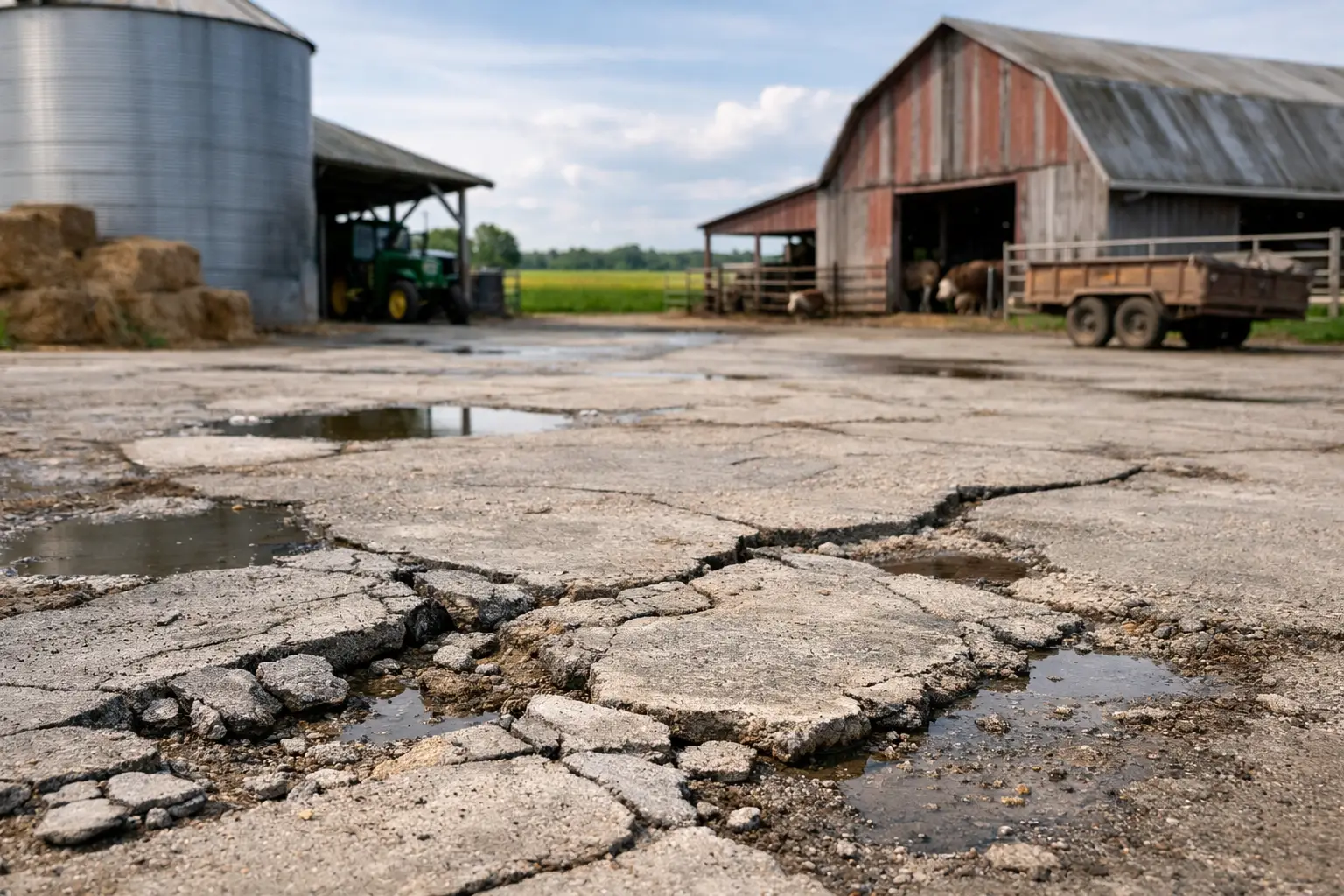
A cow that hesitates at the dairy entrance, a worker taking shorter steps on a wet lane, or slurry sitting in shallow hollows are not small issues to put off until next season. They are often the best signs concrete needs resurfacing before worn flooring starts contributing to slips, hoof damage and costly disruption.
On a working farm, concrete does not wear evenly or quietly. It is exposed to hoof traffic, machinery, water, effluent, feed, cleaning and changing weather every day. A surface can still look solid from a distance while its grip, drainage and comfort have already deteriorated. Knowing what to look for helps you act before a repair becomes a larger replacement job.
Loss of traction under hoof
The clearest warning sign is livestock losing confidence on concrete. Cows may shorten their stride, spread their legs, bunch up at corners or hesitate before entering the shed. You may notice more slipping during wash-down, after rain, or in high-traffic areas where manure and moisture build up.
A concrete surface becomes slippery when its original texture has been polished away by constant movement. This commonly happens on dairy shed exits, collecting yards, feed pads, races and turning points. A shiny, smooth-looking finish is not simply cosmetic. It can reduce the grip animals need to walk naturally and safely.
Do not judge traction only when the concrete is dry. Wet conditions reveal how the floor is really performing. If the surface feels slick under your boots, livestock are dealing with the same risk, often with far more weight and less ability to recover from a slip.
Worn aggregate and polished traffic lines
Look closely at the paths animals use most. If you can see clear, smoother tracks through previously textured concrete, the surface is wearing unevenly. Exposed aggregate can also become rounded and polished over time, especially where cows turn, queue or push through gateways.
These traffic lines tend to worsen quickly because animals naturally follow the same route. Once the texture has gone, water and manure are harder to clear, and hoof wear can increase as cattle try to find purchase. Resurfacing, bush hammering or purpose-designed grooving may restore practical traction, but the right option depends on the concrete condition and how the area is used.
A sound slab with a worn finish may only need surface treatment. A slab that is breaking down underneath needs a more involved repair first. Treating the texture without addressing failed concrete can be a false economy.
Cracks, spalling and broken concrete edges
Not every crack means a slab needs resurfacing, but cracks should never be ignored in livestock areas. Fine surface cracking may be stable, while wider, deep or moving cracks can allow water into the slab and create weak points. Broken edges, loose pieces and flaking concrete are more urgent because they create uneven footing and can catch a hoof.
Spalling is particularly common where concrete has been exposed to repeated wetting, effluent, impact or poor drainage. It often begins as small patches of loose or pitted material, then expands under traffic. In a race or shed entrance, even a modest rough patch can make cattle alter their gait.
The practical question is whether the damage is isolated or widespread. Localised repairs can work well for a few damaged areas. If defects are appearing across the same working zone, resurfacing may provide a more reliable long-term solution than repeatedly patching individual spots.
Water pooling where it should drain away
Concrete does not need to be perfectly dry to be safe, but standing water is a warning that the surface or drainage is not doing its job. Puddles in cow flow areas create a slip hazard, soften contamination into the walking surface and can accelerate surface wear.
Pooling may result from settlement, poor falls, damaged channels or a worn surface that has developed low points. A resurfacing plan needs to account for the cause, not just cover the symptom. Adding material without correcting drainage can leave the same problem underneath a new finish.
Watch where water sits after wash-down. Check around backing gates, dairy exits, feed areas, gateways and the bottom of slopes. These are the places where traction and drainage matter most, and where a tailored repair can make a noticeable difference to day-to-day movement.
More hoof problems or reluctant cattle movement
Concrete condition is only one factor in hoof health, but it can be a significant one. Hard, slippery or broken flooring changes how animals walk. Over time, poor footing can add stress at the sole, increase the risk of slips and contribute to lameness pressures already caused by moisture, long walking distances or animal health issues.
Pay attention to changes in behaviour as well as formal lameness records. Cattle that are reluctant to move down a race, take corners slowly, push together at an entrance or frequently lose their footing are giving useful feedback about the surface.
The goal is not to make concrete soft. It is to provide a durable, well-drained surface with dependable grip that allows livestock to walk with confidence. Correctly specified surface treatment can support safer movement without creating an overly aggressive finish that may increase hoof wear.
Dusting, pitting and a surface that is breaking down
If concrete produces fine dust, looks porous or has widespread pitting, its top layer may be failing. This is more than a visual issue. As the surface opens up, it can retain moisture and effluent, become harder to clean and deteriorate faster under stock and machinery.
Pitting can also reduce footing consistency. One part of the slab may be smooth and polished while another is rough, loose or uneven. That inconsistency is difficult for livestock to manage, particularly at pace or in crowded conditions.
At this stage, a site inspection is worthwhile. The depth of deterioration, slab strength, drainage and existing texture all influence whether resurfacing is suitable. In some cases, targeted concrete repairs followed by grooving create the best result. In others, a more substantial resurfacing system is needed to restore the working surface.
Repairs that keep failing in the same places
A patch that breaks out again within a short period is usually telling you something about the underlying conditions. The base may be moving, the edges may not have been prepared properly, water may be getting underneath, or concentrated traffic may be exceeding what the repair was designed to handle.
Repeated patching can interrupt operations and consume maintenance budget without solving the real issue. It is sensible for small, isolated defects, but it is not always the right approach for a busy dairy lane, holding yard or shed threshold that sees constant loading.
When assessing repeat failures, consider the whole area. Is there enough fall? Is machinery crossing the same point? Are cattle turning sharply there? Is the finish suitable when wet? A repair plan based on these farm conditions will last longer than a generic concrete fix.
When resurfacing is the right call
Resurfacing is generally worth considering when the slab remains structurally serviceable but the upper surface has lost its traction, profile or ability to shed water. It can renew worn working areas and provide a platform for a surface finish suited to livestock movement.
It is not automatically the answer for every damaged slab. Deep movement cracks, major settlement and badly failed concrete may require removal or structural repair before any overlay is applied. The key is an honest assessment of what is happening below the surface as well as above it.
For farms, the best outcome is usually a staged solution that protects animal welfare while limiting downtime. That may involve repairing failed sections, correcting drainage, then applying grooving or bush hammering where stock need consistent grip. Happy Hoof assesses these details with the practical demands of livestock traffic in mind, including areas that may be safer to complete after hours.
Act before the surface becomes a safety event
The cost of worn concrete is rarely limited to the repair itself. A fall can injure an animal or worker. Lameness can affect production and treatment time. A rushed repair during a busy period can disrupt cow flow when the farm can least afford it.
Walk your high-traffic concrete after a wash-down or rainfall and look at it from the animal’s point of view. If it is smooth, pooling, cracked, breaking away or making stock move cautiously, it is time to assess the surface before the next slip forces the decision.