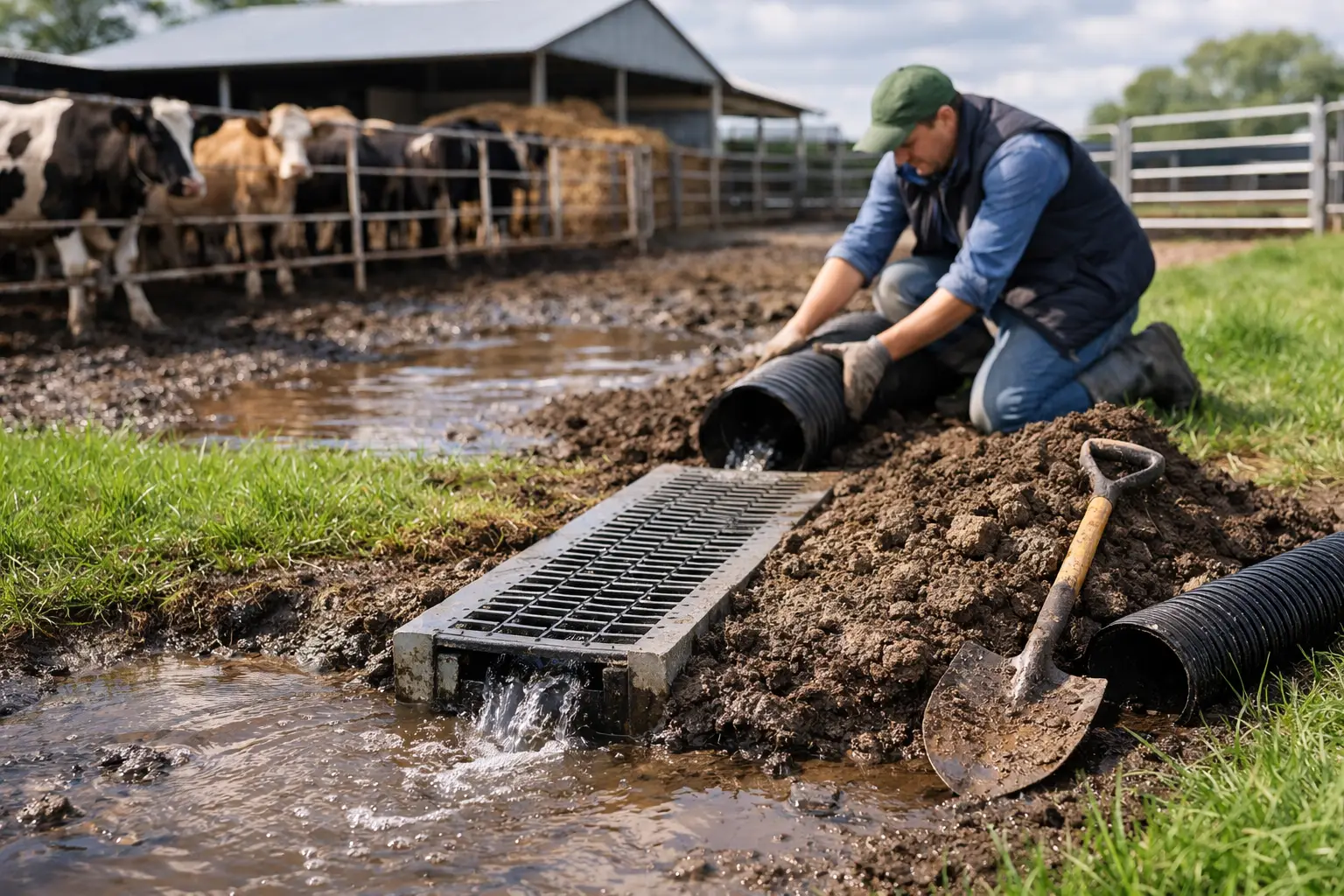
A yard can look sound from the gate and still create problems every day. Drainage issues in livestock yards often show up as puddles around gates, slick concrete at corners, muddy holding areas and cows reluctant to move. That standing water is not just an inconvenience. It changes the way livestock walk, affects hoof condition, increases cleaning time and puts workers at greater risk.
For dairy, beef and sheep operations, drainage needs to work under real pressure: rain, wash-down water, effluent, feed residue, hoof traffic and machinery. A practical solution considers the whole yard, not simply the wettest patch.
Why poor yard drainage becomes a livestock problem
Water follows the easiest path. If a concrete yard has low spots, blocked drains or insufficient fall, water stays where animals need to stand and turn. Add manure and feed residue and the surface quickly becomes slippery, abrasive or both.
Cattle are particularly vulnerable in high-traffic areas such as dairy exits, collecting yards, races, gateways and the approach to the shed. When they cannot confidently find their footing, they shorten their stride, hesitate at turns and place extra pressure on their hooves. A single slip can cause injury. Ongoing exposure to wet, contaminated surfaces can contribute to softened hooves, sole problems and conditions that increase lameness risk.
Poor drainage also costs time. Staff may need to hose, scrape or redirect stock around wet areas. In winter, a yard that never properly dries can become a daily safety issue rather than a problem reserved for heavy rain.
The common causes of drainage issues in livestock yards
The cause is rarely just “too much water”. Most drainage failures come from a combination of surface design, maintenance and changing yard use.
Incorrect or interrupted concrete falls
Concrete needs a consistent fall towards an appropriate collection point. If the slope is too flat, water does not move with enough purpose. If it falls in the wrong direction, water may run towards a gate, race, shed entrance or animal waiting area.
Even a yard that was originally built with suitable falls can develop problems where new concrete meets old concrete, repairs have been made without matching levels, or settlement has created a low point. Water pooling in one predictable spot after every wash-down is usually a sign worth investigating, not something to keep working around.
Drains that cannot keep up
Channel drains, sumps and grates must handle the volume of water and solids produced in that location. A narrow drain in a busy dairy exit may clog quickly with manure, stones, straw or feed. Once partially blocked, it slows the entire system and allows water to spread over the concrete.
Drain placement matters as much as drain size. A drain positioned where stock must constantly step across it can fill with debris, create an awkward walking line or become difficult to clean. It needs to collect water efficiently without creating another hazard underfoot.
Worn or poorly repaired concrete
Cracks, spalling and broken edges hold water and make scraping less effective. They also create pockets where contamination remains after washing. In some cases, repeated patching creates uneven transitions that interrupt surface flow.
Repairs need to restore both the strength and the drainage line of the slab. A durable patch that sits proud of the surrounding concrete can be just as disruptive as a hole if it dams water uphill.
Surface texture that does not suit wet conditions
Drainage and traction are closely linked, but they are not the same job. A yard can drain reasonably well and still be dangerous if the concrete becomes polished under hoof and machinery traffic. It can also have aggressive texture but remain unsafe because water sits across it.
The right surface treatment gives livestock secure footing while allowing water and slurry to move towards drainage points. The treatment needs to suit the existing concrete, animal traffic, cleaning method and yard use. Excessively harsh finishes can increase hoof wear, while inadequate texture gives animals no confidence on wet concrete.
Yard changes without a drainage plan
A new gate, extended race, feed area or shed alteration can change how water moves across the site. So can increased herd numbers and more frequent wash-downs. What worked for a smaller operation may no longer cope with the volume of stock, slurry and water moving through the yard.
Before adding concrete or changing stock flow, consider where water will travel, where solids will collect and whether the new surface will direct animals through a consistently wet zone.
Start with a practical yard assessment
The best time to inspect drainage is during or immediately after rain, wash-down or milking. Dry-weather inspections can miss the actual flow pattern. Walk the yard and look for water that remains after the main surface has cleared, particularly at turns, gate openings, dairy exits, troughs and yard edges.
Watch livestock as well. Hesitation, bunching, wide-legged walking or repeated slipping around the same area can point to a drainage and traction problem. Stock behaviour often identifies the highest-risk section before a visible concrete failure develops.
It helps to separate the issue into three questions. Where is the water coming from? Where should it go? What is stopping it from getting there? The answer may be a blocked channel, but it may also be a low slab, an ineffective fall or a damaged surface that is retaining slurry.
Fix the water path before treating the surface
Surface grooving or bush hammering can improve traction, but neither should be used to hide a drainage fault. If water is ponding because the concrete falls the wrong way, the first priority is correcting the water path. Depending on the yard, this may involve cleaning and repairing drains, regrading a localised section, rebuilding damaged concrete or installing additional collection points.
This is where a site-specific approach matters. A heavily used dairy yard may need a different solution from a beef handling area or sheep forcing yard. The volume of water, frequency of cleaning, livestock type and machinery access all affect the best outcome.
Once drainage is working, the concrete surface can be assessed for grip. Concrete grooving or bush hammering can provide more reliable traction in wet areas when specified correctly. The goal is not to make the surface rough for the sake of it. It is to create a finish that supports confident animal movement without causing unnecessary hoof wear.
At Happy Hoof, that means looking at drainage, traffic patterns and existing concrete condition together. A high-performance livestock surface should help water move away, give animals secure footing and stand up to repeated use.
Maintain drainage before the wet season exposes it
Drainage systems need routine attention, especially before periods of heavy rain. Clearing grates and channels is simple work, but it has a direct effect on safety. Check for broken grates, loose concrete around drain edges, cracked channels and build-up that prevents water entering the drain.
Do not overlook the outlet. Water can leave the yard channels properly but still back up if the downstream line, sump or disposal area is blocked or undersized. Effluent management requirements also need to be considered when altering drainage so contaminated runoff is managed appropriately.
Keep an eye on repairs through the season. A small crack beside a drain can become a broken edge under machinery wheels, and that broken edge can trap solids and redirect water across the traffic line. Early repair is generally less disruptive and more cost-effective than waiting for a larger section to fail.
When it is time to call in a specialist
Repeated ponding, recurring slips, worn concrete in high-traffic areas and drainage that fails after every wash-down are signs the yard needs more than routine cleaning. An experienced concrete specialist can assess the existing slab, identify where falls are failing and recommend surface work that matches the operation.
Night work may also be an option where dairy schedules leave little room for disruption. The key is to plan the work around animal movement and return the area to service with a surface that is safer, cleaner and built for the workload ahead.
A dry, well-textured yard will never remove every livestock risk, particularly during wet weather. But when water has a clear path away from hoof traffic and concrete provides dependable grip, animals move with more confidence and the daily job becomes safer for everyone on farm.