
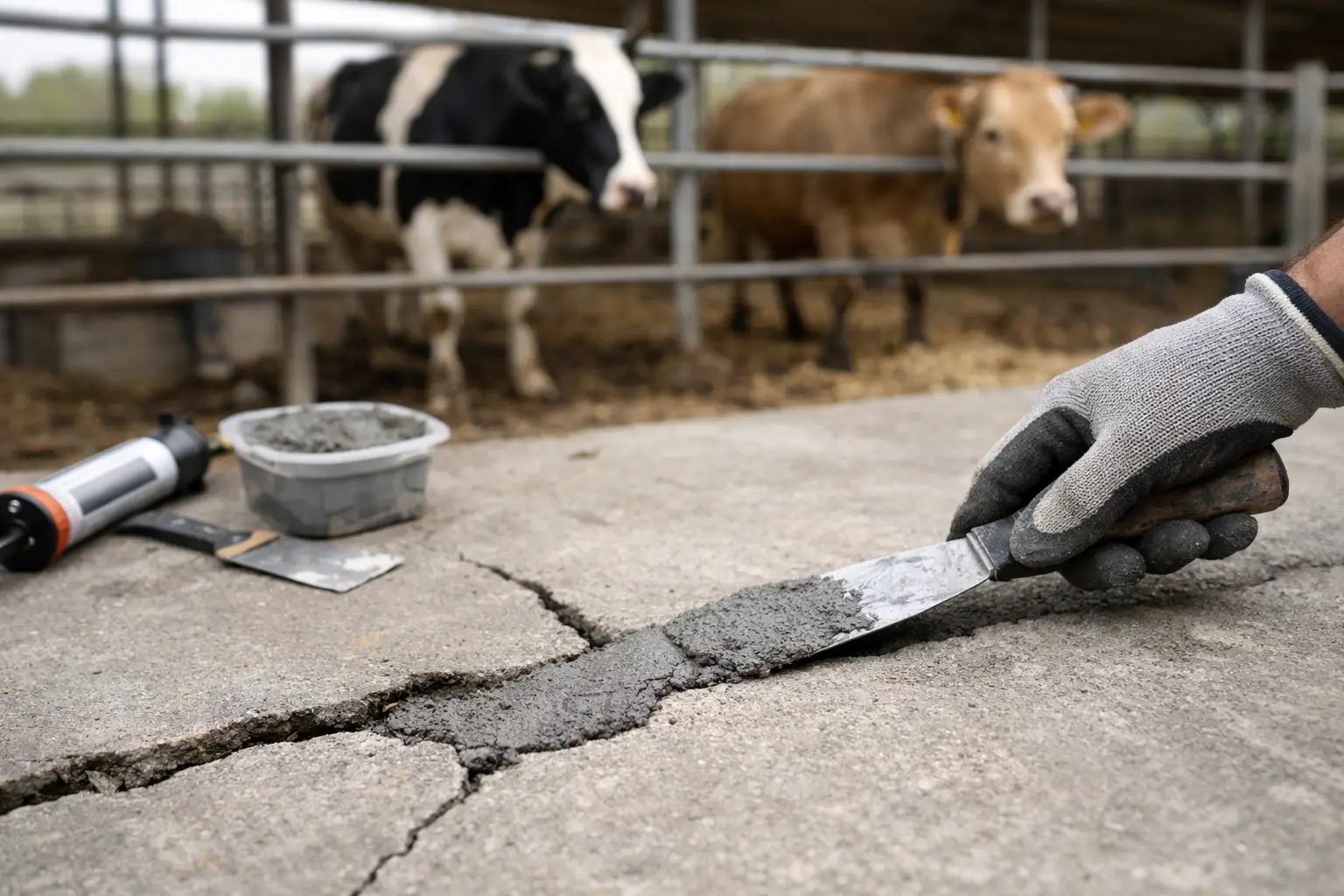
A crack in a cattle yard or dairy shed floor is rarely just a cosmetic problem. If you need to repair cracked concrete in cattle areas, the real issue is what that damage means for hoof grip, drainage, hygiene and animal movement. Small cracks can quickly turn into edges, hollows and slippery sections that put pressure on hooves, slow stock flow and create more cleanup work every day.
On a working farm, concrete wears hard and it wears unevenly. Cows bunch at gates, pivot in holding areas, stand for long periods near feed zones and track moisture and effluent across the same paths over and over. That constant load is why a repair has to do more than fill a line in the slab. It needs to restore a surface that is safe, durable and suited to livestock traffic.
Why cracked concrete matters in cattle areas
Concrete in livestock environments fails differently from concrete in a warehouse or driveway. In cattle areas, the surface is exposed to hoof impact, moisture, manure acids, washdown, machinery and temperature movement. Once cracking begins, the damage often spreads faster in spots where stock turn sharply or where drainage is already poor.
For the animals, the risk is straightforward. Cracks create uneven footing, and uneven footing changes how cattle walk and stand. That can contribute to slips, hoof wear, joint strain and hesitation in high-traffic areas. If the crack opens up or the surface around it starts to break away, the problem shifts from a maintenance job to a welfare issue.
For the farm, cracked concrete also affects efficiency. Water and effluent can sit in damaged sections instead of draining cleanly. Scrapers and washdown become less effective. Repairs that could have been simple can turn into slab replacement if water gets deeper into the base and starts undermining the area.
What causes cracks in cattle area concrete?
Not every crack means the slab has failed, but the cause does matter because it affects the repair method. Some cracks come from shrinkage during curing. Others come from movement in the base, poor drainage, heavy machinery loads, or years of hoof traffic concentrating stress in the same lane.
In farm settings, we often see a combination of factors rather than one single cause. A surface may already be polished smooth from wear, then begin cracking where water ponds, then worsen because cattle avoid one section and overload another. If the slab was never designed for livestock-specific traction and runoff, repair work needs to address the bigger performance issue as well.
That is why a quick patch is not always a good repair. If the crack is only treated on the surface but the surrounding concrete is weak, the same section usually breaks down again.
How to assess damage before you repair cracked concrete in cattle areas
The first step is to look past the crack itself. Width matters, but so does movement, depth and the condition of the surrounding surface. A fine stable crack in sound concrete is a different job from a wider crack with spalling edges, moisture coming through, or a hollow feel underfoot.
You also need to assess where the crack sits in the yard. A damaged feed passage, dairy entry, backing gate zone or holding yard carries a different risk level from a low-traffic perimeter edge. In high-use cattle areas, even moderate surface damage can become a serious traction problem very quickly.
Drainage should be checked at the same time. If water is collecting around the crack, the repair needs to account for slope and runoff, not just the broken section. There is little value in fixing the concrete if the same water problem stays in place.
When a basic patch will work – and when it will not
Some farm operators hope to get by with a simple filler, and in a few cases that can be reasonable. If the crack is narrow, stable and the surrounding slab is still structurally sound, a well-prepared repair using the right product can extend the life of the area.
But cattle areas are unforgiving. If there is edge breakup, repeated movement, soft base material underneath or widespread surface polishing, a patch on its own will not restore safe footing. It may close the crack, but it will not solve the traction issue. In those situations, the repair often needs surface preparation, sectional replacement, or a follow-up treatment such as grooving or bush hammering to bring grip back into the traffic line.
This is where farm-specific concrete work matters. A repair that looks fine on day one can still be wrong for livestock if it cures too smooth or creates an abrupt transition under hoof.
Best practice to repair cracked concrete in cattle areas
The right repair starts with solid preparation. Damaged concrete needs to be cut back to sound material, cleaned thoroughly and cleared of slurry, dust and contamination. On farms, that cleaning stage is critical because organic material can interfere with bond strength and shorten the life of the repair.
From there, the method depends on the type of failure. Stable cracks may be routed and filled with a suitable repair compound. Broken sections often need saw cutting and removal before new material is installed. If the base has moved or washed out, it may need rebuilding before any new concrete goes in. Skipping that step is one of the main reasons repairs fail early.
Surface finish is just as important as strength. In cattle areas, the repaired section should match the surrounding floor level and support confident hoof placement. If the finish is too smooth, stock can lose grip even though the concrete itself is new. If it is too rough or poorly blended, it can create pressure points and uneven wear.
That is why specialist finishing matters after repair. Depending on the area, grooving or bush hammering may be needed to restore slip resistance and make the repaired section perform like the rest of the working surface.
Traction and hoof health after concrete repair
A repaired slab is only doing half the job if it has not restored traction. Cattle need a surface that allows steady forward movement, especially in wet conditions and around turns. Where cracks have been repaired in high-traffic zones, traction should be reviewed as part of the job, not treated as a separate issue for later.
This is particularly important in dairies, collecting yards and feed areas where cattle spend time standing, queuing and pivoting. A repaired patch that is smoother than the surrounding slab can become the first place animals hesitate or slip. Over time, that affects stock flow and places extra stress on hooves and legs.
For many farms, the best long-term result comes from combining repair work with surface texturing. Happy Hoof often approaches these jobs with the wider outcome in mind – not just fixing damage, but restoring a floor that supports safer movement and healthier hooves under daily use.
Timing the work to reduce disruption
Repairs in cattle areas need to fit around the farm, not the other way around. Access, curing time, weather and stock movement all need planning before any section is cut out. In some cases, night work or staged repairs make the most sense, especially where a full closure would interrupt milking or yard use.
The right timing also depends on the repair type. Fast-return materials can be useful in operational areas, but they are not the answer for every job. A larger failure may need more extensive preparation and curing to deliver a lasting result. Rushing a structural repair to save a few hours can cost far more if the area fails again under load.
Preventing the next crack
Once repairs are complete, the next step is reducing the conditions that caused the damage. That may mean improving drainage, addressing ponding, reworking high-wear traffic patterns or restoring surface texture before cattle start slipping and twisting across polished concrete.
Regular inspections make a difference here. A crack caught early is usually simpler and cheaper to repair than a section that has already begun breaking away. Farm concrete does not need to look perfect, but it does need to stay safe, cleanable and stable under stock.
If you are seeing repeated damage in the same area, that is usually a sign the floor needs more than patching. It may need a different finish, better runoff, or a more suitable repair strategy for livestock conditions.
Cracked concrete does not fix itself, and cattle will keep testing the weak spots every day. The sooner you deal with it properly, the better the result for hoof health, staff safety and the working life of the slab. A good repair should leave the area safer to walk, easier to clean and better suited to the pressure of real farm use.