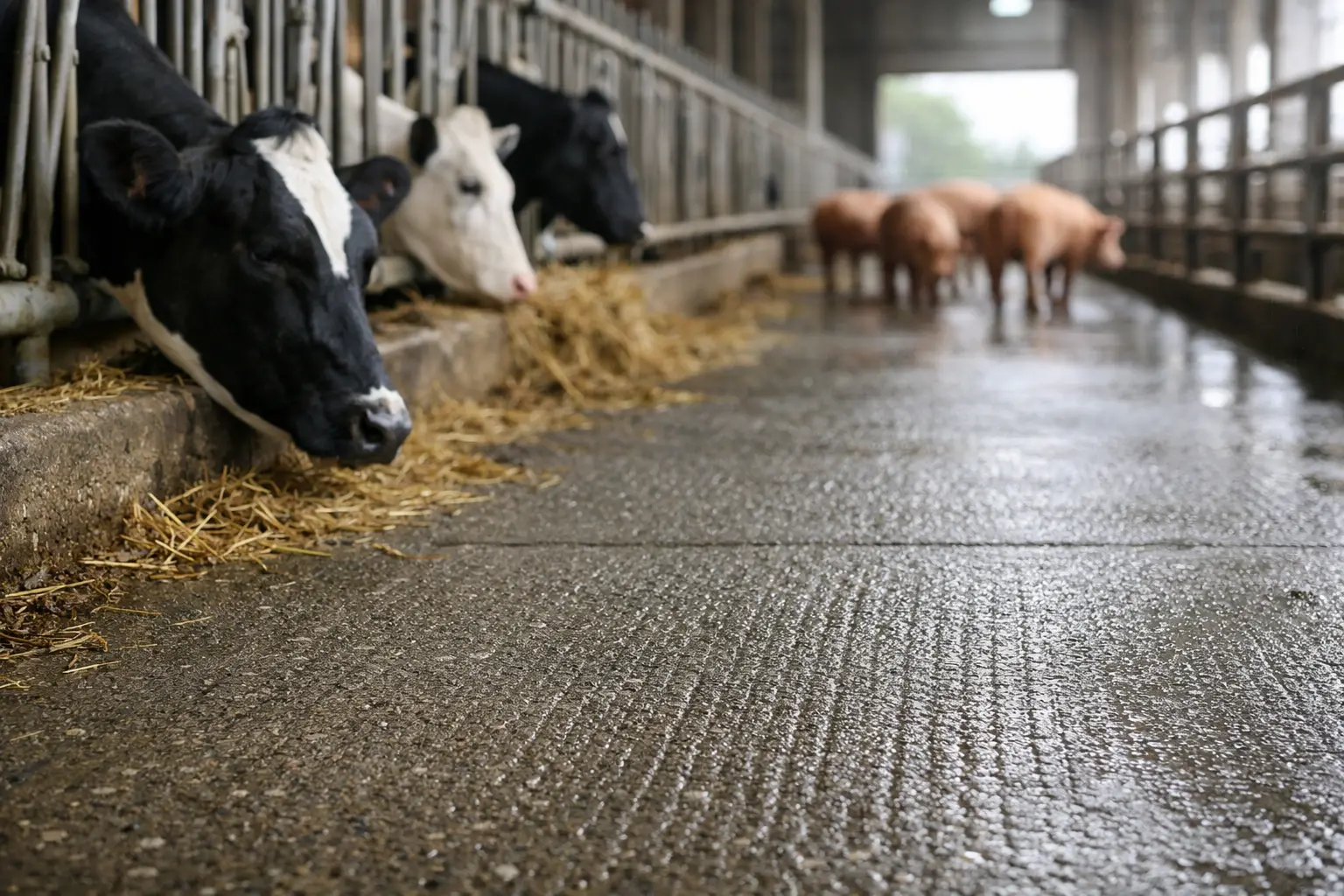
A cow that loses footing on wet concrete rarely does it just once. Slips in the yard, hesitation in the race and short, careful steps into the dairy are usually signs the surface is working against the animal. Slip resistant concrete for livestock is not a cosmetic upgrade. It is a farm safety measure that affects hoof wear, lameness risk, stock flow and the amount of time your team spends dealing with preventable problems.
On a working farm, concrete takes a beating. Effluent, washdown water, feed residue, weather and constant traffic all wear surfaces down over time. Even concrete that was once rough enough can polish under hoof traffic and become unpredictable. That is where specialist surface treatment matters. The goal is not simply to make concrete rough. It is to create the right texture for grip, drainage and hoof comfort without turning the surface into something overly aggressive.
Why slip resistant concrete for livestock matters
When livestock move across concrete, they need confidence in every step. If they do not feel secure, they shorten their stride, bunch up, baulk at corners and put extra strain on joints and hooves. In dairy systems, this often shows up first in collecting yards, feed pads, drafting areas and shed entries where water and manure are part of daily operations.
Poor traction creates obvious safety risks such as falls and injuries, but the hidden costs are often bigger. A single slippery area can contribute to bruising, white line issues, stress during movement and lower throughput during milking or handling. Staff safety is part of the picture too. If cattle are tense or scrambling, people working around them are exposed to more risk.
That is why flooring should be treated as part of herd management, not just part of the build. Good concrete under stock supports better movement, calmer handling and more consistent performance across the farm.
What makes concrete safe for stock
Safe livestock concrete comes down to the balance between traction and wear. Too smooth, and animals slip. Too sharp, and the surface can damage hooves, especially under heavy traffic. The right finish depends on where the concrete is, how often it is used and what type of stock is moving over it.
In a dairy collecting yard, for example, you need dependable grip under wet conditions and frequent washdown. In a race or laneway connection, the pattern may need to support forward movement over a longer run. In feed areas, manure build-up and turning behaviour can change what surface performs best.
Texture is only one part of the equation. Drainage, slope, concrete condition and maintenance all influence how slip resistant a surface remains over time. A well-grooved slab with poor drainage can still become hazardous if water sits on top. Likewise, a yard with the right fall but worn smooth concrete may not give animals enough purchase.
How slip resistance is created in farm concrete
The most effective way to improve an existing slab is usually through mechanical surface treatment. Two of the most common methods are grooving and bush hammering. Both aim to improve traction, but they do it in different ways and suit different conditions.
Concrete grooving cuts defined channels into the slab to improve hoof grip and help water move off the surface. This is often a strong option in dairies, holding yards and high-traffic areas where consistent movement and drainage matter. The spacing, depth and pattern need to match the livestock use. Grooves that are poorly planned can wear unevenly or create discomfort, so experience counts.
Bush hammering creates a textured finish by mechanically roughening the concrete surface. This can be useful where a broader non-slip texture is needed rather than a grooved pattern. It is often chosen for areas where stock turn, pause or spread out rather than move in a straight line. The benefit is a more uniform grip across the slab, but it still needs to be controlled properly to avoid creating an overly harsh finish.
The right method depends on the job. Sometimes grooving is the better fit. Sometimes bush hammering is. On some sites, repairs and drainage improvements need to come first, because surface texture alone will not solve a slab that is breaking up or holding water.
Where slippery concrete causes the most trouble
Some areas on farm are more exposed than others. Collecting yards are usually at the top of the list because they combine moisture, manure, frequent turning and high stocking pressure. If the surface is worn, cattle feel it straight away.
Shed entries and exits are another common trouble spot. Stock are transitioning between spaces, often moving with urgency, and even a short slick section can cause slips. Races, feed pads and holding areas also deserve attention, especially where the concrete has been in service for years and the original finish has faded.
Repairs are often overlooked in these spaces. Cracks, spalling and patched sections can interrupt animal movement and create uneven traction. It does not take major structural failure to create a problem. Small defects in the wrong location can be enough to trigger hesitation and poor footing.
New concrete versus existing concrete
If you are planning a new build, slip resistance should be part of the design from the start. That means thinking about stock flow, slope, drainage, washdown patterns and the finish required for each zone. Getting that right early is usually more cost-effective than correcting avoidable issues later.
Existing concrete is a different conversation. Many farms are working with slabs that are structurally sound but no longer safe enough under stock. In those cases, specialist treatment can restore performance without full replacement. That is often the practical choice when downtime, budget and site access are all in play.
There is no single answer for every farm. A newer slab may only need targeted treatment in key areas. An older yard may need repairs before traction work begins. The best results usually come from looking at the whole working environment rather than treating slippery concrete as a standalone issue.
The long-term value of slip resistant concrete for livestock
The return on improved flooring is rarely limited to one line item. Better traction can reduce slips and falls, but it also supports smoother movement, calmer stock and less strain on hooves. Over time, that can contribute to fewer lameness issues, less disruption and better labour efficiency.
It also protects the value of the concrete itself. Surfaces that are inspected, maintained and treated before they become dangerous tend to last longer and perform more consistently. Waiting until cattle are obviously slipping usually means the problem has already been costing you in ways that are harder to measure day to day.
For farms running tight schedules, minimising disruption matters as much as the treatment itself. That is why after-hours work can be a real advantage. If surface improvement can be done around milking or handling routines, it is far easier to tackle the problem before it becomes urgent.
What to look for before booking concrete treatment
A proper assessment should look beyond whether the slab feels slippery underfoot. Livestock behaviour tells you plenty. Watch for shortened stride, bunching, reluctance at entry points and animals spreading their weight carefully on corners. Those signs often show up before a serious incident.
It is also worth checking how water moves across the area after washdown or rain. If moisture pools in low spots, traction work may need to be paired with drainage corrections. Surface wear should be examined closely as well, especially in high-pressure zones where traffic has polished the concrete smooth.
Most importantly, the treatment should be designed for livestock use, not general industrial traffic. Farm concrete has its own demands. Hooves, manure, moisture and repeated movement patterns create conditions that need specialised planning and execution.
When the job is done properly, the difference is visible in how animals use the space. They move with less hesitation, corners become less chaotic and staff spend less time managing around the floor. That is the standard worth aiming for.
Good farm concrete should do more than survive hard use. It should help stock move safely, protect hoof health and support the way your operation runs every day. If a surface is asking animals to brace, shuffle or second-guess their footing, it is time to treat it as a production issue, not just a concrete one.