A cow that loses its footing in the yard rarely walks away without a cost. Sometimes it is obvious – a fall, a knock, a strained leg. More often, the damage builds quietly through bruising, stress on joints, and extra wear on already tender hooves. That is why concrete grooving for cattle yards matters. It is not just about roughening a surface. It is about giving stock secure footing where pressure, moisture and traffic are at their highest.
On working farms, cattle yards deal with constant punishment. Effluent, wash-down water, mud tracked in from laneways and repeated hoof traffic all combine to polish concrete over time. Even yards that once had decent grip can become slick enough to change how animals move. You see hesitation at corners, bunching at gateways, and stock shortening their stride. Those are early warnings that the surface is working against the animals instead of for them.
Why yard traction affects more than slips
Poor traction does not only raise the risk of a visible accident. It also changes behaviour. Cattle that feel unsure underfoot move more slowly, baulk more often and put extra stress on handlers trying to keep flow steady. In dairy systems, that can affect movement to and from the shed. In beef yards, it can make drafting, loading and weighing more difficult than it needs to be.
There is also the hoof health side. When cattle are forced to compensate on slippery concrete, they place weight unevenly and twist more through turns. Over time, that can contribute to hoof wear, bruising and lameness pressure. A safer surface helps animals walk more naturally, which is exactly what you want in high-traffic areas.
This is where grooving earns its place as a practical farm investment. It improves grip in a way that works with the animal, the yard layout and the day-to-day reality of wet conditions.
What concrete grooving for cattle yards actually does
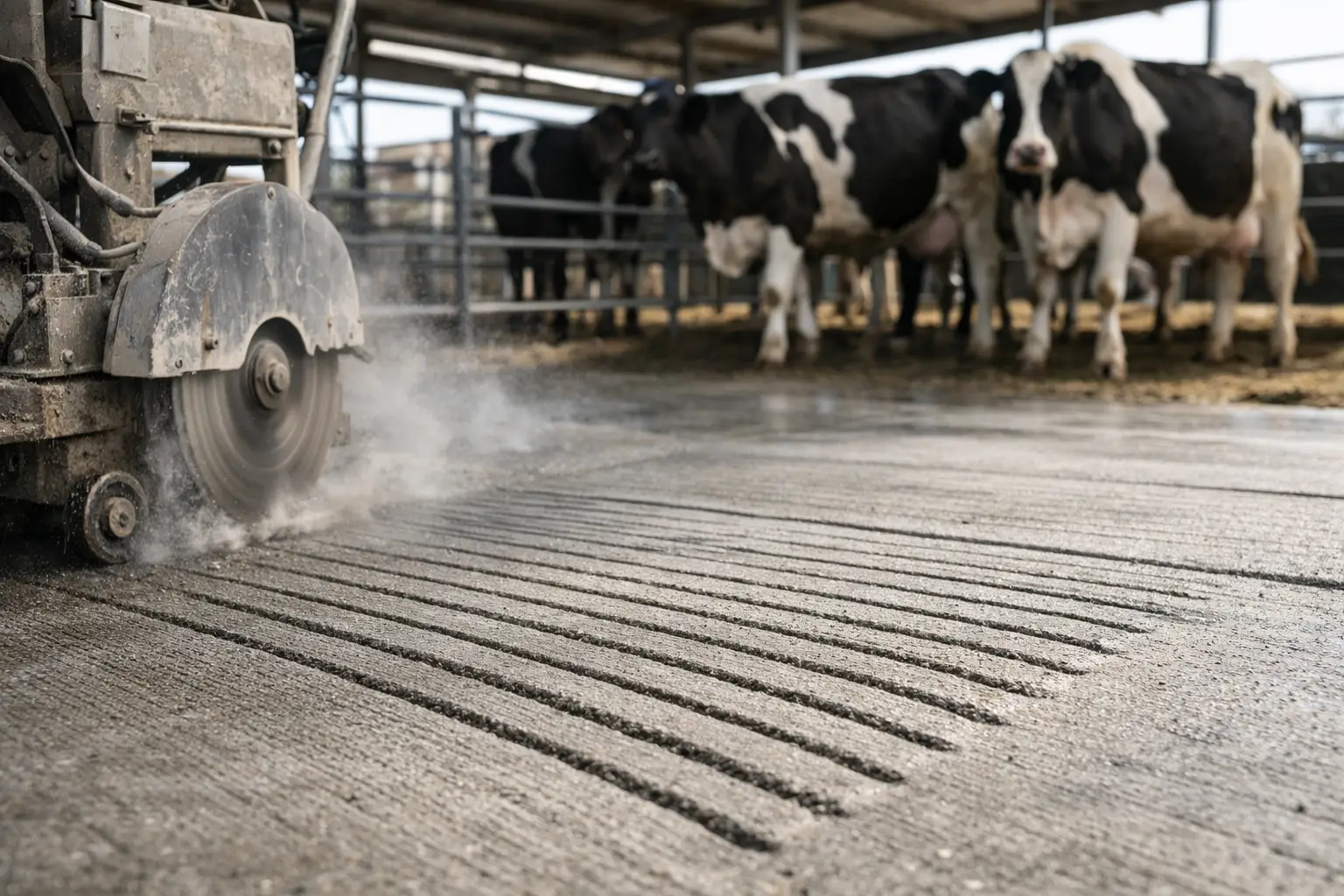
Concrete grooving creates a pattern of cut channels in the slab to improve underfoot traction. Those grooves give hooves edges to grip while also helping water and slurry move away from the walking line. The result is a surface that offers more control without becoming harsh or overly aggressive.
Done properly, grooving is not a cosmetic fix. It is a measured treatment based on how cattle move, where water sits and how the yard is used. The spacing, depth and direction of grooves all matter. A layout that works in a straight run may not suit a forcing yard or a return area where animals are turning tightly.
That is why a one-size-fits-all approach rarely gives the best result. Some yards need full-area treatment. Others benefit most from targeted work in high-risk zones such as entries, exits, corners, backing gates and wash-down sections. The best outcome usually comes from looking at stock flow and drainage together, not treating the whole slab as if every square metre does the same job.
Where grooving makes the biggest difference
The highest-value areas are usually the places where cattle slow, turn, bunch or stop. These points carry more lateral movement and more pressure on the hoof. If the concrete is smooth there, slips are more likely, especially when the surface is wet.
Entry and exit races are common problem spots because cattle are changing pace. Holding yards and drafting areas also wear heavily because animals are shifting weight in tight groups. Around troughs, gateways and shed approaches, water and manure often combine to create a polished top layer. In these locations, improved traction can quickly change how confidently stock move.
Older yards are especially worth checking. Concrete does not need to be cracked or broken to be unsafe. It can look structurally sound while the top surface has become glazed from years of traffic. In that case, grooving can restore function without the cost and disruption of full replacement.
Getting the pattern right
Good grooving is about balance. Too shallow, and the cuts do not provide enough bite once the yard is wet. Too deep or too harsh, and the surface can become uncomfortable, harder to clean or more prone to edge damage over time. The goal is secure footing that supports natural movement, not a rough finish for its own sake.
Pattern direction also matters. Grooves need to work with the way cattle travel through the yard while still allowing drainage to do its job. In straight runs, the approach may differ from what is used in curved or congested areas. If water is already ponding because of poor fall, grooving can help but it may not solve the whole problem on its own. Sometimes the right advice is to combine surface treatment with repairs or drainage improvements.
That is an important trade-off to be honest about. Grooving is highly effective, but it is not magic. If the concrete is badly spalled, structurally unsound or laid with the wrong slope, the yard may need more than a surface cut. A specialist assessment should look at the slab condition as well as the traction issue.
Timing, disruption and farm routine
Most farm operators are not worried about whether a contractor can cut grooves. They are worried about whether the work can be done without throwing the whole operation off track. That is a fair concern. Yards and shed approaches are critical infrastructure, and downtime has a real cost.
The good news is that grooving can often be planned around the working day. For farms with tight milking or stock movement schedules, after-hours work can make a big difference. Night work is not suitable for every site, but where it fits, it can reduce disruption and let the yard stay functional when it matters most.
Preparation also counts. A clean surface, clear access and a plan for managing stock movement during the job all help keep things efficient. The more closely the work matches the farm routine, the smoother the result for everyone involved.
Concrete grooving for cattle yards and long-term value
It is easy to look at grooving as a maintenance line item. In practice, it sits closer to risk reduction and productivity protection. Fewer slips mean fewer injury events. Better hoof support can help reduce lameness pressure. More confident stock flow can save time at every movement point across the week.
There is a staff safety angle as well. Handlers working around unsettled cattle on slick concrete are carrying more risk than they should. Better traction supports safer movement for both stock and people, particularly in wet weather or busy yarding periods.
From a cost point of view, the value often shows up in avoided problems rather than dramatic one-off gains. One bad fall, one lame animal in treatment, or one section of yard that repeatedly slows movement can cost more than many operators realise. Surface performance is part of the farm system, not an optional extra.
When to act
If cattle are slipping, even occasionally, the issue is already worth attention. But there are earlier signs that should not be ignored. Watch for animals shortening stride, swinging wide through turns, hesitating at certain entry points or looking unsettled on wet concrete. Also look at the yard after wash-down. If water lingers where cattle travel most, traction is likely under pressure.
Run your eye over the slab itself. Smooth, polished patches in traffic lanes are often a sign that the original texture is gone. If the concrete feels slick under boot, cattle will feel it too.
This is where specialist experience matters. A contractor who understands livestock yards will not just measure the slab and start cutting. They will look at how stock use the space, where moisture sits, what condition the concrete is in and what result is realistic from the existing surface. That practical judgement is what turns a trade service into a useful farm outcome.
For farms that want safer yards without unnecessary replacement, tailored grooving is often the smart middle ground. It addresses traction directly, supports hoof health and helps the yard work the way it should under pressure. Happy Hoof approaches that work with the same priority farmers do – safer movement, durable surfaces and less trouble where cattle and concrete meet every day.
If a yard is making stock cautious, staff tense or daily handling harder than it should be, the surface is telling you something. The right fix starts with reading those signs before they turn into bigger losses.