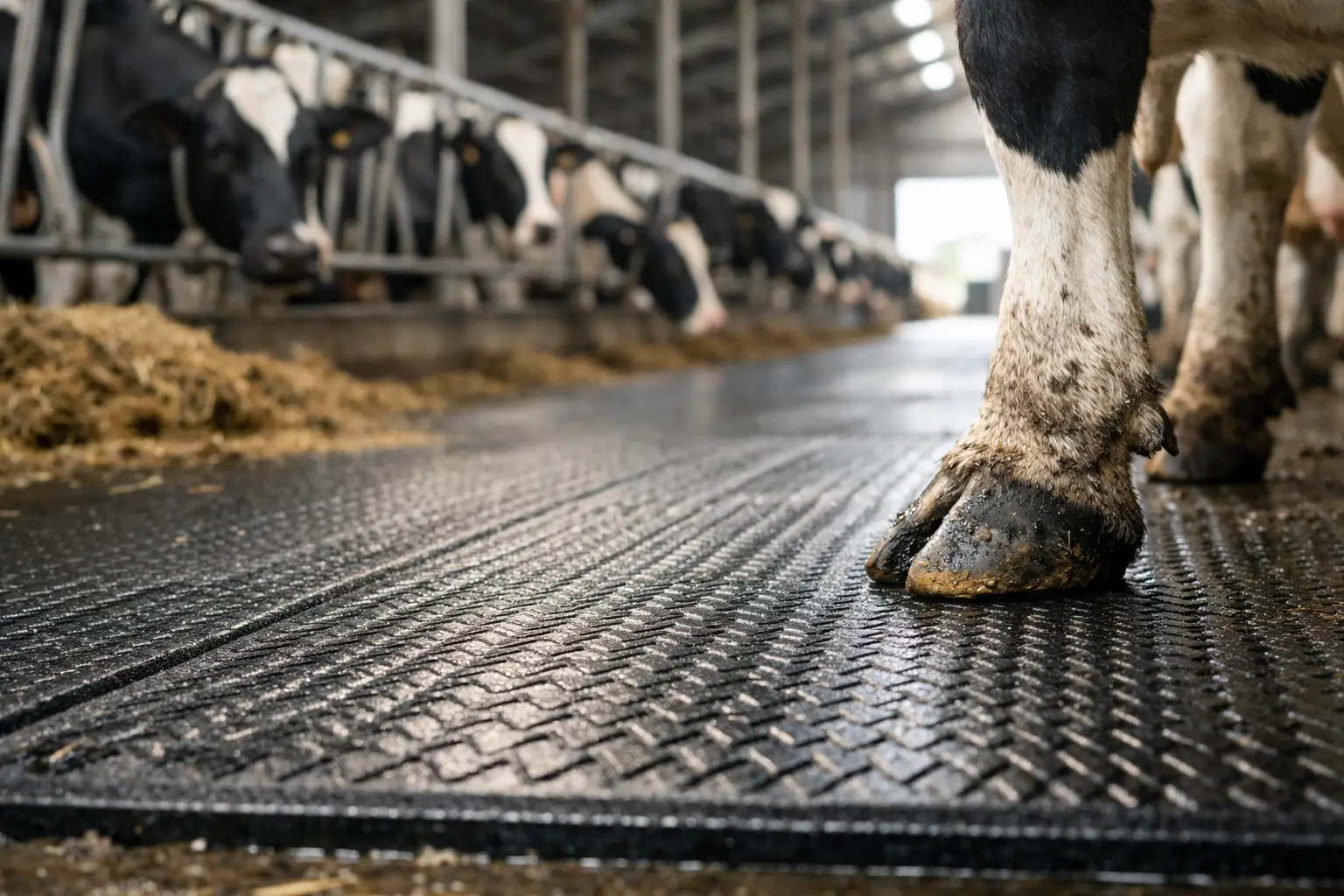
A cow hesitating at the dairy entrance, slipping around a wet corner or taking short, careful steps is giving you useful information. The problem may not be the cow. Cow shed flooring has to cope with moisture, manure, feed, hoof traffic and machinery every day, while still giving stock the confidence to move freely.
Hard concrete alone is not a flooring solution. It is only the starting point. The right surface supports hoof health, reduces slips and helps keep the shed moving when conditions are at their toughest.
What good cow shed flooring needs to do
Farm flooring is expected to perform several jobs at once. It must provide reliable grip without being so aggressive that it wears hooves excessively. It needs to shed water and effluent, tolerate frequent cleaning and stand up to repeated loading from cows, people, scrapers and vehicles.
That balance matters. A surface can look tidy and still be dangerous when wet. Likewise, a heavily roughened surface may give traction but create unnecessary hoof wear if the pattern, depth or location is wrong. Flooring should be assessed according to how animals actually move through the shed, not just how the concrete looks on a dry day.
In practical terms, the highest-risk areas are usually where cows turn, bunch up, stop or transition between surfaces. Think dairy entries and exits, collecting yards, feed alleys, holding areas, wash-down zones and ramps. These are the places where traction has the greatest direct impact on animal confidence and worker safety.
Start with the flow of stock and water
Before choosing a concrete treatment, look at the shed as a working system. Watch stock movement during milking. Are cows reluctant to enter? Do they spread their legs at a particular corner? Is there a spot that remains wet after wash-down? Are animals being pushed through a narrow area where they cannot choose their footing?
These observations help identify whether the issue is surface grip, drainage, layout or a combination of all three. Grooving cannot solve poor drainage on its own, and a drain will not fix polished, worn concrete where cattle are turning sharply. The most durable outcome comes from addressing the cause rather than treating the visible symptom.
Floor falls should direct liquid away without creating an awkward slope for cattle. Sudden changes in level, uneven repairs and low spots that hold slurry can all undermine an otherwise good surface. Where a shed has developed settlement or damaged channels, concrete repairs may need to come before surface texturing.
The right texture depends on the area
There is no single finish that suits every square metre. Straight-line grooving can work well in areas where cattle travel in a consistent direction, helping hooves find purchase as animals move forward. Cross-grooving or carefully planned patterns may be more appropriate where turning and sideways forces are common.
Bush hammering produces a more uniformly textured concrete surface and can be useful where broad, consistent grip is needed. It is often considered for yards, feed areas and high-traffic zones, subject to the condition and thickness of the existing slab.
The key is controlled treatment. Groove spacing, depth, direction and the final texture all affect how the floor performs. Over-cutting concrete, using an unsuitable pattern or treating damaged slabs without repair can lead to problems that cost more to correct later.
When existing concrete needs attention
Many flooring problems develop gradually. Repeated scraping and wash-down can smooth the concrete surface. Hoof traffic rounds off earlier grooves. Small chips become broken edges, while cracking allows water and effluent into the slab. By the time cows are regularly slipping, the floor may have been deteriorating for years.
A close inspection should check for worn traction, polished sections, cracking, spalling, loose concrete, failed joints and drainage defects. It should also consider where surfaces meet. A safe concrete floor can become a risk at the transition to rubber, grating, old yard concrete or a ramp if there is a lip, gap or sudden loss of grip.
Repairs are not cosmetic work in a livestock shed. A rough patch with proud edges can catch a hoof. A poorly finished repair can become slick faster than the surrounding slab. Repairs need to restore a sound, level base that can be matched to the required traction finish.
If the concrete is structurally sound but too smooth, grooving or bush hammering is often a practical way to extend its working life. If it is heavily broken, thin, unstable or badly drained, surface treatment alone may not be the right investment. An honest assessment should explain where treatment will deliver value and where more substantial remedial work is needed.
Why traction protects more than hooves
Lameness has obvious welfare consequences, but its effect runs through the whole operation. A cow that is uncomfortable on her feet is less willing to walk, stand, feed or present calmly for milking. That can mean disrupted routines, treatment costs, reduced production and extra pressure on staff.
Slip-resistant flooring supports safer movement, but it also improves behaviour. Cows that trust the surface are more likely to walk with a normal stride and move through the dairy without hesitation. This helps reduce bunching at entries and exits, where pressure from other animals can turn a small slip into an injury.
Workers benefit as well. The same wet concrete that challenges a cow can be hazardous for anyone moving hoses, opening gates, drafting stock or cleaning down. Better grip in high-use areas is a practical safety measure for everyone using the shed.
Plan the work around farm operations
Concrete work in a working dairy or livestock shed has to be organised around stock, not the other way around. Access, cleaning requirements, curing times and the location of treated areas all need consideration before work begins.
For many farms, after-hours or night concrete grooving is the sensible option. It can reduce disruption to milking and keep key routes available when they are needed. The right schedule depends on the shed layout, herd numbers, weather and whether repairs are required before the surface can be treated.
Preparation is equally important. Floors may need thorough cleaning so the concrete condition can be properly assessed and cutting equipment can work accurately. Stock should be kept clear of the work zone, and a plan is needed for safe movement around any temporary restrictions.
A specialist contractor should be able to discuss the traffic pattern, slope, drainage, concrete condition and your daily routine before recommending a finish. At Happy Hoof, that farm-first approach keeps the focus on what matters: a surface that works under real livestock pressure, not just one that looks newly finished.
Maintain the surface you have invested in
Even well-treated concrete needs regular checks. Keep drainage channels clear, repair damaged sections early and watch for areas that are becoming polished again. Scraping equipment should be maintained and operated in a way that does not unnecessarily damage groove edges or create uneven wear.
Walk the shed after wash-down and in wet weather, not only when it is dry. Look for standing water, manure build-up, changes in cow behaviour and places where people naturally alter their stride. Those signs can reveal a developing flooring issue before it becomes a lameness or accident problem.
Cow shed flooring is part of daily herd management. When the surface gives animals secure footing, it supports calmer movement, healthier hooves and a safer workplace. The best time to address a suspect area is when it first starts changing how your stock move through it.