When a yard goes slick after wash-down or a race polishes up under constant stock movement, the problem is not just inconvenience. Bush hammering farm concrete surfaces can make the difference between confident footing and costly slips, bruising and lameness. On a working farm, that surface texture affects livestock flow, staff safety and how well concrete holds up under daily pressure.
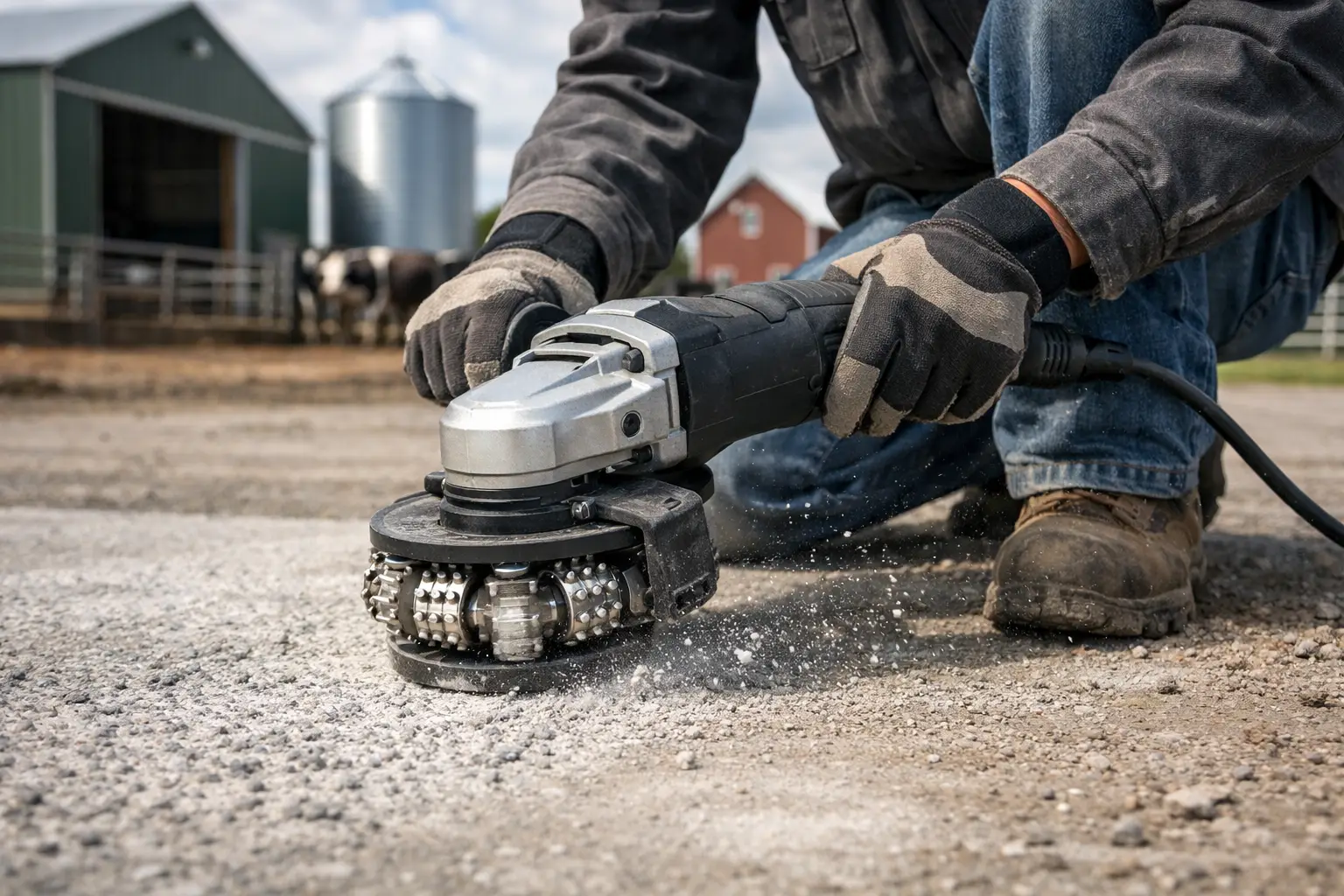
Bush hammering is a mechanical texturing method that roughens hardened concrete to improve grip. Instead of cutting channels into the slab, it works by impacting the surface with a specialised bush hammer head, creating a uniform, pitted finish. On farms, that matters because smooth concrete rarely stays safe for long once it is exposed to manure, water, feed residue and heavy hoof traffic.
Why bush hammering farm concrete surfaces matters
Concrete on farms has a hard life. Cows bunch at the dairy entrance, sheep move quickly through yards, beef animals pivot under pressure, and machinery adds its own wear. Over time, even concrete that started with reasonable grip can become polished. The result is a surface that looks sound but performs badly when it is wet.
That loss of traction shows up in practical ways. Animals shorten their stride, hesitate at corners, and carry more tension through the yard. Staff notice near-slips, awkward handling and extra time getting stock where they need to go. Those delays and injuries cost money, but they also point to a surface that is no longer doing its job.
Bush hammering restores texture across the concrete face rather than just adding isolated grip points. That can make it a strong option where broad, consistent traction is the priority, especially in areas where livestock need to walk naturally rather than step across grooves.
Where bush hammering works best on farms
Not every farm area needs the same finish. Bush hammering is often well suited to collecting yards, feed pads, holding areas, walkways and other high-traffic zones where surface polish has become the main issue. It can also work well on concrete around sheds and service areas where workers and livestock both need dependable footing.
The key is matching the treatment to how that space is actually used. A straight walkway with steady livestock movement has different demands from a turning yard or an area with regular scraping and wash-down. In some cases, bush hammering gives the right balance of traction and surface coverage. In others, grooving may still be the better fit, or a combination of treatments may deliver the best result.
That is why a site-specific assessment matters. Slope, drainage, stock type, traffic direction and concrete condition all affect what surface profile will perform well over time.
Bush hammering versus grooving
Farm owners often ask whether bush hammering is better than grooving. The honest answer is that it depends on the location and the problem you are trying to solve.
Grooving cuts defined channels into the slab, which can be highly effective for drainage and directional grip. It is a proven option in many dairies, races and shed areas. Bush hammering, by comparison, textures the whole surface and can provide a more even roughness underfoot. That broader texture can be useful where concrete has become uniformly smooth and stock need reliable grip across the full area rather than along set lines.
There are trade-offs. Bush hammered finishes can hold more surface residue if drainage is poor, so the surrounding layout still matters. Grooving can offer stronger water management in some settings, but if groove spacing or depth is not matched properly to stock movement, it may not deliver the desired result. Good concrete safety work is rarely about one method being right everywhere. It is about choosing the right finish for the way the farm operates.
What makes a bush hammered surface effective
A rough surface on its own is not enough. The texture needs to improve traction without being unnecessarily aggressive. For livestock, especially dairy cows walking the same routes every day, the aim is confident movement and hoof stability, not a harsh surface that creates avoidable wear.
That balance comes from controlled application. A proper bush hammered finish should be even, durable and appropriate to the stock and environment. If the treatment is too light, the concrete may still become slippery quickly. If it is too severe, cleaning and comfort can become issues. Surface preparation, machine selection and operator experience all play a part.
The age and strength of the existing slab matter as well. Older concrete may have weak patches, repairs or surface scaling that need attention first. If those issues are ignored, the finished result may be inconsistent and the surface may continue to deteriorate. In practical terms, concrete texture and concrete condition should always be considered together.
The farm outcomes that matter most
On-farm concrete work should earn its place by improving day-to-day performance. Bush hammering can help reduce slips in wet areas, but the real value sits in what follows from that.
Animals that feel secure on their feet move more freely. That can reduce bunching, stress and awkward loading on joints and hooves. In dairy systems, better footing supports smoother movement to and from the shed. In beef and sheep operations, it can improve control through yards and reduce the risk of panic when animals lose confidence on concrete.
There is also a staff safety benefit. Wet concrete in a livestock environment is dangerous for people as well as animals. A more secure surface helps lower the risk of falls during wash-down, drafting, feeding and general yard work. For many farms, that matters just as much as stock flow.
Over time, there is a durability argument too. Concrete that functions properly tends to suffer less from the secondary damage caused by skidding, impact and poor water behaviour. Bush hammering does not fix every structural issue, but as part of a broader surface maintenance plan, it can help extend the useful life of working concrete.
When bush hammering is not the first answer
A practical contractor should say this clearly: some slippery surfaces need more than texturing. If water is pooling because the fall is wrong, or if manure build-up is constant because drainage is poor, surface treatment alone will not solve the underlying problem. The same applies where concrete is cracked, spalling or patched badly.
In those cases, the best result may involve repairs, drainage correction or a different surface treatment entirely. Bush hammering is a strong tool, but it is still one part of a bigger farm concrete strategy. The goal is not to sell a process. The goal is to create a safer, longer-lasting surface that suits the farm.
That is why inspection matters before any work starts. Looking at wear patterns, runoff, animal movement and the age of the slab gives a clearer view of what will perform well over the long haul.
Choosing a contractor for bush hammering farm concrete surfaces
Farm concrete is not the same as commercial footpaths or residential slabs. Livestock pressure, wash-down cycles, manure acids and machinery all change the brief. If you are considering bush hammering farm concrete surfaces, choose a contractor who understands those farm-specific demands and can explain why a certain finish is right for a dairy yard, feed pad or race.
You want more than a machine operator. You want someone who can assess traction, drainage and hoof impact together. The best advice is usually straightforward. What surface is failing, why is it failing, what finish will fix it, and what needs attention around it so the result lasts.
That practical approach is what matters most. A farm does not benefit from decorative concrete talk. It benefits from a surface that stays safer in wet conditions, stands up to stock traffic and supports better hoof outcomes over time. That is where a specialist service makes the difference, and it is why companies like Happy Hoof focus on flooring as a farm performance issue, not just a construction job.
If your concrete has gone smooth, slippery or unpredictable under stock, it is worth acting before it becomes normal. Good footing does more than prevent falls – it helps the whole farm run with less stress, less risk and better confidence every day.