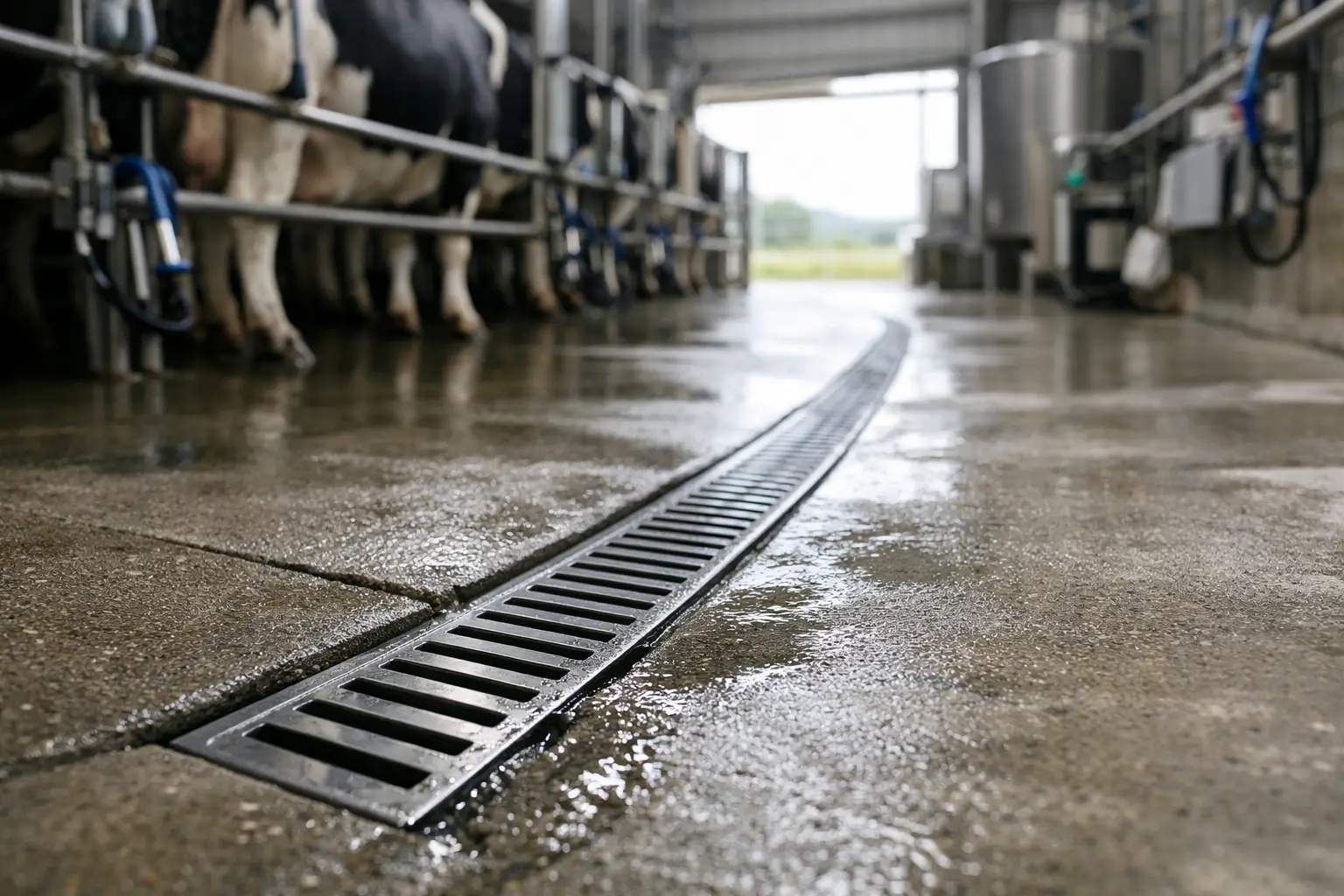
When a dairy shed holds water after wash-down, cows feel it before anyone else does. Wet patches, slurry build-up and uneven footing quickly turn a routine walk into a slipping risk. That is why dairy shed drainage and concrete slope matter so much – not as a finishing detail, but as part of how safely your shed runs every day.
Good drainage is about flow, traction and durability working together. If the slab falls the wrong way, or not enough, effluent and wash water sit where cows stand and turn. If the surface is smooth, even a well-sloped floor can still become slick. And if the concrete is already worn, small drainage faults often become bigger operational problems during peak use.
Why dairy shed drainage and concrete slope matter
A dairy shed floor does more than carry stock and equipment. It has to shed water fast, support confident animal movement, and stand up to constant traffic, cleaning and manure exposure. When one part of that system is off, the rest comes under pressure.
Poor drainage often shows up as standing water near bails, ponding in return lanes, or slurry collecting around low spots. That affects more than hygiene. Cows hesitate on wet concrete, especially around corners, entries and exits. Repeated slipping can lead to strain, hoof wear and lameness issues that cost far more than the original concrete fix.
For farm teams, drainage faults also slow wash-down and make sheds harder to keep clean. Water that should move to a drain ends up spread across working areas instead. That means more time pushing water, more contamination in the wrong places and more wear on the surface as moisture sits where it should not.
What a workable concrete slope looks like
There is no single slope that suits every dairy shed. The right fall depends on shed layout, drain placement, cow traffic, wash-down volume and how the surface is used through the day. A collecting yard has different demands from a milking platform or a feed area.
What matters is controlled movement of water without creating footing problems. Too little slope and water ponds. Too much slope and cows can lose confidence, especially when the surface is wet or they are turning. On heavily trafficked areas, aggressive fall can also increase stress on hooves and legs over time.
In practical terms, the best results come from balancing drainage efficiency with animal comfort. A floor should move water to drains consistently, but still feel stable under stock. That is where layout, finishing method and surface texture all need to be considered together rather than as separate jobs.
Slope alone will not fix a slippery shed
This is one of the most common mistakes on farm concrete. A slab may have enough fall on paper, but if the finish is worn smooth or the drainage path is interrupted, performance still drops away.
Surface texture plays a major role. Grooving or other slip-resistant treatments help cows hold their footing while water moves off the floor. Without that grip, a wet surface remains risky, even if drainage is technically adequate. The concrete has to do both jobs – drain well and provide traction.
The wrong fall creates hidden stress points
Bad slope does not always announce itself with a large puddle. Sometimes the issue is subtle. Water tracks across cow lines instead of away from them. A low pocket forms where cows queue. A turn stays damp longer than the rest of the shed.
Those small faults matter because they line up with high-pressure movement areas. That is where slips, hesitation and hoof stress often begin. Over months, not days, those issues start showing up in behaviour, cleaning time and surface wear.
Common drainage problems in dairy sheds
Most drainage failures are not caused by one dramatic defect. They usually come from a combination of poor original falls, surface wear, patch repairs that changed levels, or drains that no longer suit how the shed operates.
One common problem is ponding around existing drains. That often means the surrounding slab has settled, worn unevenly or was never formed correctly in the first place. Another is crossfall running against cow movement, which can make footing feel awkward and less secure. In some sheds, water has no clear path at all, so wash-down simply spreads contamination before eventually finding a low point.
Repairs can also create trouble if they are done without considering the full floor. A patched section may be harder, smoother or slightly higher than the old slab around it. That sounds minor, but it can interrupt flow and create a fresh slipping point in an otherwise serviceable area.
How to assess your dairy shed drainage and concrete slope
A proper assessment starts with watching what happens during real use, not just looking at the shed when it is dry. Wash-down tells the truth quickly. You can see where water moves well, where it slows, and where it sits.
Look closely at entry and exit points, corners, bail areas, crossings and any section where cows bunch up. If water remains after surrounding areas have cleared, that is usually a sign of low spots or poor falls. If cows shorten stride, shift weight or hesitate in certain places, footing may be part of the problem even when ponding looks minor.
The condition of the concrete matters just as much as the shape. Worn smooth surfaces, polished traffic lines and broken edges near drains all reduce performance. A shed floor should be assessed as a working system – slope, drainage, texture and wear all influence one another.
Signs your floor needs attention
If you are seeing regular ponding, slippery patches after cleaning, manure collecting where it should wash clear, or cows losing confidence in repeat locations, the concrete is telling you something. Likewise, if cleaning crews have to manually shift water every wash-down, the floor is no longer doing its share of the work.
These are not just maintenance annoyances. They are early warnings that safety, hygiene and hoof health are being compromised.
Fixing drainage without creating new problems
The right fix depends on what is actually wrong. In some cases, the answer is targeted concrete cutting, regrading or localised repair to restore flow paths. In others, the slope may be acceptable but the worn surface needs traction put back into it through grooving or bush hammering.
This is where experience matters. Overcorrecting a fall can make stock movement worse. Adding texture without addressing a true low spot only improves part of the issue. A long-lasting result usually comes from treating drainage and slip resistance as one job, not two separate decisions.
For working farms, timing matters too. Concrete work needs to fit around operations, and disruption has to be controlled. That is why service planning is just as important as the repair itself. A specialist who understands livestock traffic and milking routines can usually recommend options that improve the floor without creating avoidable downtime.
New builds versus existing sheds
On a new shed, drainage and slope should be planned early, before the slab is poured and finished. It is far easier to build proper falls into the layout than to correct poor levels later. Drain positions, traffic direction and wash-down routines should all be considered before final concrete work starts.
On an existing shed, the focus shifts to diagnosis and practical improvement. Some older floors can perform very well with the right remedial work. Others need more substantial correction if levels are badly off or the slab has deteriorated beyond surface treatment alone.
Either way, the goal is the same – reliable drainage, safer footing and a floor that supports cow flow rather than fighting it.
Getting the balance right for long-term performance
A good dairy shed floor is not the steepest, roughest or hardest-looking one. It is the one that keeps water moving, gives cows secure footing and holds up under pressure year after year. That balance is where real value sits.
At Happy Hoof, we see the best results when slope, drainage and surface finish are treated as part of farm performance, not just concrete construction. A shed that drains properly is easier to clean, safer to work in and better on hooves. That pays back in fewer slips, less stress on stock and a more dependable day on farm.
If your shed always seems to have the same wet spots, the answer is rarely more hosing or more pushing water around. Usually, the floor is asking for a better fall, better texture, or both. Getting that right is one of the simplest ways to make the whole shed work better.