When cows start hesitating at the entry, slipping near the pit, or shortening their stride on the way through the shed, the concrete is usually telling you something first. If you need to fix worn dairy shed concrete, the goal is not to make it look tidy. The goal is to restore grip, support hoof health, and keep the shed working safely under constant traffic, moisture and effluent.
Worn concrete in a dairy shed is not just a maintenance issue. It affects cow flow, staff safety, cleaning efficiency and lameness risk. Once the surface has polished smooth, chipped out, ponded water, or lost its original profile, every milking puts more stress on animals and more pressure on the operation.
What worn concrete looks like in a working dairy shed
Most farmers know the problem when they see it, but the cause is not always as obvious. Some surfaces wear smooth over time from hoof traffic, washdown and scraping. Others break down in patches where acids, effluent and constant moisture have attacked the surface. In high-load areas, you might see scaling, shallow spalling, exposed aggregate, or uneven wear where cows turn, bunch up or stand for longer periods.
The biggest red flag is loss of traction. Concrete does not need to be falling apart to be a problem. A surface can still look structurally sound and be unsafe because it has become too smooth for wet dairy conditions. That is often where hoof wear, slips and cow reluctance begin.
Drainage also matters. If the floor has worn low spots or lost its fall, water and effluent sit where they should be moving away. That leaves cattle walking through wet areas for longer, softens hooves, and makes already slick concrete even harder to manage.
Fix worn dairy shed concrete by matching the repair to the problem
There is no single repair that suits every shed. The right fix depends on whether the issue is traction, surface damage, drainage, or a combination of all three.
If the slab is fundamentally sound but polished smooth, surface texturing is often the most effective answer. Grooving or bush hammering can restore grip without the cost and downtime of full replacement. This suits many sheds where the concrete still has structural integrity but has simply lost the texture needed for safe livestock movement.
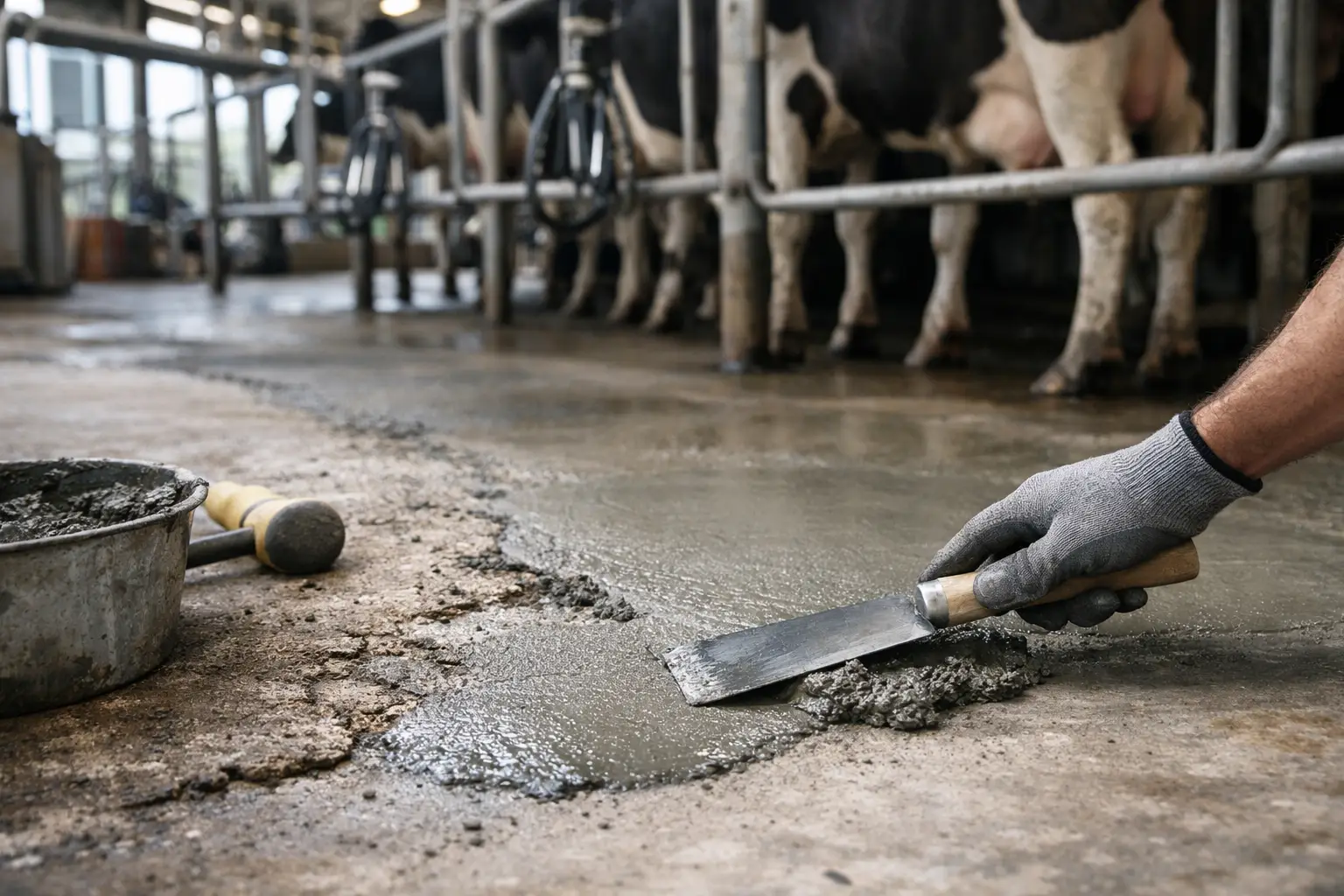
If there is localised damage, patch repairs may be enough. That can include repairing spalled sections, rebuilding worn edges, or addressing holes and broken areas around high-stress points. The repair material needs to suit the environment. A dairy shed is not a standard domestic slab. It deals with heavy point loading, frequent washdown, manure acids and nonstop movement.
Where the wear is deeper and the slab profile has been compromised, resurfacing may be the better option. A bonded topping or specialist overlay can restore levels and give a fresh working surface, but only if the existing base is stable and properly prepared. If the old concrete is weak, contaminated or delaminating, covering over it rarely lasts.
And sometimes the answer is more direct. If the slab has widespread structural cracking, major movement, poor original installation or long-term drainage failure, replacement can be more cost-effective than repeated repairs. That is not what anyone wants to hear, but it is better than spending good money on a surface that cannot hold up.
Why texture matters more than appearance
In farm concrete, grip is performance. A dairy shed floor should give cows confident footing while still allowing effective washdown and manure movement. Too smooth, and you get slips. Too aggressive, and you can create unnecessary hoof wear or cleaning issues.
That balance is why specialist concrete treatment matters. The aim is not roughness for its own sake. It is a surface profile that suits cattle, moisture levels and traffic patterns in that particular shed. Entry lanes, backing gates, holding areas and the pit approach all wear differently. One texture across the entire site is not always the best result.
Grooving is often used where consistent traction is needed in cow traffic areas. Bush hammering can also be effective for restoring surface grip, especially where a broader textured finish is required. The right method depends on concrete condition, the type of wear, and how the area is used day to day.
Common mistakes when repairing dairy shed concrete
The most common mistake is treating the shed like any other concrete job. Standard repair methods that work in a warehouse or driveway do not always survive in a dairy environment. Wet traffic, effluent, hoof impact and cleaning routines create a harsher operating condition.
Another mistake is fixing only the visible damage. If concrete has worn because water sits in one area, because cows are turning too tightly, or because the original finish was unsuitable, a patch alone will not solve the underlying issue. The same goes for surface slipperiness. Washing the floor more often does not restore lost traction.
Poor timing can also turn a good repair into a frustrating one. Concrete work needs to fit around farm operations, curing requirements and access needs. In active sheds, that often means planning work carefully or carrying it out after hours to reduce disruption. A repair is only useful if it can be completed to the right standard without creating bigger operational headaches.
How to assess whether repair or replacement makes sense
A proper assessment starts with three questions. Is the concrete structurally sound? Has the surface simply lost grip, or is the slab breaking down? And is drainage still doing its job?
If the answers point to a sound slab with worn texture, repair is usually worthwhile. Restoring grip through specialist surface treatment can extend the life of the floor and improve safety quickly.
If there are isolated failures in an otherwise solid slab, targeted repair can be the smart move. You deal with the damaged sections, restore usability and avoid the cost of full reconstruction.
If wear is widespread, the slab has lost level, and drainage is poor across the board, it becomes a bigger conversation. At that point, replacement or major resurfacing may offer better value over time. It depends on age, existing thickness, reinforcement, and how much traffic the shed sees.
That is where an experienced inspection matters. Looking at the whole working environment – not just the worst patch on the floor – leads to better decisions.
Fix worn dairy shed concrete without creating new problems
The best repair is one that improves traction and durability without making cleaning, cow flow or hoof wear worse. That means thinking beyond the concrete itself.
Surface finish should suit the livestock. Drainage should support cleaner, drier conditions. Edges and transitions should be safe for cows moving at pace. High-pressure areas should be strong enough for repeated loading. Good repair work also needs to tie into the rest of the shed, rather than leaving uneven joins or new weak points.
For many farms, maintenance should also be viewed as staged work. You may not need to tackle the whole shed at once. If one zone is high risk – the entry, exit, collecting yard connection or around the pit – fixing that area first can reduce immediate safety issues and spread cost over time.
That practical approach is often the difference between reactive spending and long-term surface management.
What a good result looks like on farm
A good result is not just concrete that has been repaired. It is cows walking through with more confidence, fewer slips in wet conditions, cleaner drainage lines and less day-to-day worry about problem areas. Staff notice it as well. The shed feels safer underfoot, and the flow of milking improves because cattle are not second-guessing where they place each step.
Over time, better flooring supports more than safety. It can help reduce avoidable hoof stress, lower the risk of lameness linked to poor traction, and protect the value of the shed itself. That is why specialist repair work matters. You are not just restoring a slab. You are protecting a working part of the farm that affects productivity every day.
If your shed floor is wearing smooth, breaking down in patches, or holding water where it should not, do not wait for it to become a bigger animal welfare and safety issue. Getting the surface assessed early gives you more repair options, less disruption, and a better chance of keeping the concrete in service for longer. For farms that rely on the shed every single day, that is money well spent.