
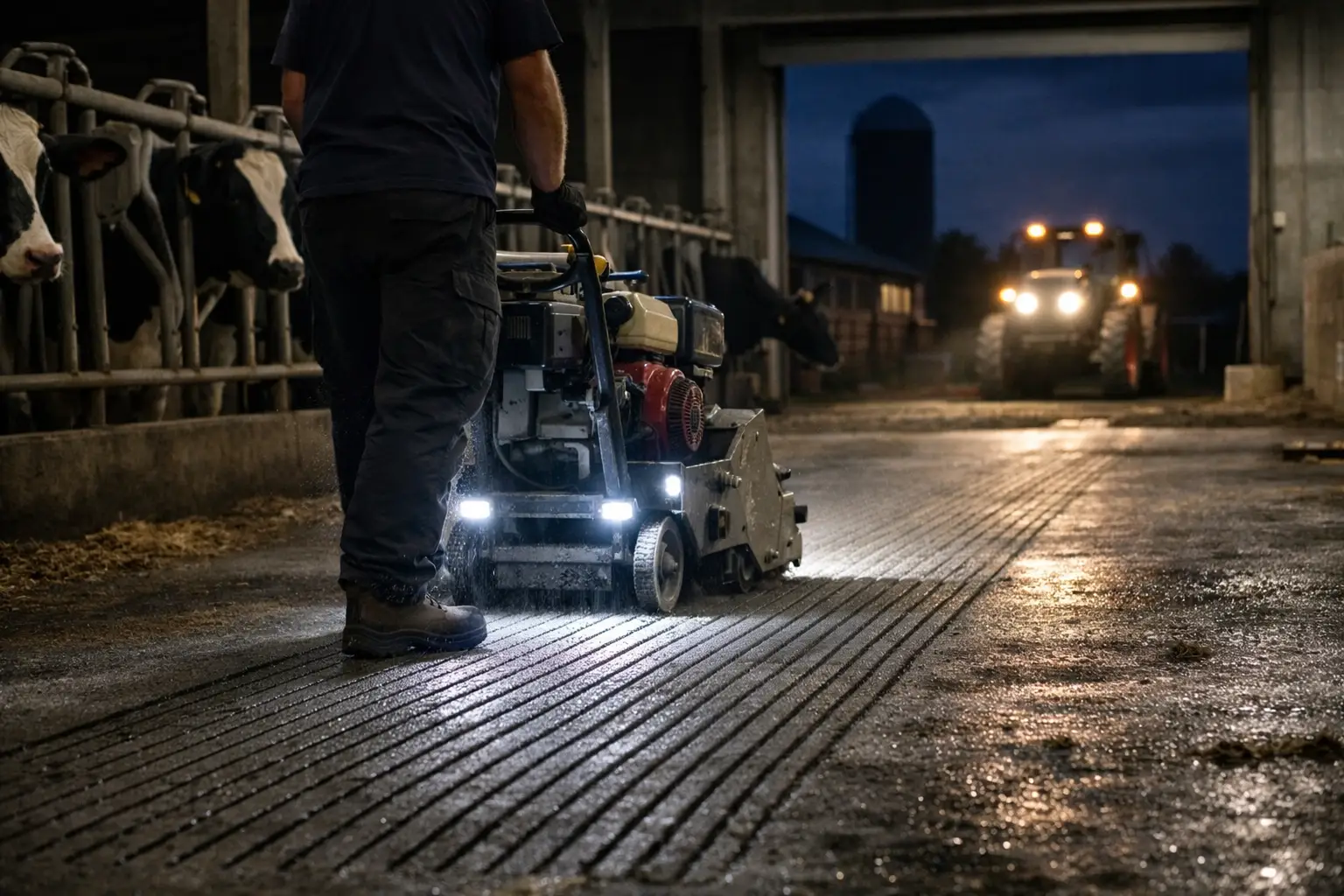
When a dairy shed, feed pad or yard is already flat out during the day, shutting it down for surface work can create more problems than it solves. That is why night concrete grooving for farms is often the smartest option. It gives you the traction upgrade you need without pushing stock, staff and machinery through unnecessary disruption during working hours.
On a busy farm, timing matters almost as much as the grooving itself. Cows still need to move, milking still needs to happen, and slippery concrete does not wait for a convenient week in the calendar. After-hours grooving allows essential concrete work to be done when traffic is lower, which helps protect livestock flow, maintain productivity and reduce the stress that comes with closing off key areas during the day.
Why night concrete grooving for farms makes practical sense
Concrete surfaces on farms take a hiding. They deal with constant hoof traffic, wet conditions, effluent, feed residue and machinery movement. Over time, even a well-built surface can polish up and lose grip. Once that happens, slips become more common, cattle start moving cautiously, and hoof strain can increase.
Grooving restores traction by cutting a patterned texture into the concrete. The aim is not to make the floor rough for the sake of it. The aim is controlled grip – enough to improve footing, drainage movement and confidence underfoot, without creating an aggressive surface that contributes to wear or discomfort.
Doing that work at night brings a clear operational advantage. In many farm setups, the busiest concrete areas are in use from early morning through to late afternoon. If those zones are taken offline in the middle of the day, it can interrupt milking routines, feed delivery, stock movement and staff efficiency. Night work helps avoid that bottleneck.
For farms with tight routines or limited spare yard space, this can be the difference between a manageable job and a major headache.
The real farm benefits go beyond convenience
The obvious benefit of after-hours work is less disruption, but that is only part of the picture. Good night grooving work supports day-to-day farm performance in ways that show up well after the crew has packed up.
Safer footing is the first and most immediate gain. When stock have reliable traction, they move more naturally. You tend to see less hesitation on corners, less bunching at entries and exits, and fewer slips in wet zones. That matters for animal welfare, but it also matters for throughput. Nervous cattle slow everything down.
Hoof health is another key reason farms invest in this work. Concrete that is too smooth can lead to unstable movement and extra strain, especially where cows are turning, queuing or standing for long periods. Concrete that is damaged or poorly textured can create a different problem by increasing wear. Proper grooving sits in the middle – enough grip to support stable movement, done with the right spacing and depth for livestock conditions.
There is also a staff safety factor. Slippery yards and shed approaches are not only hard on animals. They create risk for anyone walking those surfaces, especially in wet weather or around wash-down areas. If one concrete treatment can lower the chance of both livestock slips and worker falls, it earns its keep quickly.
Where night grooving usually delivers the most value
Not every square metre on a farm needs the same treatment. The best results come from identifying the high-pressure areas where traction matters most.
Entry and exit lanes around the dairy are common starting points because stock movement is concentrated and repetitive. Holding yards, return lanes, feed pads and collecting areas are also frequent problem spots. In beef and sheep operations, it may be loading areas, raceways or concrete around troughs and covered shelters.
Some farms need a full-surface approach. Others only need targeted grooving where slips are happening or where the concrete has become polished. That is why inspection matters. A surface can look serviceable from a distance and still be causing low-level issues in traction, drainage or movement patterns.
The right scope depends on stock type, traffic volume, moisture levels, slope and the age of the slab. There is no one-pattern-fits-all answer on working farms.
What makes a good grooving job on livestock concrete
A proper farm grooving job is not just about cutting lines into concrete. It needs to suit the way animals move and the way the site operates.
Spacing, depth and consistency all matter. If grooves are too shallow, the traction benefit can be limited. If they are too aggressive or irregular, the surface can become harder on hooves and more difficult to keep clean. The finish has to work with drainage rather than against it, and it has to hold up under regular use.
This is where specialist agricultural experience counts. Livestock concrete is different from general commercial or domestic concrete work. A dairy yard has different demands from a beef feed area, and a sheep handling space will behave differently again. Surface treatment needs to reflect that.
Noise, lighting and access also need to be managed properly during night works. Good planning keeps the job controlled and efficient, rather than turning after-hours access into a compromise.
Night concrete grooving for farms is not always the answer
Night work is a strong option, but it is not automatically the best fit for every site. If a farm has a layout that allows sections to be isolated during the day without affecting movement, daylight work may be just as practical. If lighting access is poor or if stock housing is too close to active work zones, the timing may need more thought.
Weather can also affect scheduling. Wet conditions, wash-down timing and existing slab condition all play a part in how smoothly the job can be completed. On some sites, a staged program over several nights is the most sensible approach. On others, one well-planned session gets it done.
That is why a consultative approach matters. The goal is not simply to book a night crew. The goal is to improve safety and performance while fitting around the way your farm actually runs.
How to prepare for after-hours grooving work
Preparation on the farm side is usually straightforward, but it helps the job run cleaner and faster. Access needs to be clear, the treatment area should be identified in advance, and stock movement plans need to be locked in. If there are wash-down routines, feed deliveries or morning starts that affect the work zone, those should be mapped out early.
It is also worth discussing what success looks like before the work begins. Are you targeting a known slip zone? Trying to improve cow flow through a holding yard? Addressing concrete that has become polished over time? Clear goals make it easier to recommend the right treatment and prioritise the right areas.
For many farms, this planning is exactly why specialist contractors are worth bringing in. You are not just paying for someone to cut grooves. You are paying for a safer surface with minimal interference to the rest of the operation.
The long-term value of getting timing and technique right
Concrete work can be easy to put off because the problem often builds gradually. Cows start slowing down a bit. One corner gets slick in the wash. Staff know which patch to watch when it rains. Over time, those small signs add up to a flooring issue that affects movement, confidence and risk across the site.
Addressing that with night works is a practical decision because it respects the reality of farm schedules. It lets you improve the surface without sacrificing a full day of access in the areas that matter most. When the grooving is done well, the payoff is felt in safer stock handling, better underfoot confidence and a surface that works harder for the farm.
At Happy Hoof, that is the point of specialised concrete work – not just to alter the slab, but to improve how the whole farm runs on top of it.
If your concrete is getting slick and daytime shutdowns are not realistic, night work can be the right move. A well-timed grooving job often solves more than one problem at once, and the best time to fix traction is before a slip turns into a setback.