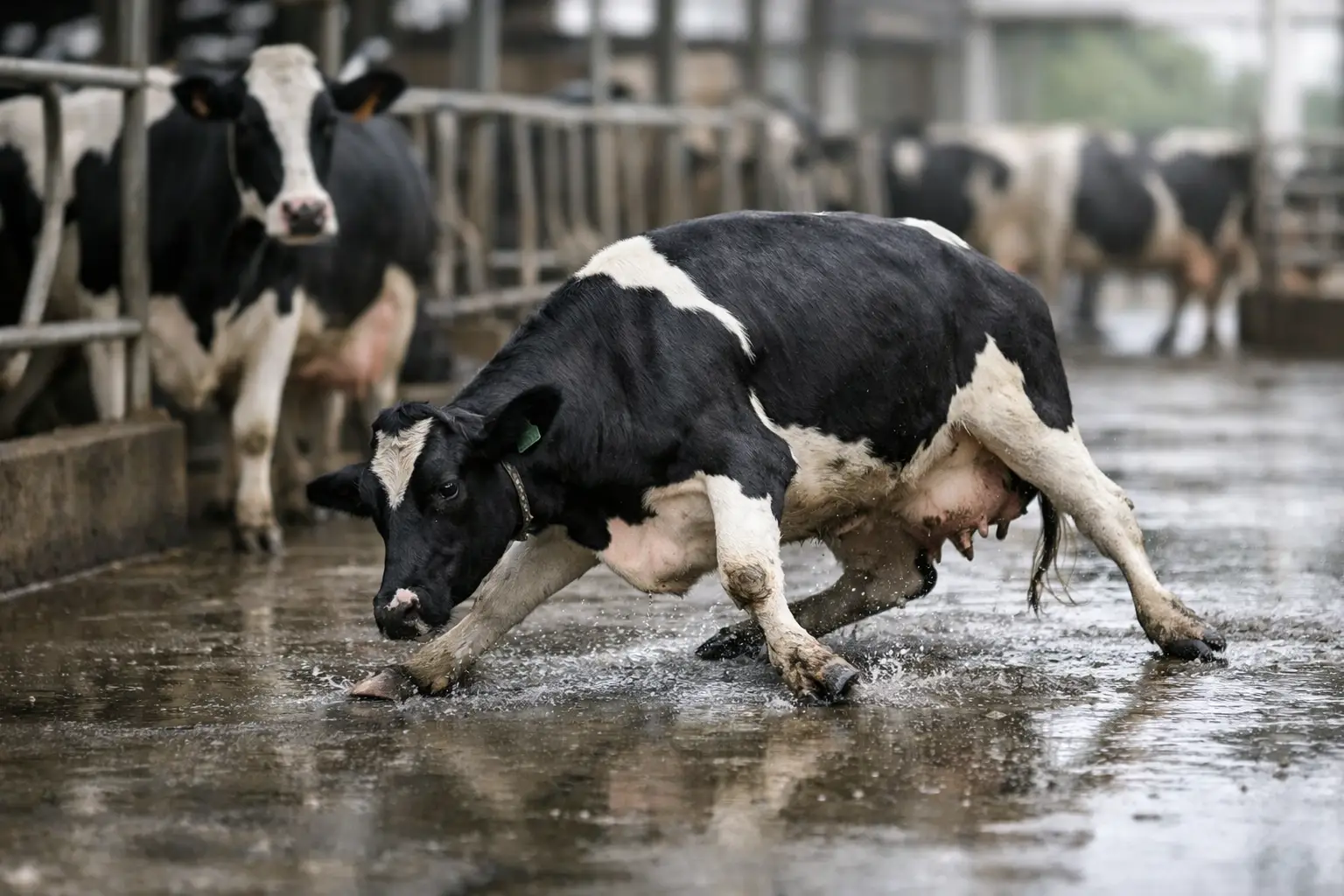
When cows start hesitating at the dairy entrance, bunching up in a race, or taking short careful steps across the yard, the concrete is usually telling you something. If you are asking how to stop cows slipping on concrete, the answer is rarely one quick fix. Most slip problems come from a mix of smooth surfaces, poor drainage, manure build-up, heavy traffic and worn concrete that no longer gives the hoof enough grip.
A slippery yard is not just a nuisance. It affects cow flow, increases stress, raises the risk of splits and falls, and can contribute to bruising, white line damage and lameness. It also puts staff at risk, especially in wet conditions or during busy milking periods when movement needs to be steady and predictable.
Why cows slip on concrete in the first place
Concrete becomes dangerous for livestock when the hoof cannot bite into the surface. Cows do not walk like people. They carry significant weight, turn sharply in confined areas and often move over wet, dirty ground. Even a concrete slab that looks sound can be too polished or too worn to provide reliable traction.
In most farm settings, the main issue is not concrete itself. It is the condition of the concrete. Years of hoof traffic, scraper use, washdown, feed spill and weather exposure can wear the top surface smooth. Once that texture is gone, water and effluent sit on the surface instead of draining away, and every step becomes less secure.
The layout matters as well. Steeper slopes, tight corners, abrupt transitions and bottlenecks all increase the chance of slipping. A cow walking straight on a mildly worn surface may cope well enough. The same cow turning under pressure on a wet incline is far more likely to lose footing.
How to stop cows slipping on concrete where it matters most
The first step is to identify the high-risk zones. These are usually dairy entries and exits, collecting yards, feed pads, races, loading areas and any spot where cows turn, queue or change pace. If one area is consistently causing hesitation or falls, that is where traction work should start.
Improving grip means restoring or creating surface texture that suits livestock movement. For farm concrete, the most effective options are usually professional grooving or bush hammering. Both are designed to increase hoof purchase, but they suit different surfaces and conditions.
Grooving for controlled traction
Concrete grooving cuts patterned channels into the slab to help the hoof grip and shed water. Done properly, it improves traction without creating a surface that is too aggressive or hard on hooves. Groove spacing, depth and direction matter. Too shallow and the result will not last. Too deep or poorly spaced and the surface can become uncomfortable or hold more debris.
Grooving tends to work well in high-traffic areas where cows need consistent footing and where drainage can be improved at the same time. It is particularly useful in yards, holding areas and shed approaches where smooth wear is common.
Bush hammering for worn or polished surfaces
Bush hammering roughens the top layer of concrete by mechanically texturing the surface. It is a strong option when a slab has become polished and slippery but does not necessarily need deep cutting. This treatment creates a more even textured finish across the area, which can be useful where broad-slip resistance is needed rather than a groove pattern alone.
The right choice depends on the age of the slab, the amount of wear, the location and how cows use the space. In some cases, repairs are needed before any traction treatment will hold up properly.
Drainage is just as important as grip
You cannot solve a water problem with texture alone. If washdown water, rain or effluent is sitting on the slab, even a treated surface will struggle to perform at its best. Poor drainage is one of the biggest reasons slip issues keep coming back.
Look at how water moves through the yard after washdown or rain. If puddles sit in low spots, if runoff crosses walking lines, or if channels are blocked, cows are walking through a constant film of moisture and waste. That reduces traction and softens hooves over time.
Good drainage does not always mean major reconstruction, but it does mean being honest about slope, falls and runoff. Some yards need localised concrete cutting and repair to remove problem spots. Others need channels cleaned, transitions corrected or worn sections rebuilt so water clears the surface quickly instead of pooling where cows stand and turn.
Surface maintenance makes a bigger difference than most farms expect
Even the best traction treatment will not perform properly if the surface is coated in manure, fat, silage residue or algae. Concrete maintenance is not just about keeping the place tidy. It is part of slip prevention.
Regular cleaning helps preserve the working texture of the slab. If build-up fills grooves or coats roughened areas, the hoof loses the benefit of the treatment. In shaded or damp areas, algae can become a serious hazard, especially in winter or around troughs and feed zones.
It is also worth checking whether your cleaning system is contributing to wear. Some scraping and washdown routines gradually polish concrete or push slurry into areas where cows need the most grip. If a surface keeps getting slick despite regular cleaning, the issue may be wear, not hygiene.
Repairs matter more than patch jobs
Cracks, edge breakouts and uneven repairs can all make slipping worse. A cow does not need a dramatic hole to lose confidence. Small changes in level, damaged joins and broken patches create unstable footing, especially when the surface is wet.
That is why proper concrete repair matters. A rough patch slapped over a worn area often fails under hoof traffic and machinery. The result is a surface that is inconsistent underfoot – part smooth, part sharp, part loose. Cows will often slow down, sidestep or bunch when they hit those areas.
A better approach is to repair damaged concrete with the final traction outcome in mind. That means fixing the structure first, then applying the right surface treatment so the repaired section performs like the rest of the yard rather than becoming the next weak point.
Cow flow and yard pressure affect slipping too
Not every slip starts with the concrete. Sometimes the surface is only part of the problem. If cows are being pushed too hard into tight spaces, through sharp turns or across narrow entries, even a decent surface can become risky.
Watch how cows move at busy times. Are they rushing off the platform? Are they bunching at a gate? Are dominant cows forcing others onto wetter edges or rougher transitions? These pressure points often reveal where layout and handling are making footing problems worse.
Widening a choke point, easing a turn or changing how groups are moved can reduce slips immediately. That does not replace proper surface treatment, but it can improve the result and lower injury risk while longer-term work is planned.
New concrete needs the right finish from day one
If you are pouring new yard or shed concrete, now is the time to get this right. A smooth finish might look neat when it is fresh, but it can become a liability quickly under livestock traffic. Farm concrete should be built for function first – traction, drainage, durability and ease of cleaning.
That includes choosing the right finish, planning groove layout, getting falls correct and thinking about where cows will turn, stand and queue. Retrofitting traction later is common and often necessary, but it is usually more efficient to build slip resistance into the job from the start.
This is where a specialist approach pays off. Companies such as Happy Hoof focus on how concrete performs under stock, not just how it looks after the pour.
When to act before slips become injuries
You do not need to wait for a cow to go down before treating slippery concrete as a serious issue. Early signs usually show up first in behaviour. Cows shorten stride, spread their legs slightly, walk around certain spots, or hesitate before entering a familiar area. Staff often notice it too, especially in wet weather or night milking.
Those signs are useful. They tell you the margin of safety is already shrinking. Acting early usually means more options, better scheduling and less disruption to the farm. Leave it too long and you are more likely to be dealing with lameness costs, stress on the herd and urgent repair work at the worst possible time.
The best fix depends on the condition of the slab, the layout of the yard and how stock move through it every day. But the principle stays the same. Cows need a clean, well-drained, properly textured surface that supports confident movement without being harsh on hooves.
If you are looking at how to stop cows slipping on concrete, think beyond the visible slide. The goal is not just fewer falls. It is calmer cow flow, better hoof health, safer working conditions and a yard that keeps performing under real farm pressure. A concrete surface should help the job run smoothly, not become another risk to manage.