A cow that hesitates at the shed entrance is usually telling you something. When stock shorten their stride, bunch up on a lane, or shift weight more than usual in the yard, the surface under them is often part of the problem. That is why understanding how concrete affects hoof health matters on any farm running regular livestock traffic, especially where wet conditions, manure, and hard daily wear are part of the job.
Concrete is one of the most practical flooring materials on a working farm. It is durable, easy to clean, and able to handle heavy use from animals, machinery, and washdown. But concrete is not neutral. The finish, grip, drainage, slope, and ongoing condition of that surface all influence how an animal walks, stands, turns, and carries weight. Get those details right and concrete supports sound movement. Get them wrong and it can contribute to slips, bruising, white line damage, excess wear, and lameness.
How concrete affects hoof health day to day
A hoof is built to cope with load, movement, and varied ground, but it still has limits. On-farm concrete creates repeated contact with a hard, unforgiving surface. If stock are walking over it several times a day, standing on it for milking, or crowding on it in holding areas, that contact adds up quickly.
The first issue is traction. Cows and other livestock need enough grip to walk confidently without overcompensating. If a concrete surface is too smooth, animals tend to tense up and alter their gait to avoid slipping. That means shorter steps, slower movement, and extra strain through the hoof and leg. Over time, poor traction can increase the risk of falls, splits, sole injuries, and general hoof stress.
The second issue is wear. Concrete that is too aggressive can grind hooves down faster than they should wear naturally. Some surface texture is essential for grip, but there is a clear line between slip resistance and abrasive damage. A floor that is rough in the wrong way can leave hooves over-worn, tender, and more vulnerable to infection or bruising.
Then there is standing time. Hard concrete does not forgive long periods of pressure. In dairy settings, that often shows up in collecting yards, feed areas, and walkways where animals spend repeated periods standing on the same surface. The longer they stand on poorly finished or poorly drained concrete, the more stress goes through the hoof capsule.
Surface texture matters more than most people think
When people talk about concrete and hoof health, they often focus on whether a floor is slippery or not. That is part of it, but the bigger issue is whether the surface texture suits the stock, the location, and the amount of traffic it carries.
A smooth slab may look tidy, but once it gets wet or fouled, it can become dangerous fast. Cows need confidence underfoot, particularly around bends, entry points, and areas where they bunch together. If they lose trust in the surface, movement slows down and handling becomes harder. That has a knock-on effect on labour, milking flow, and animal stress as well as hoof health.
On the other hand, overly harsh concrete is not the answer. Deeply broken, sharp, or inconsistent surfaces can create pressure points and excessive hoof wear. That is why purpose-built finishes such as grooving or bush hammering are valuable when done properly. They are designed to improve traction without turning the slab into a rasp.
The best result is controlled texture. It gives enough bite for stable footing while still allowing the hoof to land and lift naturally. This is where specialist agricultural concrete work makes a real difference, because the right finish is based on livestock movement, moisture, and how the space is actually used every day.
Wet concrete, poor drainage, and soft hooves
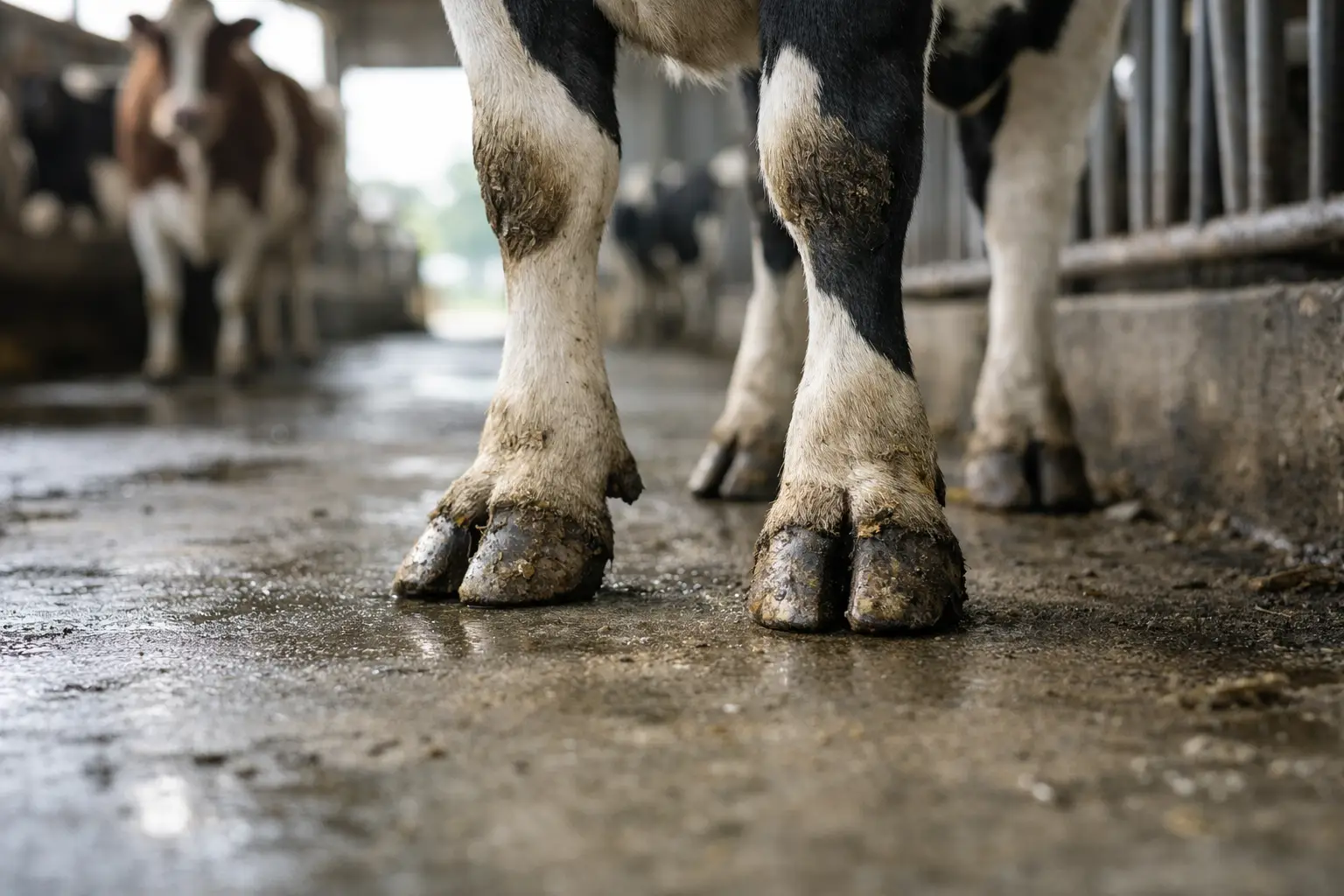
Moisture changes everything. Even a well-finished concrete surface can become a hoof health problem if drainage is poor. Water, effluent, and manure sitting on the slab soften the hoof and make it more vulnerable to wear, infection, and mechanical damage.
Softened hooves are less resilient under pressure. Add stock movement over hard concrete, and minor issues can become expensive ones. White line separation, sole bruising, and infections are more likely where hooves stay wet and dirty for too long. Slippery conditions also encourage animals to move awkwardly, which adds further stress.
Good drainage is not just about keeping a yard tidy. It is directly tied to traction and hoof condition. The slope needs to carry water away without making the surface awkward to walk on. Channels and drainage points need to function properly, and any repairs must maintain the correct fall across the slab. A surface with the right texture but poor drainage still falls short.
High-traffic zones carry the biggest risk
Not all concrete on a farm has the same effect on hooves. Some areas are far tougher on stock than others. Dairy sheds, collecting yards, feed pads, underpasses, race entries, and corners where animals turn tightly are usually the first places to assess.
These zones combine pressure, repetition, and contamination. Stock stop, start, bunch, and pivot more often there, which increases the force going through the hoof. If the surface is polished from wear, patched unevenly, or holding water, hoof problems tend to show up sooner.
That is also why a one-size-fits-all approach rarely works. The finish that suits a straight walkway may not suit a holding area. The concrete in a beef yard may need a different treatment from a dairy shed exit. Good concrete planning looks at behaviour as much as material performance.
Wear and tear changes concrete over time
A slab that was safe five years ago may not be safe now. Constant traffic, scraping, washdown, and weathering gradually alter the surface. Grooves wear down. Polished patches develop. Cracks and spalling create uneven footing. Repairs done without considering traction can leave one section slick and another section harsh.
This gradual change is easy to miss because it happens bit by bit. Farmers often notice the animal behaviour first. More slipping, more caution at certain points, or a lift in lameness cases can all be signs the concrete is no longer performing as it should.
Regular inspection matters because hoof health issues tied to flooring rarely come from one dramatic failure. More often, they come from a slow decline in grip, drainage, and consistency. By the time the problem is obvious, it has usually been costing the farm for a while.
What better concrete performance looks like
Improving hoof health through concrete is not about making every surface rougher. It is about making each area safer, more stable, and easier for stock to move across with confidence.
That may mean cutting grooves into worn concrete to restore traction in a dairy shed or collecting yard. It may mean bush hammering a polished area where stock are slipping under wet conditions. It may mean repairing damaged sections so there are no abrupt edges or broken patches catching hooves. In some cases, it also means correcting drainage and slope so the surface can stay cleaner and drier between washdowns.
There is always a balance to strike. Too little texture creates slip risk. Too much aggression increases wear. A specialist assessment should consider stock type, traffic levels, moisture, turning points, and how often animals stand in the area. That practical detail matters far more than a generic concrete fix.
For many farms, timing matters as well. After-hours work can reduce disruption and help get improvements done without interfering with daily operations. That is especially useful in working sheds where downtime affects the whole routine.
The farm outcome is bigger than the floor itself
When concrete supports hoof health, the benefits spread well beyond the slab. Stock move more freely. Handling becomes easier. The risk of slips and falls drops. Lameness pressure can ease, which helps with production, reproduction, treatment costs, and general welfare.
There is also a labour benefit. Staff should not have to coax reluctant animals over dangerous concrete or work around preventable slip hazards. Safer surfaces make day-to-day movement smoother for both stock and people.
That is why concrete should be treated as part of the farm’s livestock management system, not just a construction surface. Flooring affects animal confidence, comfort, and performance every day. On a busy farm, small improvements in footing can have a very real return.
If you are seeing animals slow down, slip, or show signs of hoof stress around concrete areas, it is worth acting early. The right surface will not solve every hoof issue on its own, but it can remove one of the biggest avoidable pressures. Good concrete should work hard without making your stock work harder than they need to.