A dairy laneway only has to go wrong once to become expensive. A few slick patches, loose stone, poor drainage or a hard edge through a gateway can quickly turn into bruised soles, stone trapping, slower herd movement and more lame cows to manage. That is why choosing the best surfaces for dairy laneways is not just a construction decision. It is a herd health and farm efficiency decision.
The right surface needs to do several jobs at once. It has to carry regular stock traffic, cope with weather, shed water, protect hooves and stay maintainable over time. There is no single material that suits every farm, every contour or every budget, so the best result usually comes from matching the surface to the pressure points of the laneway rather than treating the whole track the same.
What makes the best surfaces for dairy laneways?
On working dairy farms, the surface matters because cows use it every day, often under time pressure and in mixed conditions. A laneway that looks acceptable in dry weather can become a problem after rain or through a wet winter. Grip, drainage and hoof comfort all need to be considered together.
A good dairy laneway surface should be firm underfoot without being harsh. It should drain well enough to avoid persistent mud and standing water, but it also needs enough texture to reduce slipping. The shape of the lane matters too. Even a good material performs poorly if the crown is wrong, the shoulders collapse or water has nowhere to go.
This is why the best surfaces for dairy laneways are usually chosen as part of a system. Base preparation, camber, drainage channels, edge support and maintenance all affect how the top surface performs.
Gravel laneways – practical, common, but not always forgiving
Gravel is still one of the most common choices for dairy laneways because it is comparatively affordable, accessible and straightforward to install over longer distances. When it is well graded and properly compacted, it can provide a stable running surface that drains reasonably well.
The issue is that gravel quality varies a lot. Sharp, coarse stone can be hard on hooves, especially where cows are walking long distances twice a day. Oversized aggregate can increase stone bruising and trapping, while poorly graded material can shift underfoot and create unstable patches. If fines are too high, the lane may seal over and hold water instead of draining.
Gravel works best where the base is solid, drainage is sorted and the stone has been selected for livestock use rather than simply tipped in because it was cheap and close by. It also needs ongoing attention. Heavy traffic, weather and machinery can create ruts, potholes and exposed larger stone over time. For many farms, gravel is a practical main-lane option, but it is rarely the best answer for high-pressure areas such as dairy exits, holding yard approaches or sharp turns.
Lime and fine aggregate surfaces – softer underfoot, higher upkeep
Some farmers prefer lime-based or finer aggregate laneway surfaces because they can be more forgiving on hooves than coarser metal. Under the right conditions, these surfaces can create a smoother track and reduce some of the hoof wear associated with rougher stone.
The trade-off is durability in wet conditions. Fine materials can break down faster, pump under traffic and become slick or boggy if drainage is poor. They may suit lower-traffic sections or farms with lighter soils and strong maintenance routines, but they can become costly if they need frequent top-ups or reshaping.
If hoof comfort is the main concern, softer surfaces have appeal. But comfort without structure does not last long on a busy dairy lane. A surface still needs to stay stable when several hundred cows are using the same path day after day.
Concrete – strongest where pressure is highest
Concrete is often the best surface for dairy laneways in high-wear zones, especially where cattle bunch, turn, stop or leave the dairy at pace. This includes dairy exits, return lanes, feed pad approaches, crossings, gateways and sections with steep grades or chronic wetness.
The reason is simple. Concrete gives you consistency. It does not rut like gravel, it handles concentrated traffic, and it can be built to support proper drainage and fall. Where cows are most likely to slip or wear the surface out, concrete usually outperforms loose materials by a wide margin.
That said, plain smooth concrete is not enough. A hard surface without the right texture can become slippery, particularly with manure, wash-down water or algae build-up. Surface finish is what makes concrete suitable for livestock. Grooving and bush hammering create the grip needed for safer movement while still allowing cleaning and drainage to work properly.
On farms, this is where specialist concrete treatment matters. The goal is not roughness for the sake of it. It is controlled traction that supports hoof placement, reduces sliding and helps cows walk more naturally.
Textured concrete surfaces for safer movement
If you are comparing the best surfaces for dairy laneways, textured concrete deserves separate attention because finish changes performance. A concrete lane with the wrong finish can be hard and slippery. A properly treated concrete lane can be durable, safer and easier to manage in wet conditions.
Grooved concrete helps by giving hooves defined grip points, particularly on slopes, around corners and through high-traffic exits. Bush hammered concrete creates a textured profile across the surface and is often used where broad slip resistance is needed. Which option suits best depends on the lane layout, cattle flow, drainage pattern and existing slab condition.
This is also where repair work can extend the life of infrastructure you already have. If a concrete section is worn smooth or has become unsafe, resurfacing or texturing may be more practical than full replacement. For farms trying to improve safety without major downtime, targeted upgrades can make strong operational sense.
Where mixed surfaces often work best
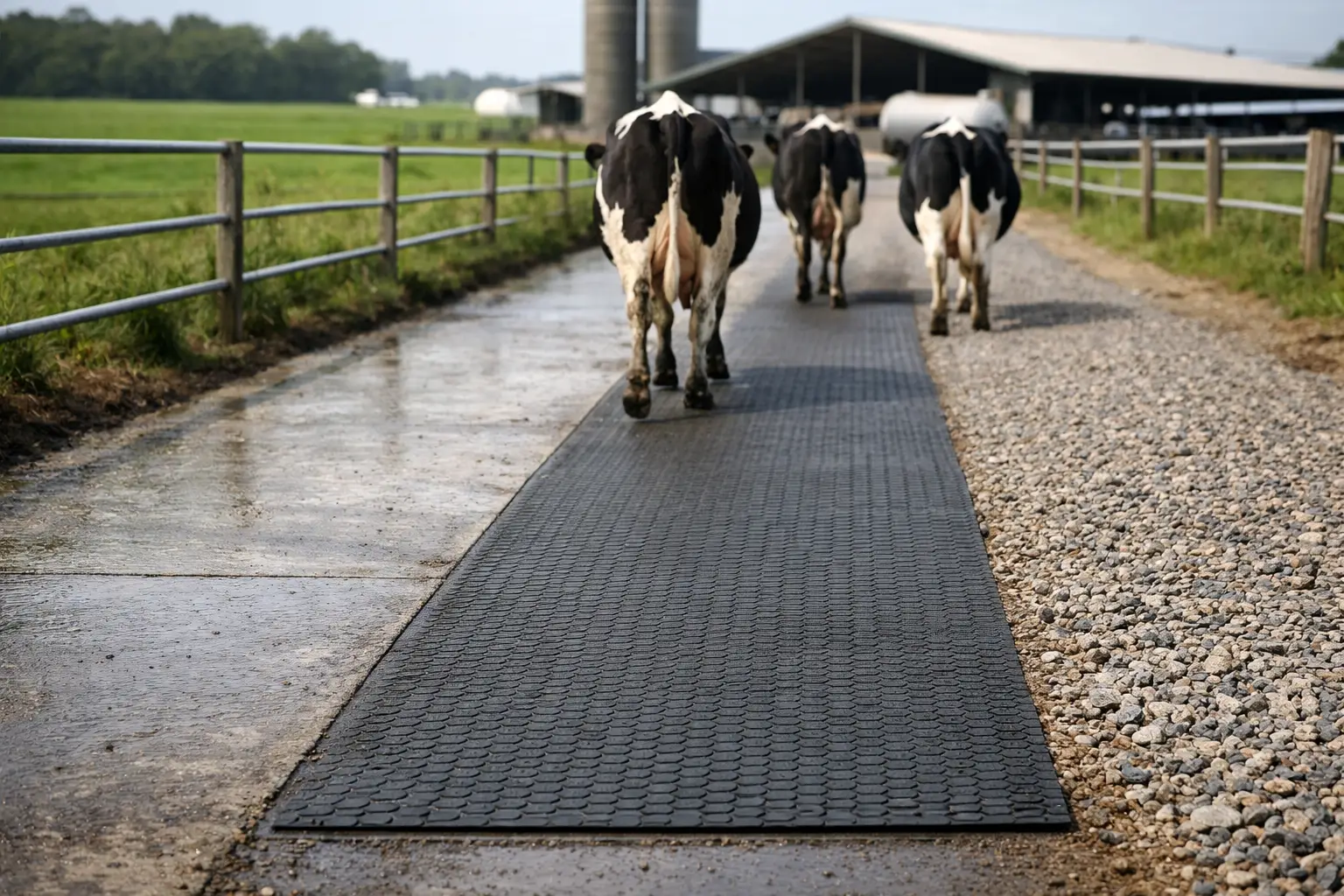
On most dairy farms, the best result is not one surface from gate to gate. It is a mix of surfaces used in the right places. Long straight runs may be suited to a well-built aggregate lane, while concrete is reserved for stress points that carry the highest risk and wear.
This approach usually gives a better return than overspending on concrete where it is not needed or relying on gravel where it will continually fail. For example, a farm may use compacted aggregate for the main return lane, then install textured concrete through the dairy exit, the first stretch where cows are tightly packed, and any steep or bog-prone areas. That balances cost, hoof comfort and durability.
The key is knowing where cows lose confidence or where the lane repeatedly breaks down. Those are the sections that deserve stronger surface treatment.
Drainage matters as much as the surface itself
A poor-draining laneway can make even good materials perform badly. Water softens bases, moves fines, exposes stone, encourages algae and creates ongoing slipperiness. If the shape of the lane is wrong, surface choice alone will not fix the problem.
That is why drainage should be part of any laneway decision. The fall across the surface, table drains, runoff control and edge stability all affect longevity. Concrete sections need the right slope so water clears quickly. Aggregate lanes need a sound base and enough camber to stop water sitting in wheel tracks or cattle lines.
When farmers say a surface did not last, the issue is often not just the top layer. It is what happened underneath and around it.
How to choose the right dairy laneway surface for your farm
The best choice depends on distance, herd size, rainfall, soil conditions, slope and how cattle move through the lane. A flat lane on free-draining ground has different demands from a steep return track near the dairy that stays wet for months.
Start with the areas causing the most trouble. If cows are slipping near the shed, if gateways are constantly chopped out, or if one section keeps holding water, that is where investment should go first. Surface upgrades are most effective when they solve a repeated problem, not when they are spread too thinly across the whole farm.
It is also worth thinking long term. A cheaper surface that needs frequent topping up, grading or repairs may cost more over time than a stronger solution installed in the right place. Good laneway work should reduce daily friction on the farm – fewer slowdowns, fewer injuries, less rework and better cow flow.
For farms wanting a more durable answer in high-risk areas, specialist concrete treatment can make a real difference. Happy Hoof focuses on surfaces that improve grip, support hoof health and stand up to the realities of livestock traffic, wet conditions and working farm schedules.
The best laneway surface is the one that keeps cows walking confidently, drains properly and holds up under pressure. If a lane is costing you time, traction and hoof condition, it is worth treating the surface as part of farm performance, not just another maintenance job.