When cows start hesitating on the way into the shed, the concrete is already telling you something. If you are looking at how to groove dairy shed concrete, the real goal is not just cutting lines into a slab. It is creating reliable footing in wet, high-traffic areas so cows move with confidence, staff stay safer, and hoof wear stays manageable.
On a working dairy farm, concrete cops constant pressure from moisture, manure, washdown and hoof traffic. A smooth surface might be easier to hose, but once it gets polished by daily use it can quickly become a slip risk. Good grooving restores grip without turning the floor into a rough, punishing surface. That balance matters.
Why grooving dairy shed concrete matters
Slippery concrete costs more than a few awkward steps. It can lead to falls, strains, reduced cow flow, baulking at entry points and extra pressure on hooves and joints. In busy yards and sheds, those problems affect throughput as much as animal welfare.
Properly grooved concrete helps water and effluent clear away while giving claws a better purchase on the surface. That reduces slipping, especially around collecting yards, entry lanes, feed pads and holding areas where cows bunch, turn and stand for long periods. If the floor is too smooth, traction drops. If it is too aggressive, you can create unnecessary hoof wear. That is why the method, depth and spacing all need to suit the location.
How to groove dairy shed concrete: start with the slab condition
Before any cutting starts, the slab needs to be assessed properly. Not every concrete surface is ready for grooving, and not every slick floor should be treated the same way.
The first thing to check is the age and strength of the concrete. New concrete should be fully cured before grooving. If it is too green, the edges can ravel or break down early. Older concrete can usually be grooved well, but it needs to be sound enough to hold a clean cut. If the surface is scaling, cracked badly, patchy or soft, repairs may need to come first.
The second check is wear pattern. In some sheds, the issue is widespread polishing across the whole area. In others, it is concentrated in turning zones, ramps or the approach to the platform. That matters because a full grooving job is not always the best answer. Sometimes a targeted treatment, or even bush hammering in selected sections, gives a better result.
Drainage also needs a hard look. Grooving improves traction, but it does not fix poor falls. If water and effluent are sitting on the slab, the floor design may be part of the problem. In that case, grooving should be part of a wider plan rather than treated as a stand-alone fix.
Choosing the right groove pattern
There is no one-size-fits-all pattern for every farm. The best groove layout depends on how cows move through the space, how wet the area gets and what the slab is used for.
Straight grooves are common in dairy environments because they provide consistent traction and can support drainage. In many areas, grooves are cut across the direction of travel so claws can grip as cows walk forward. In turning areas, entries and exits, the pattern may need more thought because cows are not moving in a single line. A layout that works well in a straight race may not perform the same way at a busy corner.
Depth and spacing are just as important as direction. Grooves that are too shallow can lose their effect quickly, especially on heavily trafficked concrete. Grooves that are too deep or too close together can make the surface harsh underfoot and harder to clean. This is where specialist farm concrete work matters. The aim is secure footing, not simply the roughest finish possible.
The cutting process and what good work looks like
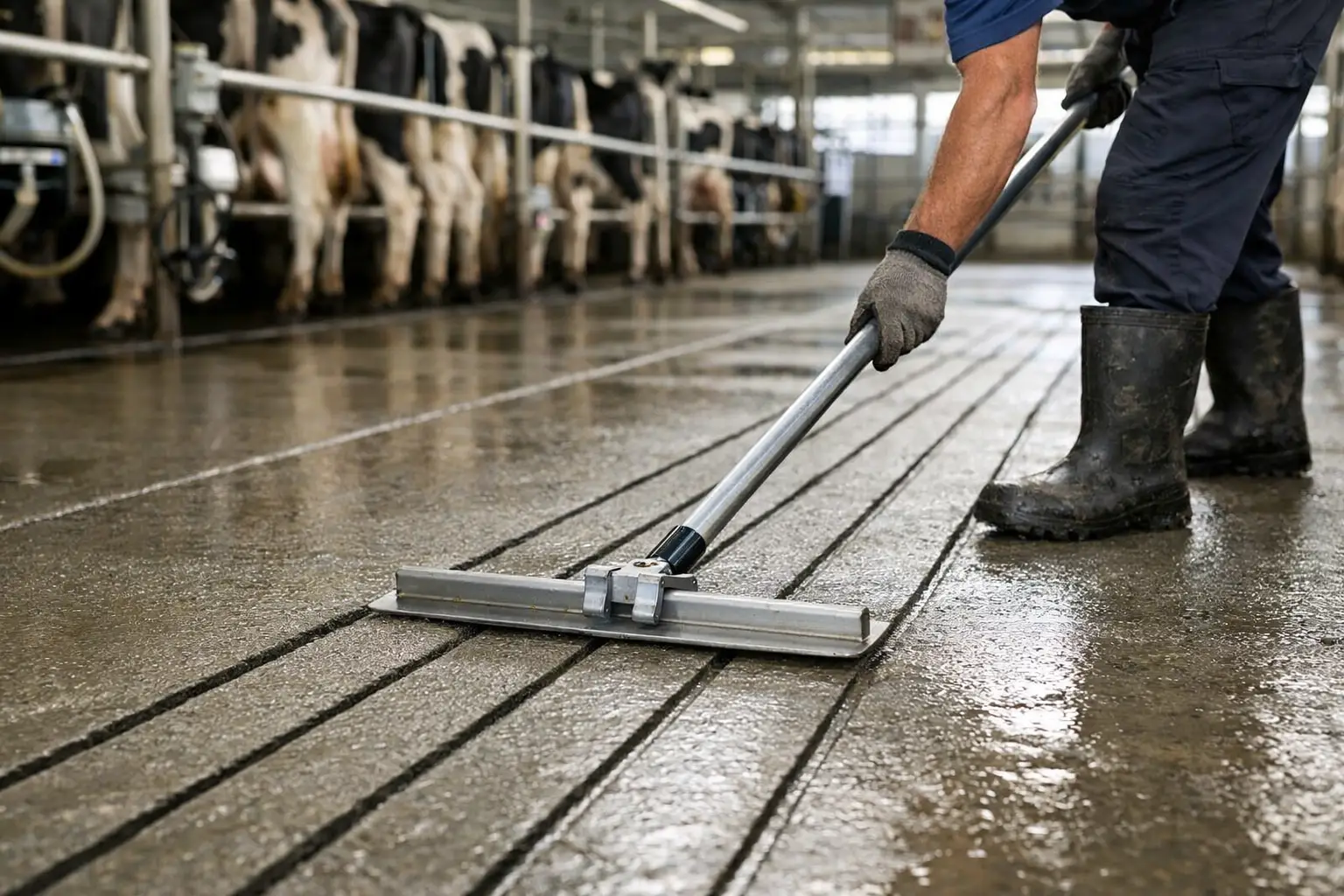
When people ask how to groove dairy shed concrete, they often picture a quick saw-cutting job. On-farm, it needs more care than that. A proper job starts with marking out the area, checking falls, identifying weak spots and selecting equipment that can produce a consistent groove profile across the slab.
Diamond cutting equipment is typically used to create clean, even grooves. Consistency is the key. If spacing wanders or depths vary too much, traction becomes uneven and the floor can wear irregularly. Clean cuts also help the surface hold up better over time.
Dust control, slurry management and site timing matter as well. In a live farm environment, the job needs to be planned around stock movement and shed use. That is one reason many operators prefer after-hours work. Night grooving can reduce disruption, keep daily routines moving and allow treated areas to be cleaned and checked before stock are back over them.
Good grooving should look deliberate and uniform, not hacked in. The concrete should retain strength, the surface should drain well, and the finished texture should support confident cow movement without becoming abrasive.
Areas where grooving delivers the biggest return
Some parts of a dairy operation benefit more than others. If budget or timing means you cannot do everything at once, it makes sense to start where slip risk and traffic are highest.
Collecting yards are a common priority because cows stand there in large numbers on wet concrete. Entry and exit points to the shed are another, especially where animals speed up, bunch or turn. Milking shed approaches, feed pads and high-use races can also benefit, depending on existing wear and drainage.
Holding areas with poor confidence underfoot often show up in cow behaviour before they show up in injury records. If cows are shortening stride, shuffling, spreading out awkwardly or baulking at the same spot every day, the floor may need attention. Those behavioural signs are worth taking seriously.
When grooving is not enough on its own
Sometimes concrete is too far gone for grooving alone to solve the problem. If the slab has widespread delamination, severe cracking or long-standing drainage issues, cutting grooves into it may only give a short-term improvement.
Repairs may be needed first to restore structural integrity. In other cases, a different surface treatment may suit the area better. Bush hammering, for example, can be useful where a broader textured finish is needed rather than defined grooves. The right approach depends on stock type, traffic pattern, moisture and how the area is cleaned.
This is also where farm-specific advice matters more than generic concrete work. A contractor who understands livestock movement will assess more than the slab itself. They will look at slope, pinch points, standing times and how the surface performs through the daily washdown cycle.
Common mistakes to avoid
The biggest mistake is treating all farm concrete the same. A dairy shed is not a warehouse, and a finish that works in a commercial yard may not suit cows walking over it twice a day in wet conditions.
Another common issue is waiting too long. Once cows have started slipping regularly, or the concrete has become highly polished, the risk is already affecting movement and confidence. Early intervention is usually easier and more cost-effective than dealing with injuries, lameness or emergency repairs later.
Cheap, uneven cutting is another false economy. If grooves are inconsistent, poorly placed or cut into weak concrete, you can end up paying twice – once for the job and again to correct it. Durable results come from matching the method to the actual farm environment.
Maintenance after the concrete is grooved
Grooved concrete still needs looking after. It is more resistant to slipping than smooth concrete, but it is not maintenance-free.
Regular cleaning helps grooves keep doing their job. If channels fill with compacted waste, traction and drainage both drop away. Periodic inspections also make sense in high-wear areas, particularly around turns and entry points where polishing can return over time.
It is worth keeping an eye on how cows move after the work is done. Better confidence, smoother flow and fewer hesitant steps are all signs the surface is performing as it should. If one section still causes trouble, it may point to a drainage issue, layout problem or the need for additional treatment.
For many farms, grooving is one of the most practical upgrades you can make to an existing concrete surface. Done properly, it supports safer stock movement, protects hoof health and helps the shed work the way it should under real farm conditions. If you are planning how to groove dairy shed concrete, think beyond the cut itself and focus on the outcome – a surface that keeps cattle steady, staff safer and the whole operation moving without unnecessary risk.