
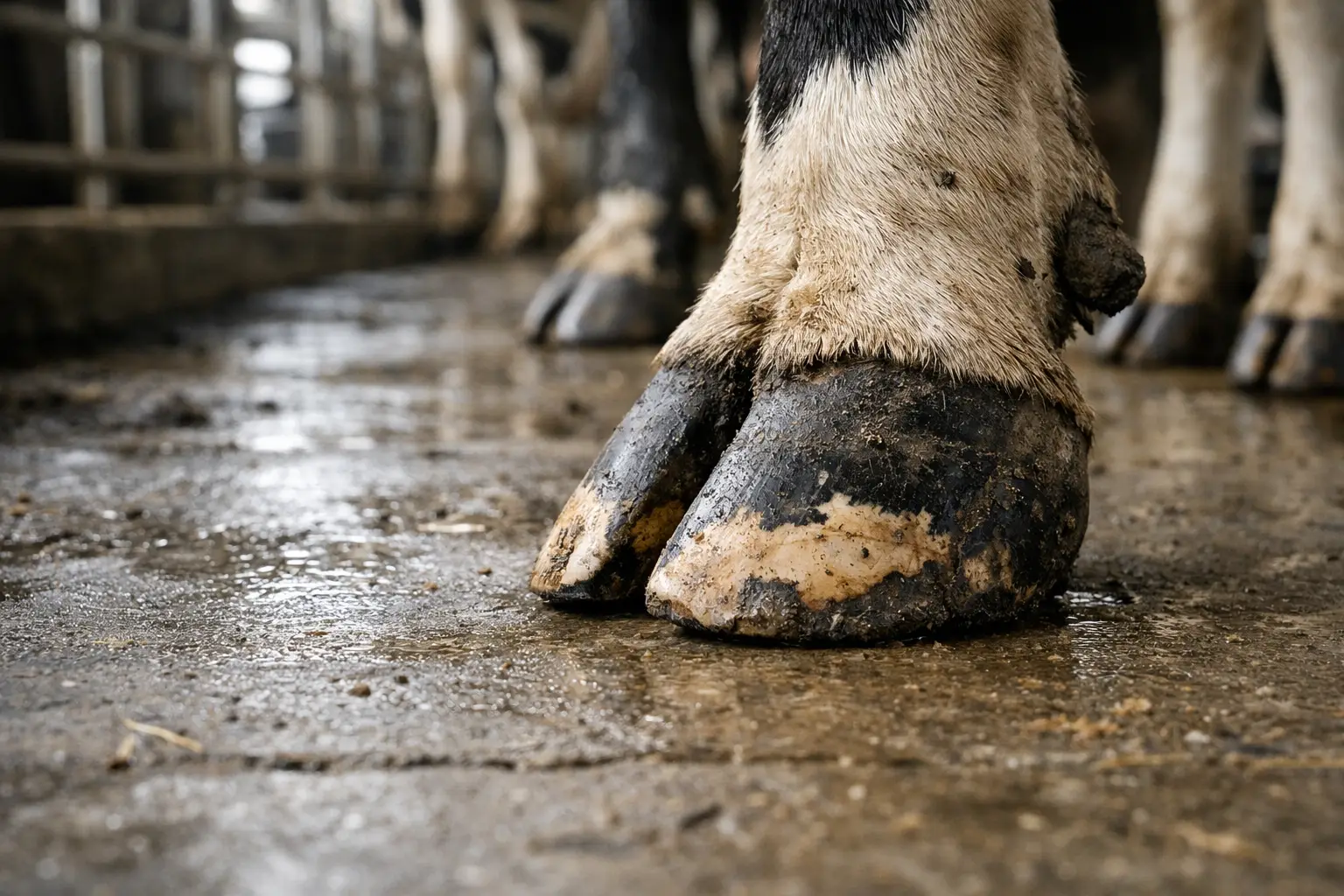
A cow leaving the dairy with shortened toes, chipped horn or a hesitant gait is often showing the effects of more than one bad day. The top causes of hoof wear usually build up over weeks and months, particularly where stock travel repeatedly over concrete that is too abrasive, too slippery, poorly drained or unevenly worn. Some hoof wear is normal. Excessive or uneven wear is a warning that the animal, the surface or the movement system needs attention.
For dairy, beef and sheep operations, flooring has a direct influence on hoof health, lameness risk and how confidently animals move through the farm. Getting the concrete surface right is not about making it rough at all costs. It is about providing reliable grip without creating a surface that strips hoof horn or makes cleaning and drainage harder.
Top causes of hoof wear on farm concrete
Overly aggressive concrete texture
A rough concrete finish can improve traction, but there is a point where it becomes abrasive. Sharp aggregate, exposed stone, poor finishing or an unsuitable grooving pattern can wear hoof horn faster than it can regrow. This is most noticeable on high-traffic areas such as dairy exits, feed pads, collecting yards, races and sharp turns.
The risk is greater when cows are travelling long distances over concrete twice a day, or when they are encouraged to move quickly. Hooves do not wear evenly under these conditions. The toe can become short while the heel is left carrying more load, changing how the animal stands and walks.
A good livestock surface needs texture that delivers traction under wet, dirty conditions without acting like sandpaper. This is why the method used to treat concrete matters. Generic roughening is not automatically suitable for cattle, sheep or other livestock.
Slippery surfaces and corrective movement
It may seem backwards, but concrete that is too smooth can also contribute to hoof damage. When animals feel uncertain underfoot, they shorten their stride, brace themselves and twist through turns. A slip, even one that does not end in a fall, can put sudden force through the hoof, pastern and leg.
Cows commonly wear hooves unevenly when they are repeatedly pivoting at dairy entrances, drafting gates, backing areas and tight corners. Wet slurry, algae, feed residue and worn concrete all reduce grip. The animal then compensates by gripping harder and placing the foot differently, creating concentrated wear and raising the chance of sole bruising, white line damage and lameness.
The answer is not simply a more aggressive surface. It is a consistent, slip-resistant finish matched to the location, stock flow, slope and cleaning routine.
Wet, contaminated and poorly drained floors
Moisture softens hoof horn. Add manure, urine, grit and fine stone to the mix, and the floor becomes both more abrasive and more difficult to walk on. In yards and sheds where water sits after wash-down, animals are exposed to this combination every day.
Poor drainage also creates stop-start movement. Stock avoid puddles where they can, bunching up or taking awkward steps around wet areas. Where they cannot avoid them, they travel cautiously and may slip. A low spot in a busy race can therefore create far more than a cleaning nuisance.
Check where water runs after a wash-down and where slurry collects during peak use. Drainage falls, damaged channels, broken edges and depressions in the slab deserve attention. Surface treatment performs best when it works alongside drainage, not as a replacement for it.
Long walking distances and hard transitions
Concrete mileage matters. Cows walking from paddock to dairy, across feed areas and back again may cover a substantial distance on hard surfaces every day. If the route includes coarse concrete, loose stone, steep grades or abrupt transitions between surfaces, hoof wear can accelerate.
The point where a track meets a concrete apron is a common trouble spot. Loose stones can become trapped around the sole, while a hard lip or damaged edge changes the way animals step onto the slab. Similar problems occur at gateways, underpasses and loading areas where concrete meets compacted metal or earth.
Long walking distances do not automatically cause poor hoof health. Well-maintained tracks, sensible stock flow and appropriate concrete traction can reduce the load. But when excessive wear appears across a mob, the full travel route should be assessed rather than looking only at the dairy floor.
Tight turns, crowding and rushed stock flow
Hooves are designed to carry an animal forward, not to absorb constant twisting in a confined space. Tight turns force the outer claw to take more load while the foot pivots. Add crowding behind the animal, a dog applying pressure or a gate that slows the line, and that turning force rises quickly.
Look closely at the places where cattle hesitate, swing wide or bunch together. These are often areas where layout and surface condition are working against each other. Dairy exits, holding-yard corners, backing gates and race junctions deserve particular attention because they carry frequent, repetitive traffic.
Better movement is usually a combination of enough room, clear flow, calm handling and reliable footing. Even high-quality grooving cannot fully offset a layout that makes livestock turn sharply in a congested area.
Worn, damaged or inconsistent concrete
Concrete changes over time. The original finish can polish smooth in wheel tracks and stock lanes, while surrounding areas remain rough. Cracks, spalling, exposed aggregate and patch repairs can leave a surface with very different grip levels across a short distance.
That inconsistency is hard on livestock. An animal that steps from a high-grip patch to polished concrete may lose confidence or slip. One that crosses broken edges and exposed aggregate may experience concentrated abrasion or bruising. Repairs that are not blended with the surrounding surface can create the same issue.
Regular inspections are more useful than waiting for obvious failures. Walk the area when it is wet, observe animals using it, and look for polishing, ponding, chipped edges and places where manure is difficult to remove. These signs help identify whether targeted repair, bush hammering, concrete grooving or a broader resurfacing plan is the practical next step.
Hoof wear is not always a concrete problem
Flooring is a major part of the picture, but it is not the only factor. Hoof trimming practices, genetics, nutrition, mineral balance, body condition, disease pressure and time spent standing can all affect horn quality and claw shape. A cow with soft or compromised horn will be more vulnerable on a surface that another animal manages well.
That is why patterns matter. If several animals develop excessive toe wear after a change to traffic routes or yard conditions, flooring and movement should be investigated promptly. If the issue is isolated to a few animals, a hoof care or health factor may be more likely. Often, the answer sits between the two.
Keep records of lameness cases, treatment locations and the areas where animals are reluctant to walk. Those observations give a clearer picture than relying on appearance alone.
What a safer concrete surface should achieve
The best farm concrete surface gives livestock enough traction to walk naturally in wet conditions while remaining comfortable and manageable to clean. It should drain well, avoid sharp or exposed material, and maintain a consistent finish through the highest-traffic zones.
For existing slabs, the right treatment depends on the concrete condition and farm use. Grooving can improve directional grip in suitable areas. Bush hammering can create a more even textured finish where polished concrete is a problem. Repairs may be needed first where cracking, spalling or poor falls are affecting safety. Each option needs to suit the site, because a dairy exit, sheep yard and feed pad do not place the same demands on a surface.
Happy Hoof assesses concrete with livestock movement in mind: where animals walk, turn, stop, drain and carry load. The goal is practical – healthier hooves, fewer slips and flooring that continues to perform under daily farm use.
A useful place to start is the next wet milking or wash-down. Watch how stock travel without rushing them. The spots where they shorten stride, spread their feet, hesitate or swing around a corner are often the spots where a timely concrete improvement can protect both animal welfare and farm performance.