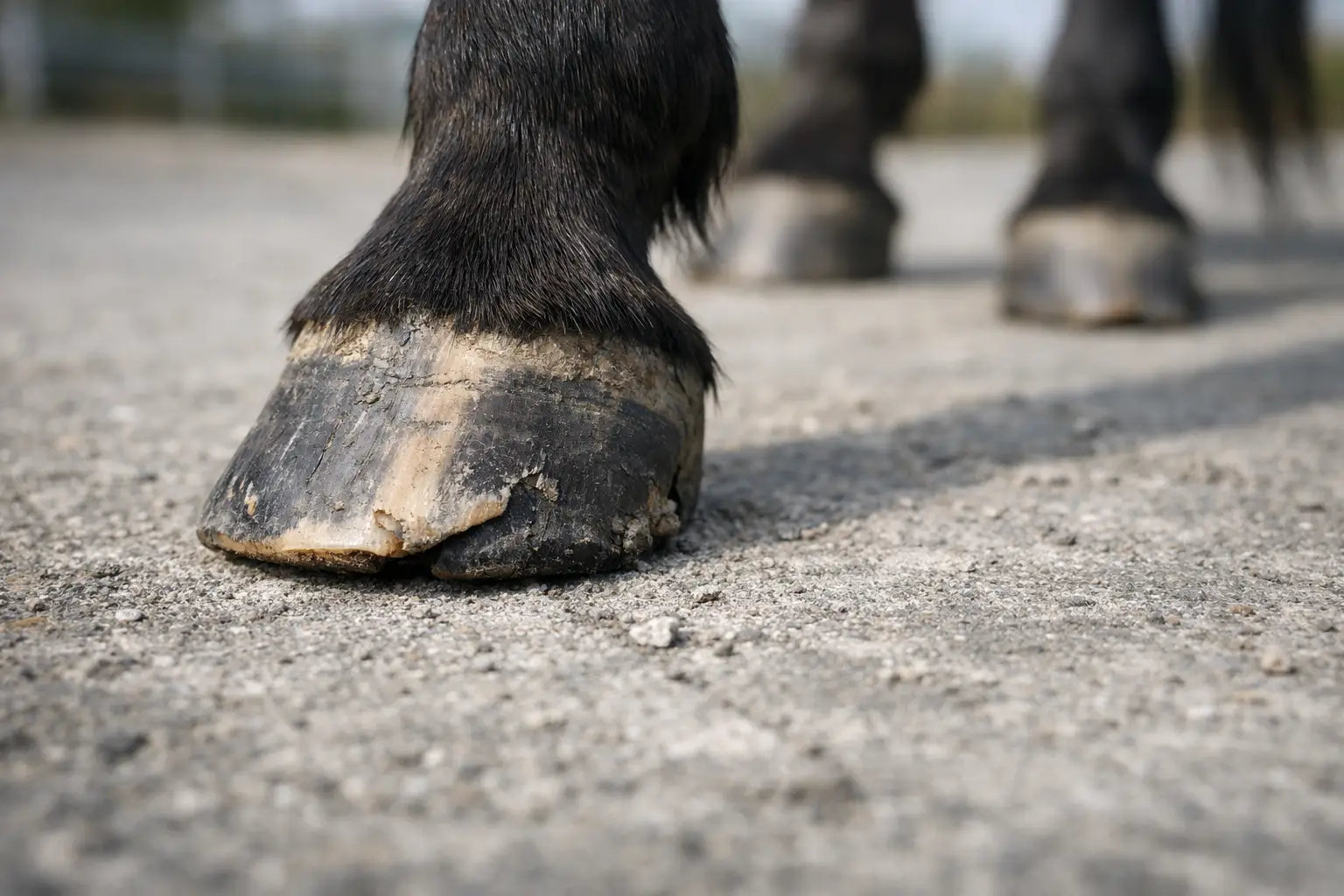
A cow that hesitates at the dairy entrance or shortens her stride on the feed pad is often telling you something about the floor before lameness shows up on paper. If you’ve been asking, is rough concrete bad for hooves, the honest answer is that it depends on how rough, where it is, and how stock are using it every day.
Concrete texture matters because livestock need two things at once – grip and hoof comfort. Get the balance right and animals move with confidence, slips reduce, and hoof wear stays manageable. Get it wrong and you can end up with either polished concrete that turns dangerous when wet, or a surface so aggressive it contributes to excess wear, bruising, and poor gait.
Is rough concrete bad for hooves in every situation?
No. Rough concrete is not automatically bad for hooves. In many farm settings, some surface texture is essential. Smooth concrete, especially where manure, water, milk or feed create constant moisture, can become a slipping hazard very quickly. That risk affects not only hoof health but also breeding performance, worker safety, and general stock flow.
The problem starts when roughness is uneven, overly sharp, or matched poorly to the job. A holding yard, race, feed lane, collecting area and shed entry all place different demands on the hoof. A surface that gives useful grip in one area may be too abrasive in another, especially where stock stand for long periods or turn tightly under pressure.
That is why the real question is not simply whether rough concrete is bad. It is whether the concrete has the right texture for the stock, the traffic level, the moisture load, and the way that part of the farm operates.
What hooves actually need from concrete
A healthy hoof copes well with normal wear. In fact, a well-designed concrete surface can help maintain function by preventing slipping and supporting natural movement. But hooves do not perform well on extremes.
If concrete is too smooth, animals compensate by tensing up, shortening stride, and placing the foot differently to avoid slipping. That changes weight distribution and can increase stress through the limb. Over time, poor footing can contribute to injury, strain, and reduced confidence moving through high-traffic areas.
If concrete is too rough, the opposite problem can develop. Excessive abrasion can wear the hoof faster than it can recover, particularly in heavy-use zones. Sharp high points can also create concentrated pressure. On wet farms, where animals are already dealing with softened hoof horn, that extra mechanical wear can become costly.
The goal is controlled traction, not harshness. Good concrete should give the animal enough bite underfoot to walk naturally without scraping the hoof down unnecessarily.
When rough concrete becomes a problem
The most common issue is not textured concrete itself. It is badly textured or ageing concrete.
Freshly damaged surfaces, broken edges, exposed aggregate, poor finishing, or makeshift roughening methods can leave concrete too aggressive. Bush-hammered or grooved surfaces need to be done to a consistent standard. If the pattern is irregular, too deep, too close, or too sharp, livestock can feel every step.
Long standing times also matter. A surface that is acceptable in a race used for movement can become a problem in a holding area where cows stand waiting. The longer they remain on abrasive concrete, the more wear and stress you can see. Add poor drainage and slurry build-up, and the hoof has to deal with moisture, contamination and friction at the same time.
Young stock, lighter animals and heavy mature cows may also respond differently. High-producing dairy cows under pressure at busy times are often the first to show the effect of flooring that is too slick or too abrasive.
Signs your concrete may be too rough
You do not need a lab report to spot an issue. On farm, the warning signs are usually practical. If you’re seeing unusually fast hoof wear, sensitivity after moving through specific areas, shortened stride, frequent reluctance to walk, or more time shifting weight while standing, the floor should be part of the conversation.
It is also worth looking closely at the surface itself. If it feels sharp under boot, has crumbling peaks, broken channels, or random patches of heavy abrasion, there is a fair chance stock are feeling it too.
Why smooth concrete can be worse than rough concrete
Many operators worry more about abrasion than slipping, but on wet livestock sites, smooth concrete often creates the bigger immediate risk. Falls and near-slips are not minor issues. They affect confidence, movement, mating behaviour, milk yield, and injury rates. Once cattle start anticipating a slick patch, they do not move freely through that area.
That is why slip resistance has to stay central to any conversation about hoof-friendly flooring. A lightly polished or worn-down yard may look easier on hooves, but if it causes unstable footing, it can do more harm across the system.
The best-performing livestock concrete is rarely smooth. It is textured in a way that provides secure footing without acting like sandpaper. That balance is where specialist concrete treatment makes a real difference.
Is rough concrete bad for hooves, or is the issue poor surface design?
In many cases, poor surface design is the real issue. Surface texture works together with slope, drainage, traffic flow, turning points, stocking pressure and maintenance. If water sits on the slab, if manure is not clearing well, or if cattle are forced to pivot sharply on abrasive sections, hoof problems can show up even when the concrete treatment itself is reasonable.
Grooving is a good example. Done properly, it improves traction and helps water move off the surface. Done poorly, it can create edges that wear hooves or trap debris. The spacing, depth and direction need to suit livestock movement and the area’s purpose. The same goes for bush hammering and remedial texturing. These are not one-size-fits-all jobs.
A practical flooring plan looks at the whole working environment. Entries, exits, corners, crossovers, feed areas and shed surrounds all behave differently. Treating every square metre the same can be a mistake.
How to get the balance right on farm
The right concrete surface is one that lets stock walk with confidence while limiting unnecessary hoof wear. That usually means aiming for consistent, slip-resistant texture rather than a coarse or jagged finish.
If you are building new, surface design should be planned around stock movement from the start. If you are dealing with existing concrete, inspect high-risk zones first. Look at where slips happen, where cattle bunch up, where they stand the longest, and where the surface has worn smooth or broken down.
In many cases, targeted treatment is better than a blanket approach. Some areas may need retexturing for grip. Others may need repair because damaged concrete is creating sharp wear points. Drainage also needs attention. Even the best surface will underperform if water and effluent are left sitting on it.
Maintenance matters too. Concrete is not set-and-forget on a busy farm. Heavy traffic, scrapers, weather, wash-down and time all change the surface. Regular checks help catch the point where a safe floor starts becoming either slippery or overly abrasive.
What a good livestock concrete surface should feel like
A good livestock surface should feel firm, consistent and grippy underfoot without having loose stone, razor-like edges or rough peaks. Stock should be able to walk out at a natural pace, turn without scrambling, and stand without constant shifting.
That is the standard worth aiming for. Not the roughest possible finish, and not the smoothest. Just the right amount of texture for the job.
For farm owners, that usually delivers more than hoof protection alone. Better footing supports calmer stock flow, lowers the chance of injury, and helps protect productivity in areas where movement and standing time have a direct impact on performance.
Happy Hoof works with that principle every day – improving traction where it is needed, correcting concrete that is causing problems, and helping farms avoid the false choice between grip and hoof health.
If you are weighing up whether your current surface is helping or hurting, start by watching how animals move, not just how the concrete looks. Hooves cope well with the right texture. It is the wrong texture, in the wrong place, that costs you.