A cow that loses her footing at the dairy exit does not just create a moment of risk. One slip can lead to bruising, a damaged hoof, reduced confidence on concrete and, in worse cases, lameness that costs time, treatment and production. To choose concrete texture for livestock properly, start with the animals’ daily movements, the amount of water and effluent on the surface, and how the area is cleaned – not simply how rough the concrete looks.
The right finish gives livestock secure footing without creating a harsh surface that wears hooves excessively. It also needs to hold traction after months of traffic, wash-downs and changing weather. That balance is where specialist assessment makes a real difference.
Concrete texture is a hoof health decision
Concrete has to work harder on a farm than it does in most commercial settings. Dairy cows may cross the same yard, holding area or race several times a day. Beef cattle can bunch, turn sharply and push against each other near troughs and gates. Sheep need secure footing on ramps, laneways and handling areas, particularly where mud and manure are carried onto the slab.
A smooth, worn surface can become dangerously slippery when wet. At the other extreme, an overly aggressive finish can increase hoof wear and make animals reluctant to walk across it. The best texture is one that provides consistent grip while allowing natural, confident movement.
This is why a flooring decision should be based on animal welfare and farm function first. Concrete texture affects slipping, turning behaviour, hoof condition, staff safety and the reliability of daily routines.
Start with the area, not a one-size-fits-all finish
Different parts of a livestock operation need different levels of traction. A finish that performs well in a dairy collecting yard may not suit a feed pad, cattle ramp or sheep handling race. The direction of travel, slope, drainage and traffic intensity all change the answer.
High-traffic dairy areas
Dairy exits, collecting yards, backing gates, holding areas and the approaches to the milking shed are usually the highest-risk zones. Cows are moving in groups, often on wet concrete, and may be turning or stopping suddenly. These areas generally need a clear, repeatable traction pattern that remains effective when manure, water and cleaning chemicals are present.
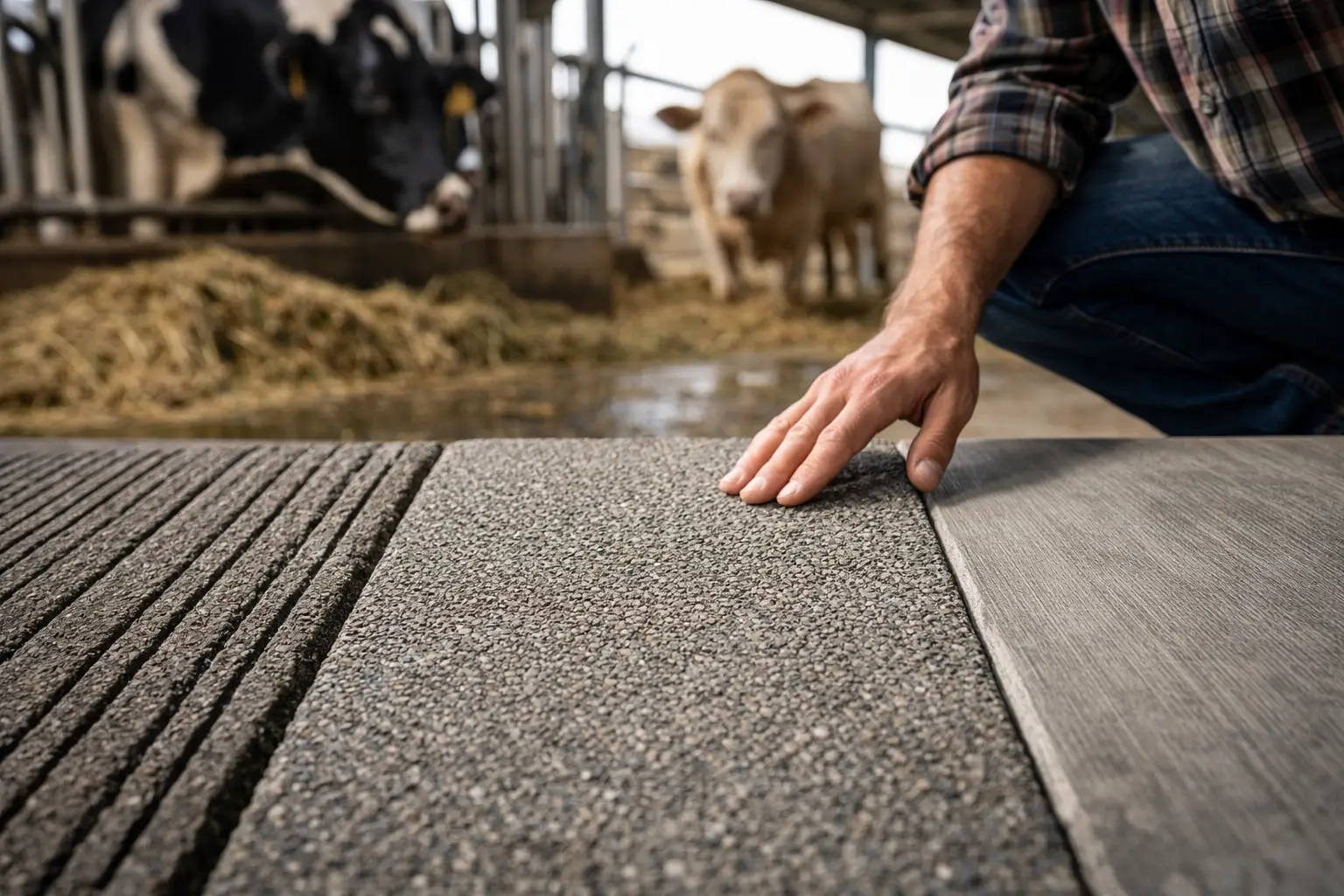
Concrete grooving is often well suited to these locations. Correctly spaced grooves give hooves an edge to grip, particularly in the direction animals travel. The groove pattern needs to suit the flow of stock and the way water drains. Grooves cut in the wrong direction can do little for traction on a slope and may make cleaning less efficient.
Turning points, gates and crossovers
A turning animal places different forces on the surface than an animal walking in a straight line. Tight corners at dairy exits, drafting gates, feed lanes and race intersections deserve particular attention because slipping often happens when an animal shifts weight sideways.
These areas may benefit from a more comprehensive texture treatment, such as bush hammering, or from a carefully planned pattern that supports traction in more than one direction. The right choice depends on how sharp the turn is, whether the surface is regularly wet and how much hoof traffic it carries.
Feed pads, troughs and wet spots
Feed areas and trough surrounds are exposed to concentrated traffic and moisture. Animals often stand for longer periods, crowd together and move sideways to access feed or water. If the slab has poor fall or drainage, even a textured surface can struggle because water and effluent remain underfoot.
Before selecting a finish, check whether the real problem is surface texture, drainage or both. Repairing low spots, restoring falls and addressing damaged concrete may be necessary before grooving or bush hammering. Texture adds grip, but it cannot compensate for standing water across a poorly drained pad.
Ramps and sloping concrete
Slopes need close attention. A mild slope that is safe in dry conditions can become a problem during wash-downs or rain, especially where animals hesitate, bunch up or accelerate downhill. Grooves should be oriented to provide resistance against the direction of travel, while still allowing water to drain away.
On steeper ramps, the surface should be assessed alongside handrails, gate placement, drainage channels and the transition from one surface to another. A sudden change from rough laneway to smooth concrete can catch livestock off guard.
Choose a texture that lasts under farm conditions
Freshly textured concrete can look effective on day one, but long-term performance is what matters. Farm floors face hoof pressure, vehicle use, manure, effluent, pressure washing and weather exposure. The chosen treatment must be durable enough for the location and carried out without weakening the slab.
Concrete grooving creates defined channels in the existing surface. It is a targeted option for improving grip where straight-line animal movement is common. Depth, spacing and direction all matter. Grooves that are too shallow may wear quickly or offer limited grip, while overly deep or poorly finished cuts can be harder to clean and may create unnecessary hoof impact.
Bush hammering produces a more uniformly roughened finish. It can be a practical option for broad areas, turning zones and surfaces where multi-directional traction is needed. However, it needs to be applied with control. The aim is a durable non-slip texture, not a surface that is punishing on hooves or difficult to maintain.
Existing concrete condition also affects the decision. Cracked, spalling or weak concrete may need repairs before any texture treatment. Cutting or hammering into deteriorated concrete will not solve the underlying issue, and it can shorten the life of the finished work.
Check drainage before blaming the concrete
Water changes everything. Even well-textured concrete can become unsafe when it is covered by ponding water, slurry or algae. If animals regularly slip in one section of a yard, look for blocked drains, worn falls, leaking troughs, wash-down practices and shaded areas that stay damp.
Drainage and texture need to work together. A surface should move water away without directing it across the main livestock path. In practical terms, that means assessing where animals enter, stop, turn and leave, then making sure the fall supports both cleaning and safe movement.
Regular cleaning matters as well. Manure build-up can fill grooves and reduce their benefit. Harsh cleaning methods may also affect weak concrete or expose existing damage. A good maintenance plan keeps the surface clean enough to perform while allowing problems such as cracks, surface wear and drainage failures to be addressed early.
Watch livestock behaviour for the clearest answer
Livestock often show a flooring issue before a person can identify it from a distance. Hesitation at a particular doorway, shortened steps, animals spreading their legs for balance or repeated slips at a turn are all useful warning signs. So is a pattern of hoof damage or lameness that appears more often in one mob or one part of the farm.
Observe the area during normal conditions and when it is wet. A yard that appears acceptable after a dry afternoon may perform very differently during milking, after wash-down or in winter rain. Ask where staff have seen animals lose confidence, not just where the concrete looks polished.
The same applies to workers. If people are cautious on a surface, livestock are likely dealing with the same reduced grip under far greater weight and movement pressure.
Plan the work around farm operations
Flooring improvements should not create unnecessary disruption. The best installation plan considers milking times, stock flow, access for plant and equipment, curing or clean-up requirements, and whether work can be completed in stages.
For busy dairy operations, after-hours concrete grooving can reduce interference with normal routines. It allows traction work to be completed while protecting the day-to-day movement of cows, staff and vehicles. The key is proper planning so the treated area is ready, clean and safe to return to service when required.
A specialist contractor should inspect the site before recommending a treatment. They should ask about animal numbers, traffic patterns, slopes, cleaning routines, drainage and the condition of the existing slab. Happy Hoof approaches concrete work this way because a texture that suits the farm is more valuable than a generic finish applied everywhere.
Make the decision on safety and performance
The lowest-cost option is not always the lowest-cost outcome. A surface that remains slippery can contribute to injuries, vet costs, lost milk production, culling pressure and avoidable stress for livestock and staff. On the other hand, treating every slab with the harshest available finish may create maintenance and hoof-wear issues where it is not needed.
Choose the concrete texture to suit the location, animal movement and moisture conditions. Prioritise the areas where stock turn, stop, crowd or travel while wet, then deal with drainage and repairs at the same time. A well-planned surface gives animals the confidence to move naturally, which is exactly what safer, more productive farm infrastructure should deliver.