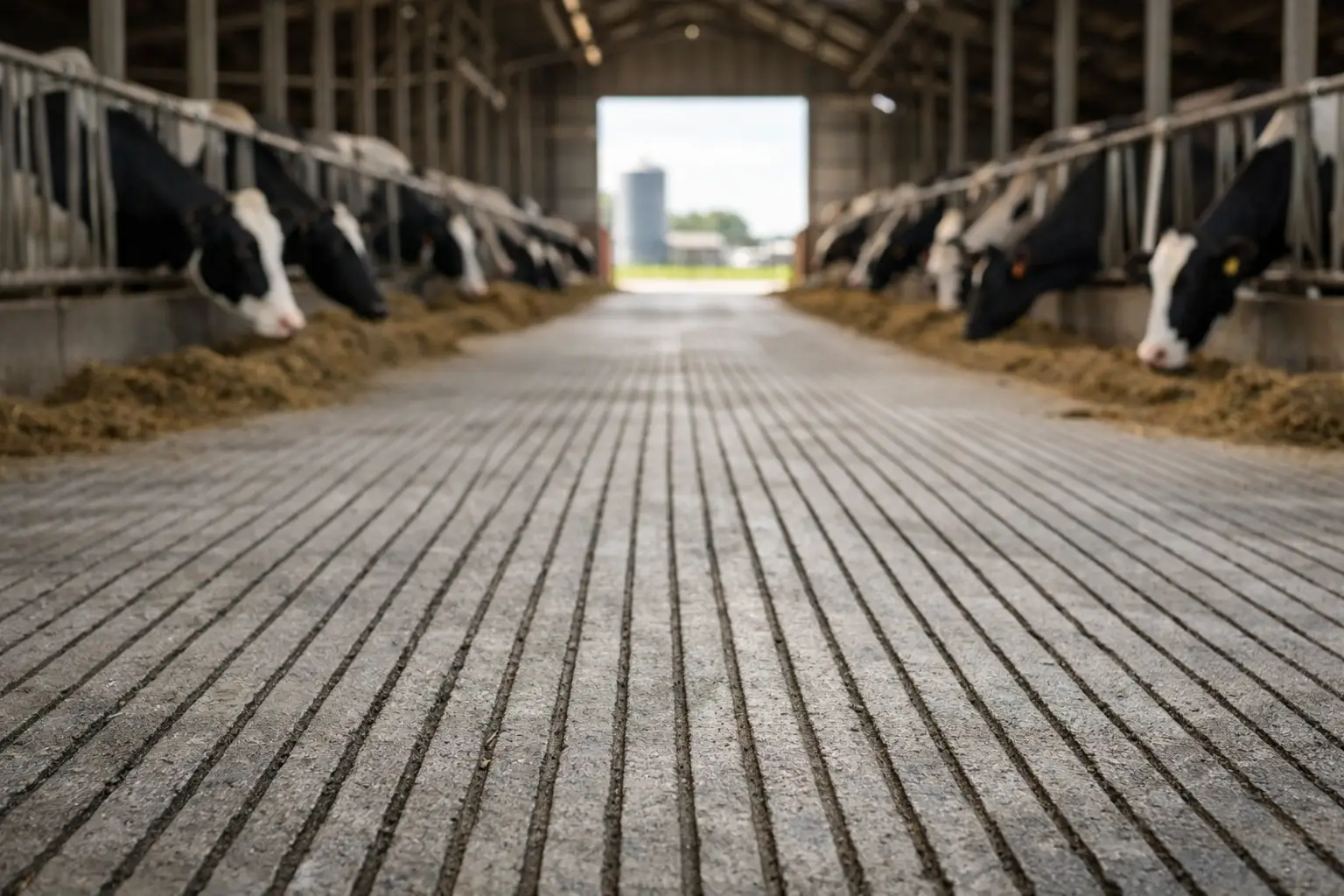
A dairy exit race can put thousands of hooves across the same strip of concrete every day. Add slurry, wash-down water, feed residues and tight turning points, and it is easy to see why farm managers ask: how long does grooved concrete last? A properly cut, well-maintained grooved surface commonly provides reliable traction for 10 to 20 years, and sometimes longer. The useful lifespan depends far more on the condition of the base concrete, livestock traffic and drainage than on a single number.
Grooving is not a cosmetic finish. It is a traction treatment designed to give hooves a positive grip under wet farm conditions. When the profile is cut to suit the location and the concrete underneath is sound, it can reduce slips, support more confident cattle movement and protect the long-term value of the yard or shed floor.
How Long Does Grooved Concrete Last in Farm Conditions?
For most dairy, beef and sheep operations, concrete grooves themselves do not simply wear away overnight. Diamond-cut grooves are cut into the slab rather than applied as a coating, so there is no surface layer to peel or flake off. On sound concrete with sensible drainage, the profile can remain effective for well over a decade.
The wider question is whether the concrete and its traction performance will last. A high-traffic dairy yard may need attention sooner than a lightly used beef handling area. Areas where cows stop, turn, push against gates or queue for milking wear differently from straight sections where animals keep moving.
A practical expectation looks like this:
- Grooves in sound, well-drained concrete may perform effectively for 10 to 20 years or more.
- High-pressure locations such as dairy entries, backing gates, drafting points and sharp turns may require assessment or local repair earlier.
- Concrete that is already cracked, soft, badly scaled or holding water may need repair before grooving, regardless of the age of the slab.
- A maintained slab can outlast its initial traction profile, but worn high-use zones can often be re-grooved or treated locally rather than replaced in full.
These are working ranges, not guarantees. The right answer comes from inspecting the surface, the stock flow and the places where water and manure sit after a busy milking.
What Shortens the Life of Grooved Concrete?
The condition of the original slab
Grooving improves grip. It does not repair weak concrete. If the slab is breaking down through surface scaling, cracking, poor finishing or old chemical damage, cutting grooves into it may expose more vulnerable material or provide only a short-term result.
Before any traction work, check for loose aggregate, deep cracks, hollow-sounding sections, crumbling edges and areas where the surface has become noticeably lower. Repairs may be the better first step. A firm, well-bonded slab gives grooves the foundation they need to perform properly.
Water, slurry and drainage
Wet concrete is part of farm life, but standing water is hard on both traction and concrete durability. Water carries slurry and abrasive grit across the surface, while poor falls allow contamination to remain in the same locations for long periods.
Grooves help break the wet surface and give hooves an edge to grip, but they work best alongside drainage. If a wash-down area constantly ponds, cattle may still hesitate or slip, and the concrete will face greater wear. Correcting falls, clearing drains and managing wash-down flow can make as much difference to surface life as the grooving pattern itself.
Traffic volume and stock behaviour
Traffic is not evenly spread across a farm floor. Cows walking calmly in a straight line create a different wear pattern from cows bunching at a gate or pivoting hard around a corner. Large herds, frequent milkings and narrow transitions increase pressure on the same sections day after day.
Look closely at the spots where animals lose confidence. A cow that braces before a turn, takes short steps or swings wide around a wet patch is showing you where the surface needs attention. Addressing those points early can prevent a small traction issue from becoming a lameness, injury or staff-safety problem.
Cleaning methods and abrasive contamination
Regular cleaning is necessary, but aggressive scraping, unsuitable attachments and repeated grinding from embedded stones can damage the surface over time. The goal is to remove slurry and debris without attacking the concrete itself.
Keep scraper blades correctly set, avoid dragging sharp metal over damaged areas, and remove loose stone or metal that can grind into the floor. High-pressure cleaning should also be managed so it does not repeatedly force contaminants into open cracks or weak joints.
Signs Your Grooved Concrete Needs Attention
Do not wait for a major slip before reviewing a surface. The clearest warning signs usually appear in the way animals move across the concrete.
Watch for hesitation at entries, skidding around corners, cows spreading their legs for balance, hoof scuffing, repeated slips in one area or reluctance to move through the yard. Staff may also notice that a surface feels polished underfoot, especially after wash-down.
A visual inspection matters too. Grooves that appear shallow, rounded or clogged with compacted material may not provide the same grip they once did. Cracks, spalls, broken edges, exposed aggregate and puddling all deserve attention because they affect both traction and hoof comfort.
Not every issue calls for replacement. Local concrete repairs, joint repairs, drainage improvements, re-grooving or bush hammering can be used where they suit the slab and the farm layout. The best approach is targeted: repair structural defects first, then restore a safe, workable texture in the areas carrying the most risk.
Can Grooved Concrete Be Re-Grooved?
In many cases, yes. If the slab remains structurally sound and has adequate thickness, an experienced concrete specialist can assess whether re-grooving is appropriate. Re-grooving can restore a defined traction profile where years of traffic have softened the original cut.
However, deeper cutting is not automatically better. Concrete has limits, and excessive cutting can weaken thin or already damaged slabs. The groove spacing, width and depth need to match the surface condition, livestock type and location. A dairy platform, feed pad, collecting yard and sheep handling area can each require a different solution.
Where the concrete is too damaged for another cut, repair or replacement of the affected section may deliver a better long-term result. This is why an inspection should consider more than the grooves. The whole surface needs to be assessed as a working system.
How to Get More Life From a Grooved Farm Surface
Long service life starts with good installation, but day-to-day management keeps that value in the ground. Keep drains and channels clear, deal with puddling before it becomes routine, and repair cracks or broken concrete while they are still localised.
Plan periodic checks around high-use areas rather than waiting for annual maintenance. The period before calving, a herd expansion or a yard upgrade is a sensible time to review traction, as increased pressure on the floor can quickly expose weak points.
It also pays to consider animal flow. Gates, backing systems, race width and sharp corners all affect how cattle load the concrete. Sometimes a small layout change reduces turning pressure and makes a grooved surface last longer. Better movement is easier on the floor, the herd and the people working around them.
For farms that cannot afford lengthy downtime, specialist contractors can often schedule traction work and repairs around stock movements, including after-hours options where practical. Happy Hoof focuses on this kind of farm-specific assessment, matching concrete treatment to traffic, drainage and hoof-safety needs rather than applying a one-size-fits-all pattern.
A grooved concrete surface should be treated as part of your herd health plan, not a set-and-forget building job. When cattle walk confidently, water drains away and repairs are handled early, the floor keeps doing the quiet work that supports safer days and healthier hooves.