
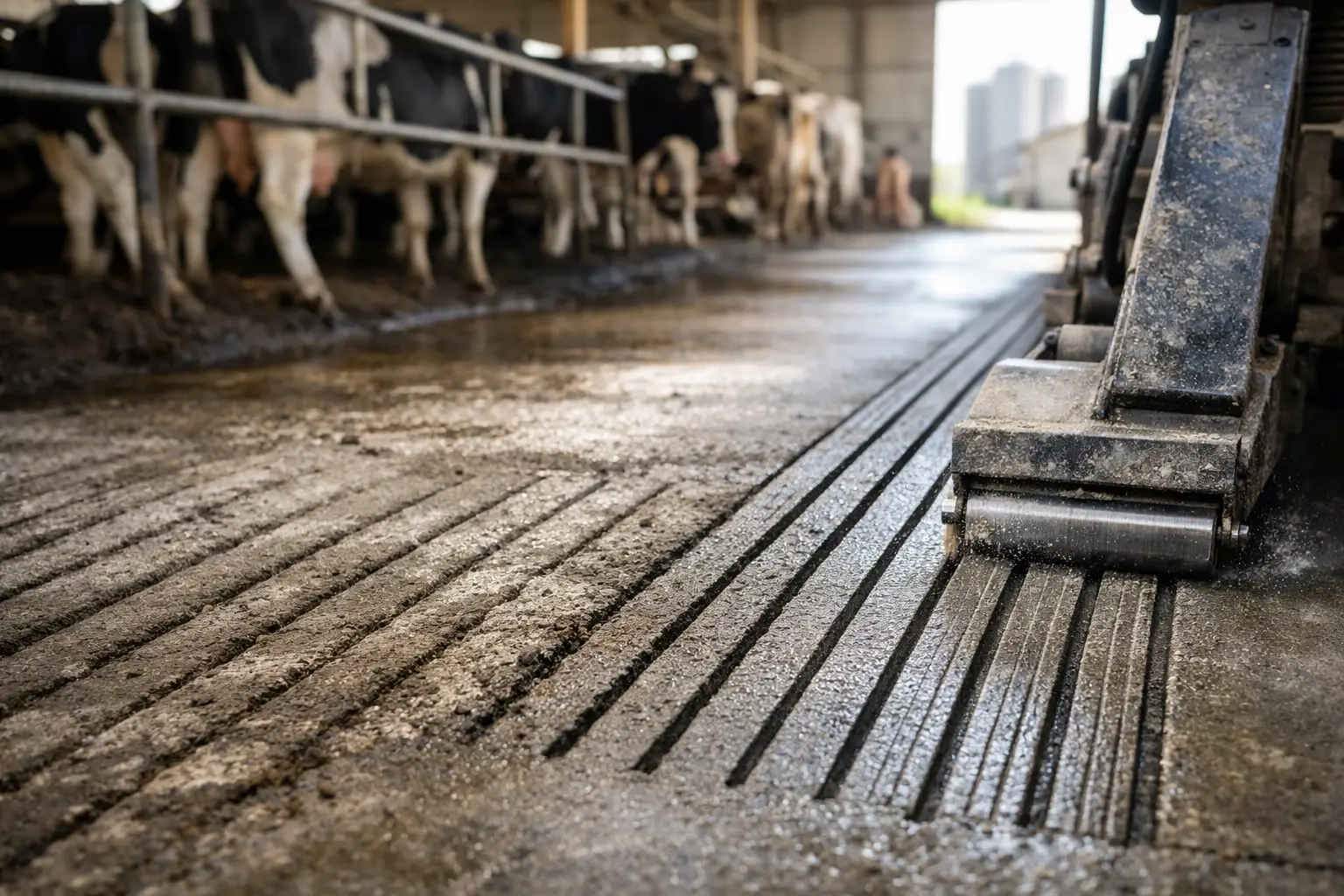
A dairy yard usually tells you before a cow does. If stock are shortening their stride, hesitating at corners, or slipping where they used to walk cleanly, the surface has likely lost the grip it once had. That is usually the real answer to when should farm concrete be re-grooved – not based on a fixed date, but when wear starts affecting traction, hoof health, and safe stock flow.
Concrete on farms does hard kilometres. It carries repeated hoof traffic, machinery, washdown water, effluent, feed residue, and weather extremes. Even well-installed grooving does not stay at peak performance forever. The grooves gradually wear down, edges round off, and the surface becomes smoother than it should be for livestock moving through wet, high-pressure areas.
When should farm concrete be re-grooved?
In practical terms, farm concrete should be re-grooved when the existing surface no longer gives reliable traction in the conditions it is used in every day. On some farms that can happen sooner in high-traffic areas such as the dairy shed entry, collecting yard, feed pad, race junctions, and backing gate zones. Lower-use areas may hold up much longer.
There is no one-size-fits-all interval because wear depends on stocking rate, concrete quality, drainage, cleaning methods, slope, and how aggressively the area is used. A busy dairy platform with regular washdowns and tight turning points will usually need attention sooner than a lightly used beef yard. That said, if you are waiting for frequent slips before acting, you are already late.
The better approach is to re-groove when you first see performance dropping off. That might be visible polishing on the surface, hesitant cow movement, or lameness pressure that cannot be explained by nutrition or other management factors alone.
The signs your concrete is due for re-grooving
The most obvious sign is slipping, but that is not the only one. Often the earlier warning signs are more subtle. Cows may walk slower into the shed, spread their weight differently, or avoid putting power through the rear legs on wet concrete. You may also notice more bunching, baulking, or uneven flow where the yard used to move stock easily.
Surface appearance matters as well. If the concrete looks polished, shiny, or worn flat between the old groove lines, grip has likely reduced. Grooves that were once sharp and defined can become shallow and rounded over time. At that point, water and slurry sit on the surface more easily, which increases the slip risk again.
Another clue is where the problem shows up. Re-grooving is often needed first in pressure points rather than across a whole farm. Areas worth checking closely include:
- dairy shed entrances and exits
- holding yards and collecting yards
- feed pads and loafing areas
- races with regular washdown or poor drainage
- corners, slopes, and spots where stock turn under pressure
If workers are also noticing the surface feels slick under gumboots, that is a useful warning. Farm concrete that is unsafe for people is often already compromising livestock confidence and hoof loading.
Why timing matters more than people think
Delaying re-grooving is not just a surface issue. It becomes an animal welfare issue and a productivity issue. When cattle do not trust the floor, they change the way they move. That can increase strain through the hoof and limb, contribute to bruising and wear problems, and add pressure to lameness management.
There is also the day-to-day operational cost. Slower yard flow means more time moving stock, more stress in the dairy, and more risk during wet conditions. A slippery collecting yard can cost you in labour efficiency long before it causes a visible injury.
The other side of the timing question is acting too early or choosing the wrong treatment. Not every worn slab needs full replacement, and not every surface needs the same grooving pattern. If the concrete is still structurally sound, re-grooving can restore function without the cost and disruption of rebuilding. But if the slab is crumbling, pumping water, breaking at joints, or holding major ponding, surface treatment alone may not solve the underlying problem.
How long does farm grooving usually last?
It depends on the job and the environment. On well-drained concrete with good original installation and moderate use, grooving can perform well for years. In high-wear dairy environments, especially where stock are densely concentrated and the surface is regularly scraped or washed, wear can show much sooner.
This is why calendar-based rules can be misleading. A three-year-old surface in a harsh location may need attention before a six-year-old surface elsewhere. Looking at real traction and stock movement gives you a better guide than simply counting years.
If you manage several traffic zones, it also makes sense to think in sections rather than treating the whole farm the same. The collecting yard may need re-grooving while adjacent areas still have useful life left in them.
When should farm concrete be re-grooved instead of repaired or replaced?
Re-grooving is the right move when the main issue is lost grip, not failed concrete. If the slab is fundamentally sound but the texture has worn smooth, re-grooving can restore slip resistance and improve movement without major structural work.
Repairs come into the picture when there are isolated defects such as chipped sections, local cracking, or damaged edges that affect safety or drainage. Replacement is usually the heavier option for slabs with broad structural failure, poor base support, severe settlement, or a layout that no longer works for the way the yard is used.
That distinction matters because traction problems are not always just traction problems. If a yard has poor fall and water sits across the surface, fresh grooves will help, but they will not overcome bad drainage forever. Likewise, if concrete strength is poor and the surface is breaking down, re-grooving may have limited life compared with repairing the slab properly first.
What a proper assessment should consider
A good assessment goes beyond asking whether the surface looks worn. It should consider animal traffic, slope, drainage, manure and water load, concrete condition, and where slips are most likely to happen. The right groove spacing and pattern can vary depending on whether the area is a holding yard, lane, feed pad, or shed approach.
This is also where farm-specific experience matters. Agricultural concrete is not the same as a generic commercial floor. Livestock movement, hoof impact, moisture, and cleaning routines all affect how the surface performs over time. A contractor who understands hoof health and stock behaviour will usually give better advice than someone looking at it as ordinary concrete texturing.
In some cases, bush hammering or another surface treatment may be the better fit for a particular area, or part of the site may need repairs before any grooving work starts. The best result comes from matching the treatment to the way the surface is actually used.
Planning re-grooving with minimal disruption
Many farms put the work off because they assume access will be too hard to manage. In reality, the job can often be staged around milking schedules, stock flow, and critical traffic areas. Night works or out-of-hours scheduling can also make sense where downtime needs to be kept tight.
The key is not to wait until the surface becomes a serious hazard. Once slips are frequent, your options get narrower because the work becomes urgent instead of planned. A planned re-groove lets you choose the timing, isolate areas properly, and deal with any drainage or repair issues before they become bigger problems.
If you are unsure, a site inspection is usually the fastest way to get clarity. An experienced agricultural concrete specialist can tell you whether the grooves still have life in them, whether the slab is suitable for re-grooving, and which areas should be prioritised first.
Good farm concrete should support confident movement, cleaner flow, and healthier hooves under real operating conditions. If your surface is asking animals to tread carefully every day, it is probably time to act before that caution turns into lost production.