A cow that hesitates at the dairy entrance is usually telling you something. When stock start shortening their stride, bunching at gateways, or slipping on the turn into the yard, the problem is often underfoot. If you want to reduce lameness with better flooring, surface grip, drainage and concrete condition need as much attention as feed, bedding and hoof care.
Lameness rarely comes from one cause alone. It builds over time through repeated stress, poor footing, wet conditions and uneven hoof wear. That is why flooring should never be treated as a background issue. On a working farm, it is part of animal health, staff safety and day-to-day efficiency.
Why flooring has such a big impact on lameness
Every step on poor concrete asks more from the hoof than it should. If the surface is too smooth, animals tense up to stay upright. That changes gait, increases strain through the leg and encourages cautious movement. If the surface is too aggressive, it can wear hooves too fast and create a different set of problems.
The goal is not simply to make concrete rough. The goal is to create consistent traction that supports natural movement in wet, high-traffic farm conditions. Good flooring helps stock walk with confidence, turn more safely and spend less time under avoidable stress.
That matters because lame animals do not just cost money at treatment time. They often produce less, cycle poorly, lose condition and need more labour. In dairy systems, even small slips repeated twice a day on the way to milking can add up quickly.
Reduce lameness with better flooring in the right areas
Not every surface on the farm creates the same level of risk. Some areas do most of the damage because they combine pressure, moisture and frequent movement.
Dairy sheds and holding yards
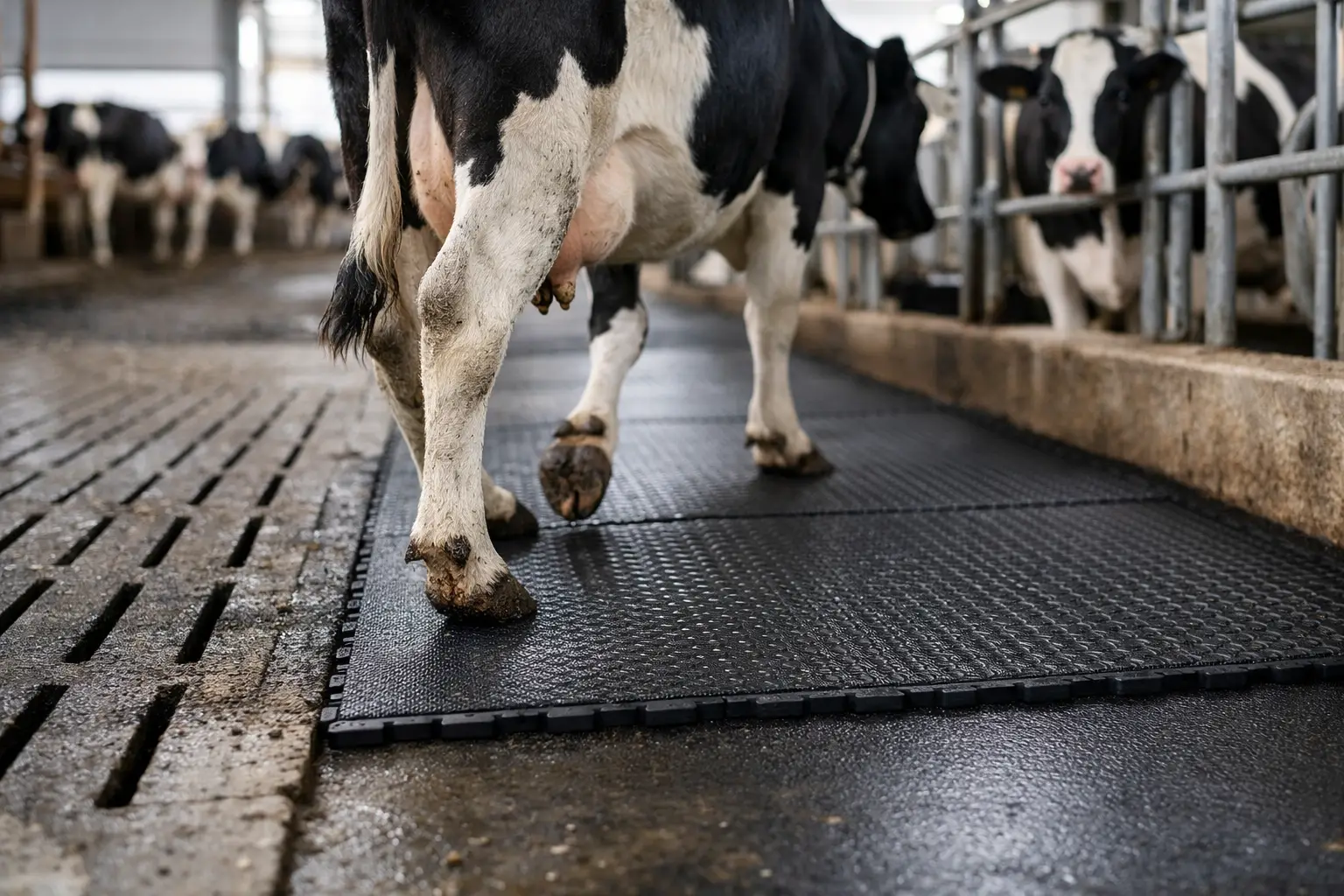
These are usually the first places to assess. Cows are standing on concrete more often here, often in wet conditions, and they are turning, bunching and stopping. Smooth concrete in these zones can become dangerous long before it looks obviously worn out.
Holding yards are especially hard on hooves because animals are close together and cannot always choose their footing. If the yard is polished from years of traffic, stock compensate by moving stiffly or leaning into each step. That extra loading is where claw issues and strain can start to build.
Feed pads and walkways
Feed areas need a balance of grip and cleanability. Too smooth and there is slipping around feed competition. Too rough and you can increase wear where animals spend longer periods standing. The right finish depends on traffic levels, drainage and how the area is managed through the year.
Laneways and transitions
Lameness is often worsened by movement between surfaces rather than one surface alone. A decent yard feeding into a slick race, or a well-textured shed exit followed by broken concrete, creates inconsistency in stride. Cows notice that immediately, even if people walking through do not.
Transitions also matter where there are changes in slope. A slight grade is manageable with proper texture and drainage. The same grade becomes a risk when slurry, water and worn concrete combine.
What better flooring actually means
Better flooring is not about replacing every slab on the property. In many cases, improving the existing surface delivers the result. What matters is matching the concrete treatment to the job.
Grooving is one of the most effective ways to restore traction on slippery concrete. Properly cut grooves give hooves a more reliable bite on wet surfaces without creating sharp, damaging edges. Spacing, depth and pattern all matter. A generic cut is not the same as a surface designed for livestock movement.
Bush hammering is another option where a textured finish is needed across a wider area. It can improve grip on worn concrete and help remove the polished surface layer that develops over time. In some settings, it is the better fit than grooving. In others, a combination of methods across different zones makes more sense.
Repairs are just as important as texturing. Cracks, potholes, spalling and broken edges change how stock place their feet. Even if a floor still has some grip, damaged sections create uneven loading and hesitation. A sound surface with the right finish will usually outperform rough concrete that is falling apart.
The trade-off between grip and hoof wear
This is where experience matters. More texture is not automatically better. Flooring that is too aggressive can contribute to excessive hoof wear, especially in high-traffic areas where animals walk the same route every day.
The best result usually sits in the middle. You want enough traction to prevent slipping and support steady movement, but not so much abrasion that the surface becomes hard on hooves over time. That balance can vary between a dairy yard, a feed pad and a laneway. It also depends on herd size, traffic patterns and how long animals stand on the surface.
That is why a site inspection is worth more than a guess. The same treatment applied everywhere can solve one issue while creating another.
Drainage matters more than many farms realise
Even a well-finished surface struggles if water and effluent have nowhere to go. Standing moisture reduces traction, softens hooves and keeps concrete slick for longer. If stock are repeatedly walking through wet patches or pooling areas, lameness risk stays high no matter how good the texture is.
Drainage should be assessed with the flooring itself. That includes slope, fall direction, low spots and how quickly the surface clears after washdown or rain. Sometimes the fix is primarily a traction job. Other times, the real issue is that the concrete never gets a chance to perform because it stays wet all day.
Good drainage also helps with hygiene and cleaning efficiency, which feeds back into hoof health. Cleaner, drier traffic areas are easier on animals and easier on staff.
Signs your flooring is contributing to the problem
Most farms do not need a formal report to know when a surface is becoming a risk. The signs usually show up in livestock behaviour first.
If animals are slowing at corners, slipping on entry or exit, standing cautiously, or avoiding certain routes, pay attention. If staff are losing confidence on the same surfaces, that is another clear indicator. Concrete can look serviceable from a distance and still be too polished where it counts.
It is also worth checking areas where lameness seems to spike after wet weather or during periods of heavier use. Seasonal patterns often point to underfoot conditions that are just coping in summer and failing in winter.
Why timing and installation approach matter
A good flooring job should improve the farm without creating unnecessary downtime. On busy operations, that practical side matters. Work often needs to fit around milking schedules, stock flow and seasonal pressure.
That is why after-hours or staged work can be a genuine advantage, not just a convenience. If high-risk areas can be treated with minimal disruption, farms are more likely to address the problem early instead of putting it off for another season.
Installation quality matters as much as timing. Poorly executed cutting or surface treatment can leave inconsistent results across the floor. On livestock surfaces, consistency is the whole point. Animals need to trust the surface step after step.
Flooring as a farm performance decision
The strongest reason to invest in better flooring is not that it looks tidier. It is that safer, more comfortable movement supports the whole system. Healthier hooves mean fewer setbacks, calmer stock flow and less avoidable pressure on labour.
For that reason, flooring should be assessed the same way you would assess any other productive asset on the farm. Ask whether the current surface is helping stock move well, whether it drains properly, and whether repairs are overdue. If the answer is no, there is a cost to waiting.
Happy Hoof works with farms where the issue is not abstract. It is a polished yard, a slippery shed exit, a worn feed pad or a cracked section that animals hit every day. The right concrete treatment can make those areas safer and far more reliable.
If you are trying to reduce lameness with better flooring, start where stock feel the pressure most. The concrete under their feet may be doing more damage, or more good, than you think.