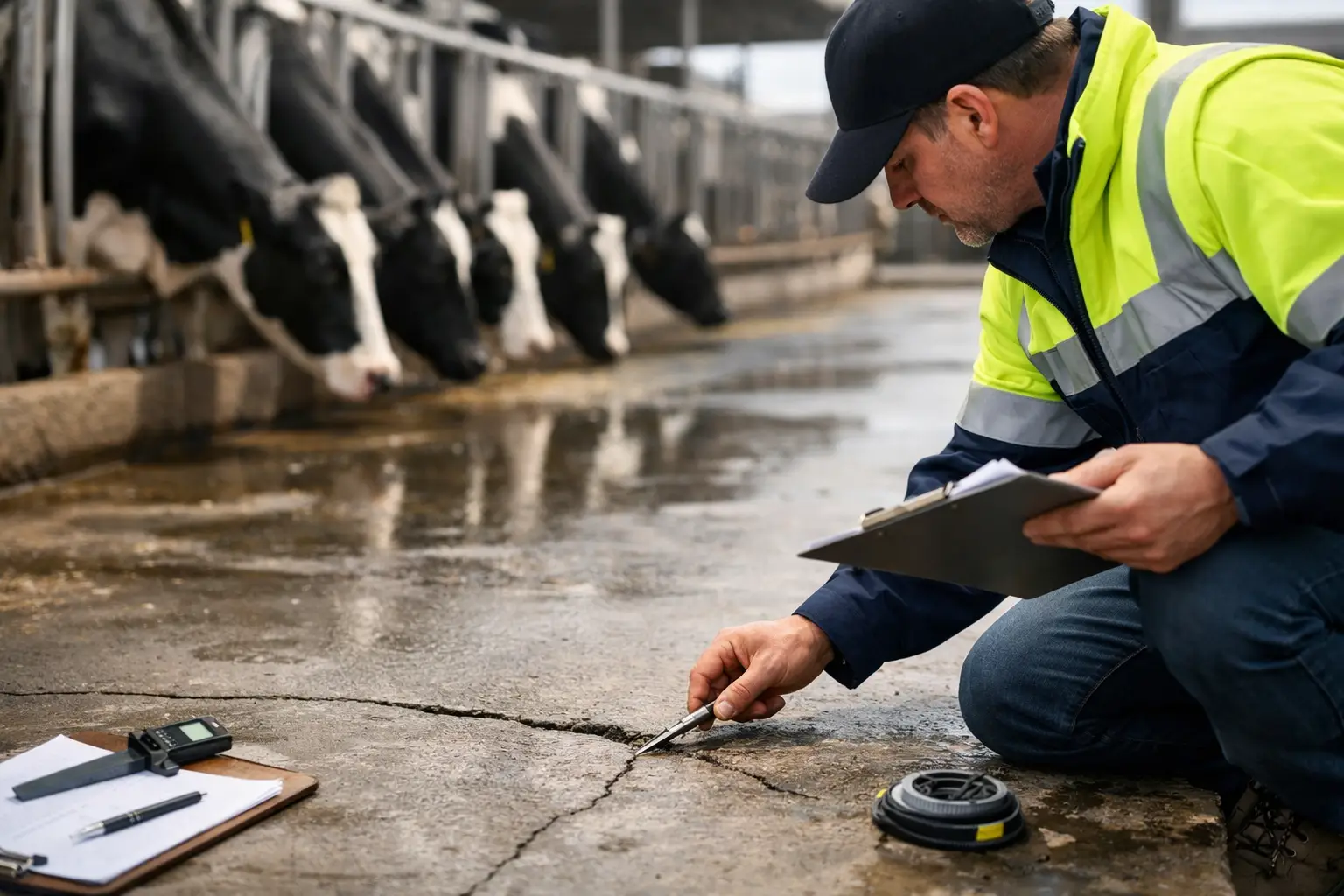
A cow that hesitates at the yard entrance, spreads her feet on the return race, or takes short careful steps is telling you something about the surface underfoot. A proper guide to dairy yard concrete inspections starts with those daily observations, then checks the concrete for the causes: lost traction, poor drainage, worn areas, cracking and surface damage that can affect hoof health, staff safety and milking flow.
Concrete in a dairy yard works harder than most farm surfaces. It carries repeated hoof traffic, effluent, wash-down water, machinery and weather exposure every day. A yard can look sound from the gate while specific high-traffic zones have become slippery or uncomfortable. Regular inspections help you identify those issues early, before they turn into avoidable lameness, injuries or a larger repair bill.
Why dairy yard concrete needs regular inspection
Concrete does not fail all at once. Its performance usually declines in the places cattle use most – around the dairy entrance and exit, backing gate, holding yard corners, wash-down areas, troughs and the first stretch of the return race. Smooth, polished concrete may be easy to hose down, but it offers less grip when it is wet or carrying manure.
The right surface must balance traction with hoof comfort and cleanability. Excessively aggressive or damaged concrete can contribute to sole wear and make cleaning more difficult. Too little texture raises the risk of slips, especially when cows turn, bunch up or are under pressure. The best treatment depends on the existing slab, traffic pattern, drainage and how the yard is managed.
Inspection is therefore not simply a concrete maintenance task. It is part of managing animal welfare, staff safety and the efficient movement of the herd.
How to inspect a dairy yard concrete surface
Walk the yard when it is dry, then inspect it again during or immediately after normal wash-down. Conditions change once water and effluent are on the surface, and that is when traction and drainage problems become clear.
Do not rush the walk-through. Follow the same path cattle take, paying close attention to transitions between surfaces, turning points and areas where cows stop or wait. If practical, observe cattle moving through the yard as well. Their behaviour often reveals more than a quick visual check.
Start with cow movement and behaviour
Watch for slipping, splaying, reluctance to move, bunching at a gateway, sharp turns taken very slowly, or cows favouring one side of a race. One isolated slip may be caused by a moment of pressure or a patch of manure. Repeated caution in the same location points to a surface or layout issue.
Also consider what is happening around the concrete. A poorly placed gate, tight turn, sudden change in light or an uneven transition can make cattle lose confidence even if the slab itself is in reasonable condition. Concrete inspection works best when it considers the whole movement route, not just the finish on the floor.
Check traction where it matters most
Look closely at the surface texture. Newer textured concrete has clear, consistent grooves or a uniform roughened finish. As concrete wears, that texture can flatten, particularly in wheel paths and areas exposed to constant hoof movement.
Run the sole of a clean boot across the surface when safe to do so. A polished feel or visible sheen is a warning sign, but it is not the only one. Compare high-traffic areas with less-used parts of the yard. If the concrete near the exit feels noticeably smoother than an outer section, the surface may have worn beyond its useful traction level.
Take note of uneven texture as well. Patchy treatments can leave cows moving from a grippy section onto a smooth one during a turn. Consistency through the main travel line is often more valuable than treating only the most obvious slippery patch.
Look for water, effluent and drainage problems
Standing water is one of the clearest indicators that concrete needs attention. After wash-down, water should move steadily towards drains rather than sitting in shallow pools, along edges or in low points at gateways.
Ponding reduces available grip and keeps the surface wet for longer. It also increases the time hooves are exposed to moisture and effluent, which is not ideal for hoof condition. Check whether drains are blocked, damaged or simply unable to cope with the water flow. In some cases, cleaning the drainage system solves the immediate issue. In others, the fall of the concrete or the surface condition needs a more considered repair.
Pay particular attention to the dairy exit and return race. These zones often combine wet hooves, manure, turning cattle and urgency to get back to grazing. A small drainage fault here can have an outsized effect on slip risk.
Identify cracking, spalling and broken edges
Cracks are not all equal. Fine hairline cracking may be cosmetic, while wider cracks, displaced slab edges or crumbling concrete can create a trip point, trap effluent and worsen under ongoing traffic. Mark any crack that is opening, moving, or collecting debris so it can be monitored between inspections.
Spalling – where the surface breaks away – deserves prompt attention. It can expose rough aggregate, create a sharp or uneven edge and allow water to enter the slab. Check around drains, expansion joints, feed areas and places where machinery turns. These are common stress points.
Examine joints as closely as the concrete itself. Failed sealant, broken joint edges or gaps that hold manure can become difficult to clean and uncomfortable for livestock. A repair should restore a sound, level transition rather than merely cover the damage for a short period.
Set a practical inspection routine
A brief visual check during daily work is useful, but schedule a more deliberate inspection at least every few months and after major weather events, concrete damage or a change in cattle behaviour. High-use yards may need more frequent attention, particularly through wet periods.
Keep a simple record of what you find. Photos from the same position are helpful for tracking whether a crack, low spot or worn surface is getting worse. Record the location, date, conditions and any action taken. This gives you a clearer basis for deciding whether cleaning, repair or surface treatment is needed.
For a consistent inspection, assess these areas each time:
- Dairy entry, exit and backing gate zones
- Holding yard corners, gates and high-pressure turns
- Wash-down paths, drain lines and known low points
- Return races, transitions and areas with regular machine traffic
- Cracks, joints, patches and slab edges throughout the yard
This routine also helps separate a surface issue from a management issue. If the concrete remains sound but cows slip only when the yard is heavily loaded, cow flow and handling pressure may need adjustment. If slipping persists during normal movement and wet conditions, the surface should be assessed by a concrete specialist.
When cleaning is enough, and when the surface needs work
Build-up from manure, algae, feed residue or minerals can make even well-textured concrete slippery. A thorough clean may restore traction where the underlying finish is still in good condition. This is why inspection should always start with a clean-enough surface to see what is actually happening.
However, cleaning cannot replace missing texture. If the concrete has become polished through wear, if grooves are shallow or inconsistent, or if repeated slips occur in the same zone, surface treatment may be the right next step. Concrete grooving can provide directional grip for cattle movement, while bush hammering can create a more even slip-resistant profile across a wider area. The most suitable option depends on the slab condition and where cows travel, turn and stand.
Repairs should come before or alongside surface treatment when there are unstable patches, significant cracking, loose edges or drainage faults. Treating over failing concrete does not solve the underlying problem. A good assessment looks at the order of work as well as the treatment itself, so the finished surface performs for the long term.
Know when to bring in a specialist
Call for a professional inspection when cows are slipping, lameness concerns are increasing around yard use, concrete is visibly worn or broken, or water is consistently pooling after wash-down. It is also worth getting advice before extending a yard, changing drainage or applying a treatment to a large area.
A specialist can assess traction, surface wear, slope, drainage and cattle traffic together. That matters because a solution that works on a straight return race may not suit a tight dairy exit or a holding area where cows turn and wait. Happy Hoof approaches these decisions around safer footing, healthy hooves and minimal interruption to day-to-day farm operations.
The best time to inspect dairy yard concrete is before cows lose confidence in it. A surface that sheds water, provides reliable grip and stays even under traffic gives the herd one less reason to hesitate – and gives your team a safer, smoother day in the yard.