
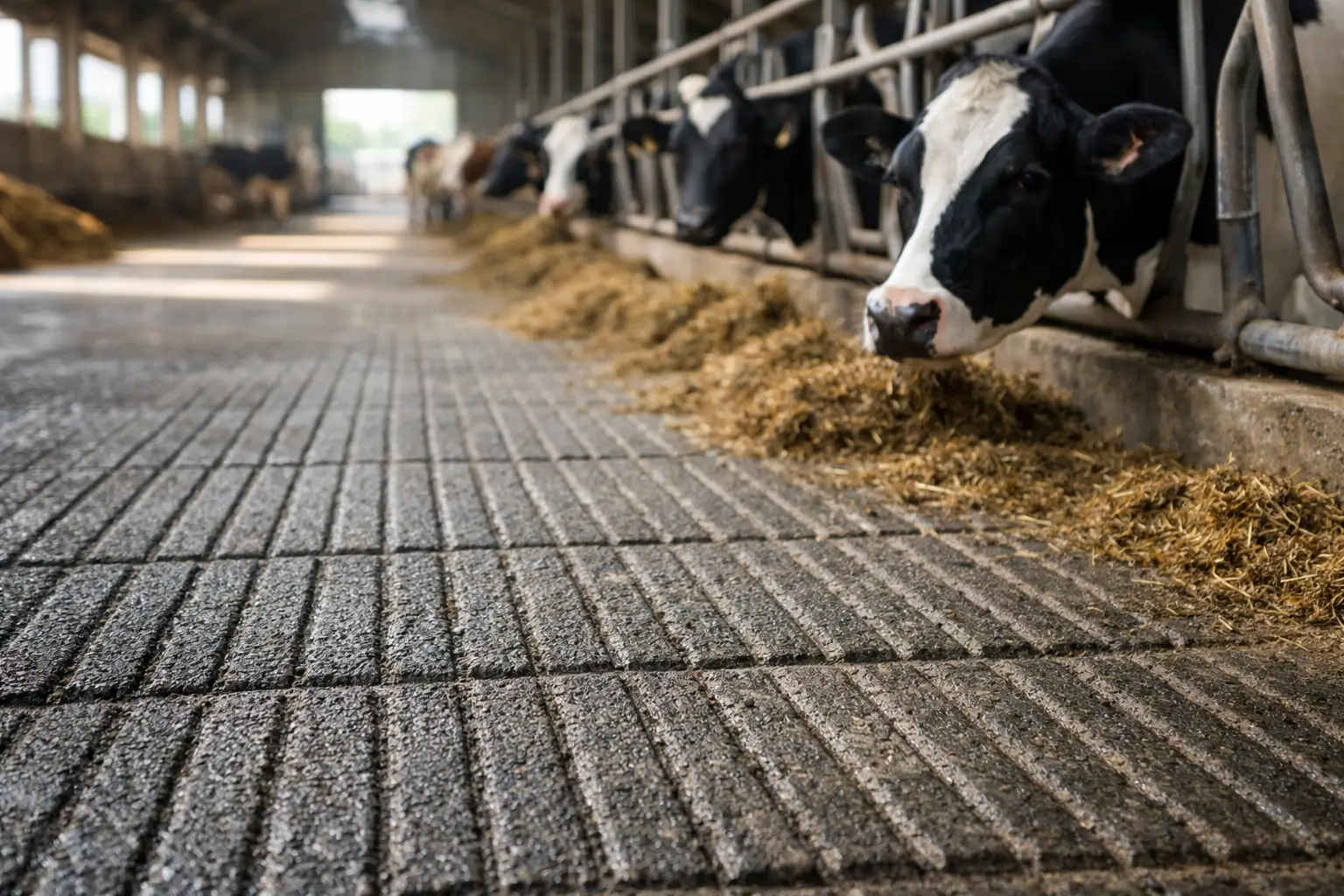
A cow that loses confidence on concrete does not simply slow down. She takes shorter steps, turns cautiously, puts extra strain on her joints and may avoid the area altogether. In a busy dairy or livestock yard, that hesitation can quickly become a safety issue, a hoof-health concern and a drag on daily flow. Knowing how to choose cow yard grooving starts with looking beyond a rougher surface and focusing on where traction, drainage and long-term concrete performance matter most.
Start with the traffic, water and pressure points
No two yards wear in the same way. The concrete outside the dairy, on a return lane, in a holding area or around a water trough is exposed to different traffic patterns and different amounts of water, effluent and feed. A surface that works well in a lightly used shed passage may not provide enough grip at a wet exit where cows are turning and bunching several times a day.
Walk the yard when it is operating, not just when it is clean and dry. Look for the places where cows hesitate, spread their legs, slip, rush or cut corners. Polished patches, ponding water, slurry build-up and chipped concrete are all useful signs that the surface needs attention. Staff feedback matters too. If people are uneasy moving stock through a particular area, the risk is already affecting the job.
The highest-priority areas are usually entries and exits, sharp turns, backing gates, drafting points, wash-down zones and routes that remain wet for long periods. Grooving an entire yard may be appropriate, but it is not always the best use of budget. A proper site assessment helps target the areas where improved grip will make the biggest difference to animal movement and worker safety.
Choose a groove pattern suited to cow movement
Grooving is not simply about cutting as many lines as possible into concrete. The direction, spacing and depth of the cuts need to suit the way stock travel over the surface. Poorly planned grooves can reduce the benefit of the work, trap material or create edges that wear unevenly under heavy traffic.
For straight cow flow, the groove orientation should help provide resistance under hoof without encouraging a slip along the direction of travel. At turns and high-pressure gathering points, the pattern needs to account for cows placing their feet at different angles. This is where a specialist approach matters. Livestock do not move through a yard like tyres on a ute – their footing changes with pace, confidence, hoof condition and pressure from the herd behind them.
The right profile also depends on the existing concrete. Hard, sound concrete can often take a clean, consistent groove pattern. Older slabs may need repairs first, particularly where cracks, spalling or broken edges are already developing. Cutting grooves into failing concrete without addressing the underlying issue can leave you with a short-lived result and more maintenance later.
Depth and spacing should be practical, not aggressive
Deeper is not automatically better. Grooves need enough definition to improve grip in wet conditions, but an overly aggressive finish can be harder to clean, collect debris and create unnecessary wear in the wrong environment. The goal is a consistent, slip-resistant surface that supports natural hoof placement and can still be managed as part of normal yard cleaning.
A contractor should explain why a particular groove depth and spacing suits your yard, rather than applying one pattern everywhere. The answer may change between a dairy exit, a high-traffic race and a wet holding area. That level of tailoring is what turns concrete cutting into a practical farm safety improvement.
Check drainage before committing to grooving
Grooving improves traction, but it cannot solve poor drainage on its own. If water, effluent or wash-down material regularly pools in a low spot, cows are still being asked to walk through a slippery layer. The grooved surface may help, yet the underlying hazard remains.
Before work begins, assess the fall of the concrete, drain locations and how the yard is cleaned. Areas with standing water may need drainage repairs, levelling work or a different surface treatment alongside grooving. This is especially relevant near dairy exits and wash-down areas, where repeated wetting can make otherwise sound concrete slick.
Also consider where material is likely to sit after scraping. A groove pattern should support practical cleaning rather than make daily maintenance harder. The best outcome balances traction with hygiene, drainage and the routines your team can realistically maintain through the season.
Assess the condition and thickness of the slab
A visual inspection tells part of the story, but good grooving decisions also consider the strength and remaining life of the concrete. Slabs with widespread cracking, loose aggregate, deep wear or damaged joints may require repair work before any cutting starts. Grooving is designed to improve a functional concrete surface, not disguise a slab that is breaking down.
Ask for damaged areas to be identified clearly. Localised repairs can often extend the usable life of a yard and provide a stable base for grooving. In other cases, a heavily deteriorated section may be better replaced than repeatedly patched. The right choice depends on the extent of damage, the load the area carries and whether water is getting beneath the slab.
This is also the time to consider heavy machinery. Feed equipment, scraping machinery and regular vehicle access can affect how the surface wears over time. A good design accounts for both hoof traffic and machinery use, rather than treating them as separate problems.
Select a contractor with livestock flooring experience
Concrete cutting equipment is only one part of the job. Cow yard grooving needs a contractor who understands animal movement, wet agricultural environments and the consequences of inconsistent work. Straight, evenly cut grooves and tidy transitions reduce avoidable weak points and make the finished area easier to manage.
When comparing providers, ask how they assess drainage, slopes, traffic routes and existing concrete damage. Find out whether they can complete repairs where needed, manage dust and slurry during the job, and work around milking schedules. You should also ask how they handle edges, drains, joints and areas close to walls or gates, as these details often determine whether the finish performs well over time.
It is worth looking for a contractor prepared to recommend a smaller, higher-priority scope if that is what the yard needs. The best advice is not always the largest job. Happy Hoof approaches grooving as a livestock safety and hoof-health investment, with the surface treatment matched to the operating conditions on site.
Plan the work around farm operations
Downtime matters on a working farm. The grooving method, work area and timing should be planned so stock can continue to move safely and the dairy routine is not unnecessarily disrupted. For some farms, after-hours or night concrete grooving is the practical option, particularly where the main yard is needed every day.
A clear work plan should cover access, stock separation, cleaning before the crew arrives and when the treated area can return to service. If the job is staged, decide which routes will remain open and how cows will be redirected without creating new pressure points elsewhere. A short-term detour through a muddy or slick lane can undo the benefit of careful planning.
Think about maintenance from day one
Grooved concrete is durable, but it still needs regular cleaning and inspection. Effluent, fine sediment and feed residue can fill the texture that provides traction. Maintain effective scraping and wash-down practices, check drains remain clear and inspect high-wear zones after busy periods.
Keep an eye on changes in cow behaviour as well. Reluctance at a particular turn, fresh chipping around a drain or a newly polished strip can signal that maintenance is needed before slips become common. Addressing small defects early is generally simpler and less disruptive than waiting for a larger repair.
The right cow yard grooving should make movement calmer, not merely make concrete look more textured. Start with the places where cows are under the most pressure, make sure water has somewhere to go, and choose a finish that your farm can clean and maintain properly. That is how a flooring decision keeps paying back in safer handling, steadier cow flow and healthier hooves.