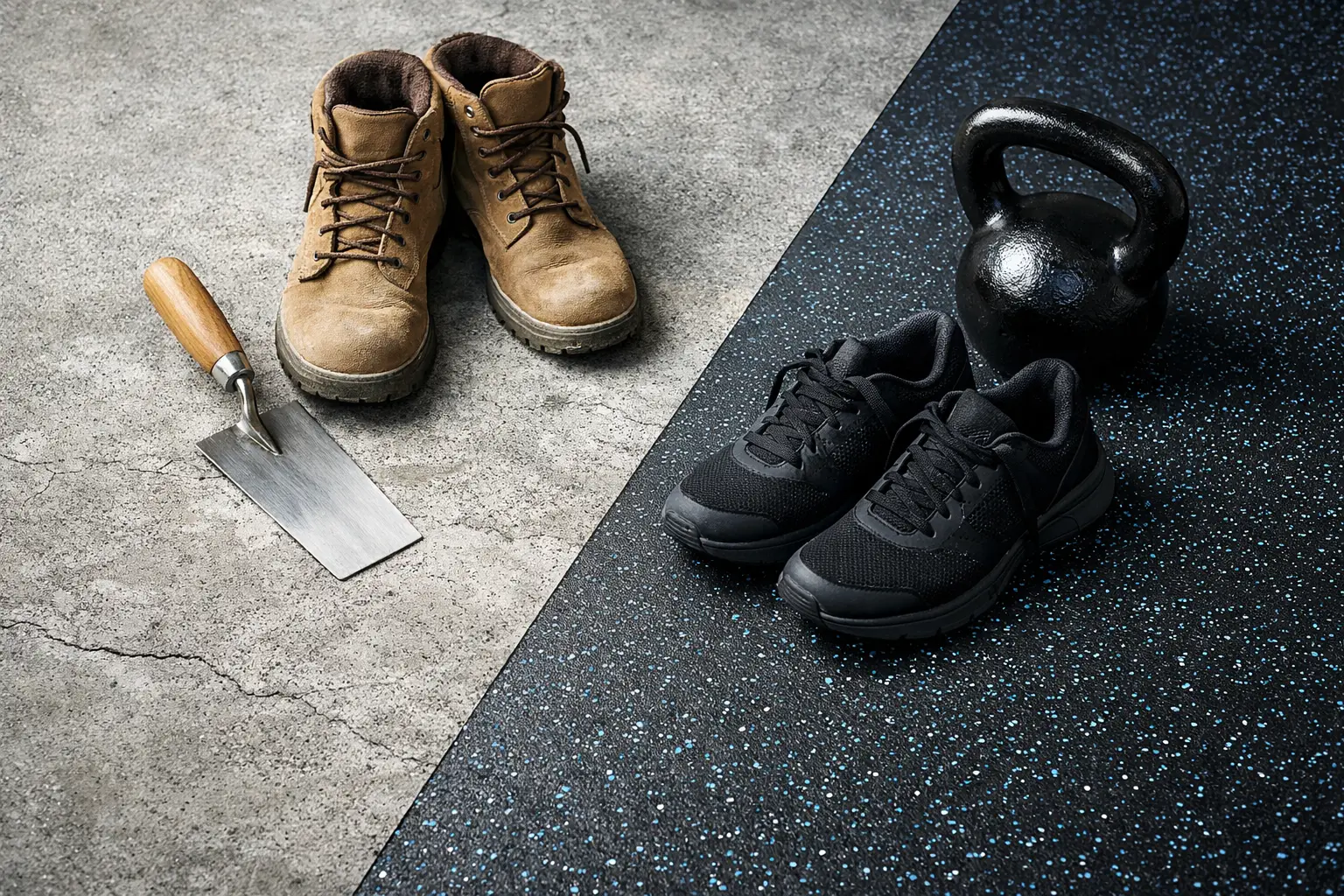
A cow losing her footing on the way to the dairy is not just a one-off incident. It can mean bruising, stress, reduced confidence, more pressure on staff and a higher risk of lameness. When weighing up textured concrete versus rubber flooring, the right answer is rarely one material across the whole farm. It comes down to where animals walk, how wet the area stays, how much traffic it carries and what the existing concrete can support.
For many dairy, beef and sheep operations, textured concrete provides the dependable, hard-wearing base for high-traffic areas. Rubber has a useful place where extra cushioning is needed. The best flooring decisions use each surface where it earns its keep.
Textured concrete versus rubber flooring on working farms
Concrete is already the foundation of most dairy yards, races, feed areas and shed approaches because it handles weight, machinery, washdown and constant traffic. The issue is not concrete itself. Smooth, worn or poorly drained concrete becomes slippery when water, manure and feed residue are underfoot.
A professionally textured surface changes that. Concrete grooving or bush hammering creates more grip under the hoof, helping animals move with greater confidence through wet, busy areas. It also retains the strength of the existing slab, which matters where tractors, scrapers, feed equipment and large numbers of stock use the same route every day.
Rubber flooring takes a different approach. It adds a softer layer over a base surface, reducing impact and providing cushioning in standing areas. That can be valuable in selected locations, but it does not automatically solve every traction or hoof-health issue. Rubber still needs a sound base, correct fixing, suitable drainage and regular cleaning to perform as intended.
The practical question is not which material is better in general. It is which surface is best for each part of your operation.
Where textured concrete usually performs best
Textured concrete is often the stronger option for areas exposed to heavy traffic, turning forces and regular washdown. This includes dairy shed exits, collecting yards, backing gates, entry and exit races, feed lanes and high-use walkways.
High-traffic routes and dairy exits
Cows tend to bunch, turn and change pace around dairy exits and race junctions. These are places where a slippery surface quickly becomes obvious. A well-planned groove pattern gives hooves edges to grip without creating a surface that is overly aggressive or difficult to clean.
The pattern, depth and spacing matter. Grooves that are too shallow may not provide enough traction once the surface is wet. Grooves that are too deep, rough or poorly spaced can make cleaning harder and may increase hoof wear. This is why a farm-specific assessment is more useful than treating every slab the same way.
Wet yards and washdown areas
Rubber can become slick if residue builds up, particularly where drainage is poor or the matting has a textured finish that traps manure. Textured concrete remains easier to hose, scrape and inspect in heavily soiled areas. It also avoids the lifted edges, damaged fixings and seams that can occur with mat systems over time.
Good drainage still matters. No flooring treatment can compensate for a yard that holds water, has poor falls or directs washdown across a main animal route. Surface texture and water management need to work together.
Areas shared with machinery
Concrete is generally more practical where machinery crosses regularly. It handles scraper blades, tyres, feed wagons and ute traffic better than most rubber systems. Rubber can tear, shift or wear quickly when it is exposed to repeated vehicle movement, especially on uneven concrete or around sharp turns.
For farms seeking a long service life with minimal disruption, improving the existing concrete can be a sensible investment. Night concrete grooving can also help reduce downtime where the dairy needs to keep operating through the job.
Where rubber flooring can be worth the investment
Rubber flooring is not a replacement for sound concrete management. It is a targeted tool for areas where animals stand for extended periods or where impact reduction is a higher priority than maximum wear resistance.
Milking platforms, holding areas, vet bays and selected calving or treatment spaces may benefit from rubber, depending on herd size, time spent standing and the system in use. A quality rubber surface can provide cushioning and may encourage more comfortable standing behaviour in the right setting.
The trade-off is that rubber costs more to install and has a finite service life. It needs to be secured properly, cleaned consistently and checked for damage. Urine, manure, moisture and grit can work beneath poorly fitted matting, creating hygiene issues or uneven spots. Once edges begin to lift, they can become a trip point for animals and people.
Rubber also needs the right concrete underneath it. Installing mats over cracked, uneven or badly sloped concrete simply hides the problem for a while. Repairs, drainage corrections and levelling should be considered before matting goes down.
Traction is only one part of hoof health
A non-slip surface helps reduce slips and falls, but hoof health is shaped by the whole walking environment. Distance travelled, time on concrete, stocking pressure, cow flow, moisture, drainage, trimming and nutrition all contribute.
Textured concrete can improve confidence underfoot, especially when cows are leaving the shed, turning corners or moving through wet yards. But excessive surface aggression can increase wear. The goal is secure footing, not a rough surface for its own sake.
Rubber may reduce concussion in standing zones, yet it cannot correct poor cow flow or a race that sends animals around tight, slippery corners. If cows are rushing, crowding at a gate or hesitating on a surface, look beyond the material alone. The layout and daily management are part of the solution.
Cleaning, drainage and maintenance costs
Every flooring choice should be tested against the cleaning routine your farm can realistically maintain. Concrete with the right texture is generally straightforward to scrape and wash. It is also easy to inspect for cracks, wear and ponding water.
Rubber requires more attention to detail. The surface needs regular cleaning without damaging the mat, and the joins, edges and fixing points need checking. Small failures can spread when stock traffic and washdown get underneath. Replacement may involve taking an area out of use, removing worn sections and preparing the base again.
Textured concrete also needs maintenance, particularly on older slabs. Grooves can wear down, corners can chip, and damaged concrete can reduce traction. The benefit is that repairs and retexturing can often be completed in focused sections rather than replacing the entire floor covering.
When comparing long-term cost, include more than the initial quote. Consider preparation work, drainage improvements, installation disruption, cleaning time, repairs, expected lifespan and the risk of an unsafe surface affecting animal movement. The cheapest square metre cost can become expensive if it does not suit the location.
A practical approach for mixed flooring
Many farms get the best result from a mixed approach. Use textured concrete across the high-traffic, wet and machinery-access areas that demand durable traction. Reserve rubber for selected standing zones where additional comfort is justified and the base, drainage and cleaning routine support it.
Before deciding, walk the farm at the times conditions are toughest: after washdown, during peak milking flow, in wet weather and when cows are turning or waiting. Watch for slipping, short strides, hesitation, crowding, pooling water and worn concrete. These signs point to the areas that need attention first.
Happy Hoof assesses surface condition, traffic patterns, slope and drainage before recommending concrete grooving, bush hammering, repair work or a broader flooring plan. That matters because a treatment that performs well at the dairy exit may not be the right answer for a covered standing bay or a steep race.
A safer floor does more than prevent the occasional slip. It gives livestock firmer footing, helps staff work with more confidence and supports the steady cow flow that keeps the whole operation moving. Start with the highest-risk area, then choose the surface that will still perform after thousands of hooves, regular washdown and another hard season.