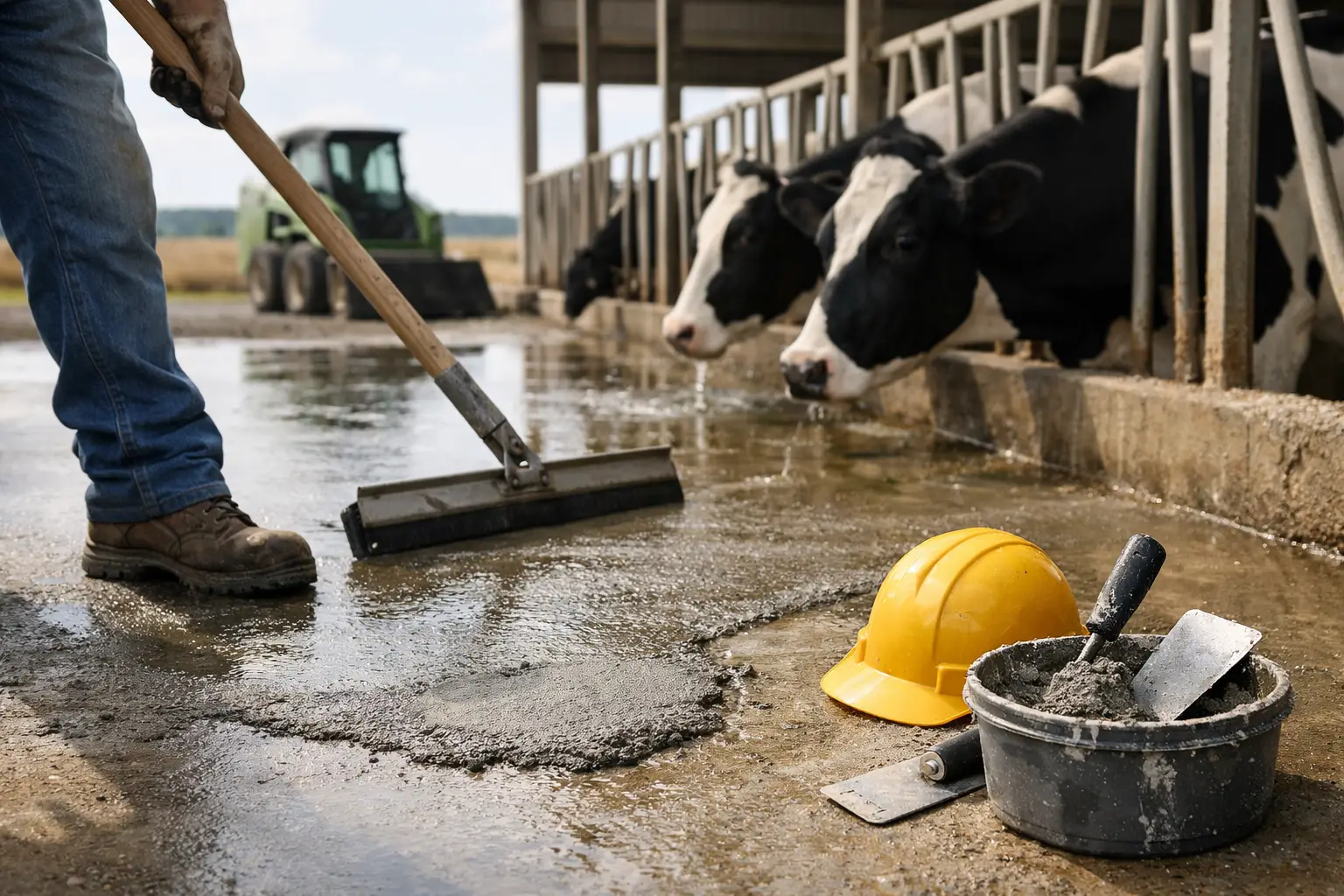
When cows start hesitating at the dairy entry, slipping on the feed pad, or wearing hoof edges unevenly on their walkways, the concrete is usually telling you something. Concrete maintenance for dairy farms is not just about fixing cracks or tidying up worn areas. It is about keeping stock moving confidently, protecting hoof health, and making sure high-traffic surfaces still do the job they were built for.
On a working dairy farm, concrete takes a beating. It carries constant hoof traffic, machinery, effluent, washdown water, feed residue and weather changes every day. Even well-laid slabs lose grip over time. Surface texture wears down, drainage can become less effective, and small faults turn into expensive problems if they are left too long. The cost shows up in slips, stress on animals, lameness risk, labour slowdowns and repairs that could have been smaller.
Why concrete maintenance for dairy farms matters
The biggest mistake is treating concrete as a set-and-forget part of the farm. In reality, flooring conditions affect how stock walk, stand, queue and turn. When the surface becomes polished or uneven, cows adjust their gait. That can mean shorter steps, more caution around corners, and extra strain through the hoof and leg.
Poor surfaces also affect the people working on them. Slippery yards and dairy surrounds create risk for staff moving animals, washing down areas or operating machinery. A concrete surface that drains poorly or has worn smooth in key zones can quickly become unsafe in wet conditions.
Maintenance protects more than the slab itself. It supports livestock welfare, daily flow through the shed, and the long-term performance of the whole layout. A good surface helps cows walk naturally. That matters because sound movement supports production, breeding performance and overall herd management.
The signs your concrete needs attention
Some problems are obvious, like cracking, potholes or broken edges. Others are easier to miss because they happen gradually. A yard may still look solid enough, but the grip under hoof has changed. That is often when trouble starts.
Watch for cows slipping slightly when turning, especially near the dairy, holding yard and feed areas. Notice whether they bunch up before crossing certain sections or start picking their way across instead of walking through. Pooled water after washdown is another clear sign that the surface profile or slope is no longer working as it should.
You should also pay attention to wear patterns. High-use lanes, entry points and backing gates often smooth off faster than less-trafficked areas. If one section dries slower, holds slurry, or seems harder to clean properly, the concrete may need restoration rather than just a more thorough wash.
Surface grip wears out before the slab fails
One of the most overlooked parts of concrete maintenance for dairy farms is the surface texture. A slab can still be structurally sound while being functionally poor for livestock. That matters because cows do not need perfect-looking concrete. They need dependable traction.
As concrete wears, the fine roughness that helps hoof grip is reduced. Years of traffic, scraping, washdown and manure movement can leave surfaces polished. This is especially common in collecting yards, feed pads, raceways and dairy exits.
Restoring grip is often more practical than full replacement. Techniques such as concrete grooving and bush hammering can reintroduce traction where it has been lost. The right option depends on the area, stock flow, existing wear and how aggressive the surface needs to be. More texture is not always better. If the finish is too harsh for the setting, it can create unnecessary hoof wear. The best result is a surface with enough bite for confidence underfoot, without becoming abrasive.
Grooving, bush hammering and repairs
Grooving suits areas where controlled traction and water movement are important. It creates a repeatable pattern that helps reduce slipping, especially in wet zones. Bush hammering is often used where a broader textured finish is needed across an existing slab. Repairs come into the picture when the surface has localised failures, edge breakdown or damaged sections that affect safety and cleaning.
The right treatment depends on the problem. A polished dairy exit may need texture restoration. A cracked apron with poor fall may need repair and reworking. A lane with surface wear but good structure may not need replacement at all. That is why inspection matters before any work starts.
Drainage is part of maintenance, not a separate issue
Many concrete problems on dairy farms are blamed on the surface when the real issue is water control. If washdown water, rain or effluent cannot move away properly, even a good textured finish will struggle. Wet concrete stays dirtier, becomes more hazardous, and wears differently over time.
Effective maintenance looks at slope, ponding points, run-off direction and how water behaves during peak use. In some cases, drainage can be improved with targeted repairs or cutting work that helps restore fall. In others, the issue is operational, such as washdown volume or solid build-up blocking flow paths.
What matters is that drainage and traction are treated together. A slip-resistant finish works best when water does not sit where cows stand and turn. Cleaner, drier surfaces are also easier to maintain between major service intervals.
Timing matters on a working farm
Most dairy farms cannot afford major disruption around milking, feeding and stock movement. That is why maintenance planning matters almost as much as the work itself. A smaller intervention done at the right time is usually better than waiting until a full shutdown is unavoidable.
High-traffic zones should be checked before they become critical. Pre-season inspections, post-winter assessments and reviews after heavy use periods can help pick up wear early. Night works or staged sections are often the best fit for busy operations because they reduce pressure on the daily routine.
There is always a balance between getting more life out of a surface and acting before safety drops away. If cows are already losing confidence on a section of concrete, the cost of waiting is rarely just the repair bill. It can mean more stress on stock, slower flow through the shed and a greater chance of injury.
What good maintenance looks like over time
Concrete maintenance is not one big event. On well-run farms, it is a cycle of inspection, targeted treatment and practical upkeep. The aim is to extend surface life while keeping performance where it needs to be.
That usually starts with regular checks of the highest-risk areas – collecting yards, dairy entries and exits, feed pads, backing areas and any place where cows turn sharply. These locations wear differently from straight laneways and often need attention sooner. Cleaning also plays a role. Built-up manure and feed residue can mask underlying wear and keep surfaces wetter for longer.
Over time, a proper maintenance approach should do three things. It should preserve traction, keep drainage functional and prevent local damage from spreading. When those three are managed well, the whole farm tends to run more smoothly. Cows move with less hesitation, staff work on safer footing, and repairs are more planned than reactive.
Choosing the right contractor for concrete maintenance for dairy farms
Farm concrete is not the same as standard commercial flooring. The surface has to work under hoof, in wet conditions, with animal movement patterns that create very specific wear points. A contractor who understands livestock behaviour, dairy layouts and traffic pressure will make better calls than someone treating the job like a general concrete repair.
That includes knowing where cows slip, how texture affects hoof contact, and why disruption needs to be kept to a minimum. It also means being realistic. Not every slab can be brought back the same way, and not every worn area needs full replacement. Good advice should be based on the actual condition of the concrete and the outcome you need from it.
This is where specialist farm concrete services make the difference. A business like Happy Hoof focuses on the practical result: safer movement, healthier hooves and surfaces that stand up to real farm use.
The best maintenance work is often the work your herd barely notices. Cows keep walking, staff keep moving, and the yard does what it should without becoming a daily concern. If your concrete is starting to cost you confidence, traction or time, it is worth acting while the fix is still straightforward. A sound surface underfoot supports every other part of the job.