A cow that hesitates at the dairy entry, slips near the feed pad, or shortens her stride on wet concrete is telling you something. When farmers weigh up grooved concrete vs rubber matting, the real question is not which surface sounds softer on paper. It is which one keeps stock moving confidently, protects hoof health, and stands up to constant traffic, effluent, washdown and weather.
On most livestock properties, flooring is a working asset. It affects lameness risk, labour efficiency, animal flow and maintenance costs every day. That is why the better option often depends on where the surface is going, how much pressure it will take, and whether you need a long-term fix or a targeted comfort layer.
Grooved concrete vs rubber matting on farm surfaces
Grooved concrete and rubber matting solve different problems. They are not direct substitutes in every area, even though they are often compared that way.
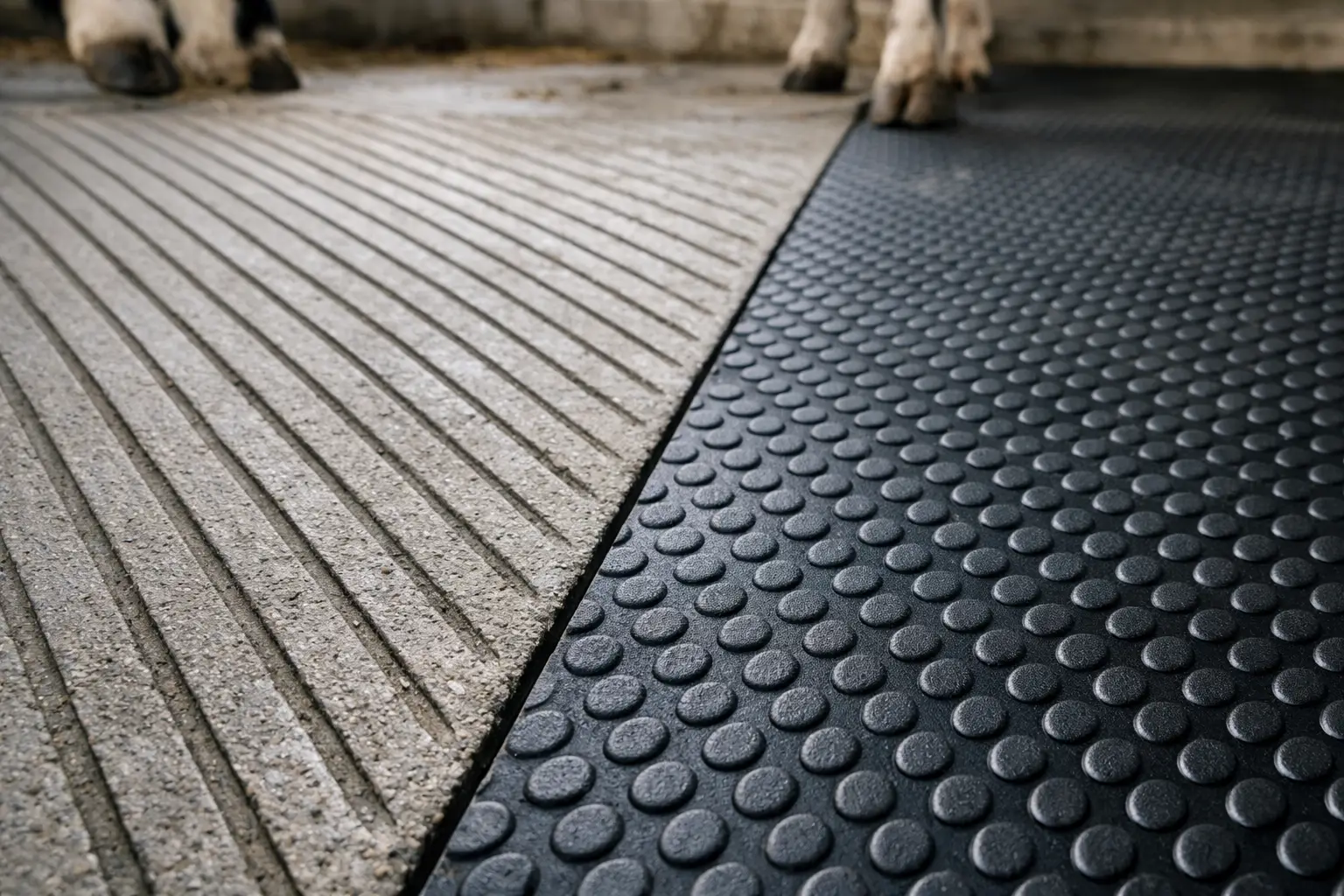
Grooved concrete improves the grip of an existing or newly poured concrete surface by cutting a patterned texture into it. That texture helps hooves bite into the surface rather than skate across it, especially in wet, high-traffic areas. It is commonly used in dairy sheds, collecting yards, feed pads, walkways and other zones where reliable traction matters more than softness alone.
Rubber matting adds a cushioned layer over a base surface. It can improve comfort underfoot, reduce some impact, and suit specific standing areas where stock remain in place for longer periods. It is more commonly considered in holding areas, milking platforms, or selected indoor zones where animal comfort is the main priority.
The difference matters. If your core issue is slipping, poor drainage interaction, or worn concrete, grooving usually addresses the root cause better. If your main issue is standing comfort in a low-speed area, rubber may have a place.
Traction is where grooved concrete usually wins
On a working farm, traction is not a nice extra. It is one of the main controls against falls, leg injuries and animal stress.
Properly grooved concrete gives hooves a consistent surface to grip. That matters most where stock are turning, bunching, entering the shed, or moving over wet areas. In those conditions, a textured concrete finish generally performs more reliably than a mat laid over the top. A mat can still become slick if slurry, feed residue or fine moisture sits on the surface, particularly if the tread pattern is worn or the wrong product has been installed for the job.
Concrete grooving also works with the slab itself. The traction is built into the traffic surface, not added as a layer that can shift, curl at edges, or wear unevenly. For busy dairy operations and livestock yards, that makes a big difference over time.
That said, not all grooving is equal. Depth, spacing, direction and surface condition all affect performance. Poorly planned grooves can wear faster or fail to deliver the grip needed in key movement lines. That is why farm-specific layout and stock flow should guide the pattern, not a one-size-fits-all approach.
Where rubber matting can help
Rubber matting can be useful in areas where animals stand for longer and fast, confident movement is less of the issue. In some settings, the cushioning can reduce fatigue and improve comfort. This is why some operators consider it in selected internal spaces rather than across the whole yard system.
But comfort should not be confused with traction. A softer surface does not automatically mean a safer one. In high-turn, wet, manure-heavy areas, grip and cleanability usually matter more.
Hoof health depends on more than softness
A common assumption is that rubber is always better for hooves because it feels gentler. The reality is more nuanced.
Healthy hooves need stable footing. When stock walk on slippery surfaces, they alter gait, tense up, and place strain through joints and soft tissue. Repeated slipping or cautious movement can contribute to hoof wear patterns, stress and lameness issues over time. In that sense, a properly grooved concrete surface can support hoof health by improving confidence and reducing scramble.
Rubber can reduce concussion in some standing areas, but if it holds moisture, traps contamination underneath, or wears into uneven sections, it can create its own problems. Hoof health is tied to hygiene, drainage, movement and surface consistency, not just softness.
This is why many farms get the best results by treating flooring as a system. Movement areas need dependable traction. Standing zones may benefit from more cushioning if the environment and cleaning routine support it. The right answer often involves matching each surface to the job rather than trying to use one material everywhere.
Drainage, cleaning and hygiene are often overlooked
In farm conditions, the best-looking flooring option can quickly become the worst-performing if it does not handle effluent and washdown properly.
Grooved concrete has an advantage here because it remains part of the slab and can be designed around existing falls, drainage channels and yard flow. When installed correctly, it supports movement without creating hidden pockets underneath the surface. It is also easier to pressure clean and maintain as part of normal yard operations.
Rubber matting can be harder to manage if moisture and waste collect beneath or around the edges. Once that happens, hygiene becomes more difficult to control. Mats can also lift, trap debris, or create areas that require extra labour to inspect and clean. On a busy farm, that added maintenance is not trivial.
If you are considering matting, the question is not just how it feels on day one. It is how it performs after months of manure, washdown, traffic and seasonal wear.
Durability and lifespan under real farm pressure
Livestock flooring does not get an easy run. Constant hoof traffic, machinery, scraping, washdown and weather exposure all test the surface.
Grooved concrete usually offers stronger long-term value in heavy-use areas because the solution is built into the structural surface. There is no separate layer to fasten, replace or manage. If the slab is sound, grooving can extend the useful life of the concrete and restore performance without the cost of a full replacement.
Rubber matting is more vulnerable to wear, edge damage, movement and replacement cycles. Some products last well in the right environment, but many farms find they become an ongoing maintenance item rather than a once-and-done fix. That does not make them a bad product. It just means they suit narrower applications than many suppliers suggest.
Cost is not just the purchase price
Rubber matting can appear attractive if you are comparing upfront numbers in a small area. But the real cost includes installation method, cleaning time, replacement frequency, and any production loss from a surface that does not perform as expected.
Grooved concrete often stacks up better over the life of the asset, particularly in high-traffic zones where traction failures carry real costs. One slip injury, one rise in lame cows, or one bottleneck in stock flow can wipe out the saving of a cheaper short-term option.
Which option suits which farm area?
This is where the grooved concrete vs rubber matting decision becomes practical.
For collecting yards, dairy entries, feed pads, races, backing gates and any wet traffic area, grooved concrete is generally the stronger choice. These are movement zones first. Animals need secure footing, steady flow and a surface that can be cleaned easily and handle pressure every day.
For selected standing areas, particularly where animals remain in one place for longer periods, rubber matting may be worth considering if drainage, hygiene and installation are properly managed. Even then, product choice and location matter. A mat that works in one indoor bay may fail quickly in an exposed, high-effluent yard.
If your existing concrete is slippery but otherwise structurally sound, grooving is often the most direct fix. If the slab is badly damaged, uneven or draining poorly, repairs may need to come first. Surface treatment cannot compensate for fundamental concrete failure.
The better question is what problem you are solving
Too many flooring decisions start with the material instead of the outcome. On farms, the better starting point is simple. Are you trying to stop slips, improve hoof confidence, reduce lameness pressure, make cleaning easier, or soften a standing area?
Once that is clear, the right surface becomes easier to choose. In most heavy-use livestock environments, grooved concrete delivers the best balance of traction, durability and day-to-day practicality. Rubber matting has a role, but usually in more limited applications where comfort is the main requirement and the maintenance demands are realistic.
That is the approach we take at Happy Hoof. Flooring should work for the animals, the staff and the pace of the farm, not just look good when it is first installed.
If you are weighing up a surface change, start by walking the problem areas after washdown or in wet weather. The spots where stock hesitate, spread out, bunch up or lose confidence will tell you more than any brochure ever will.