
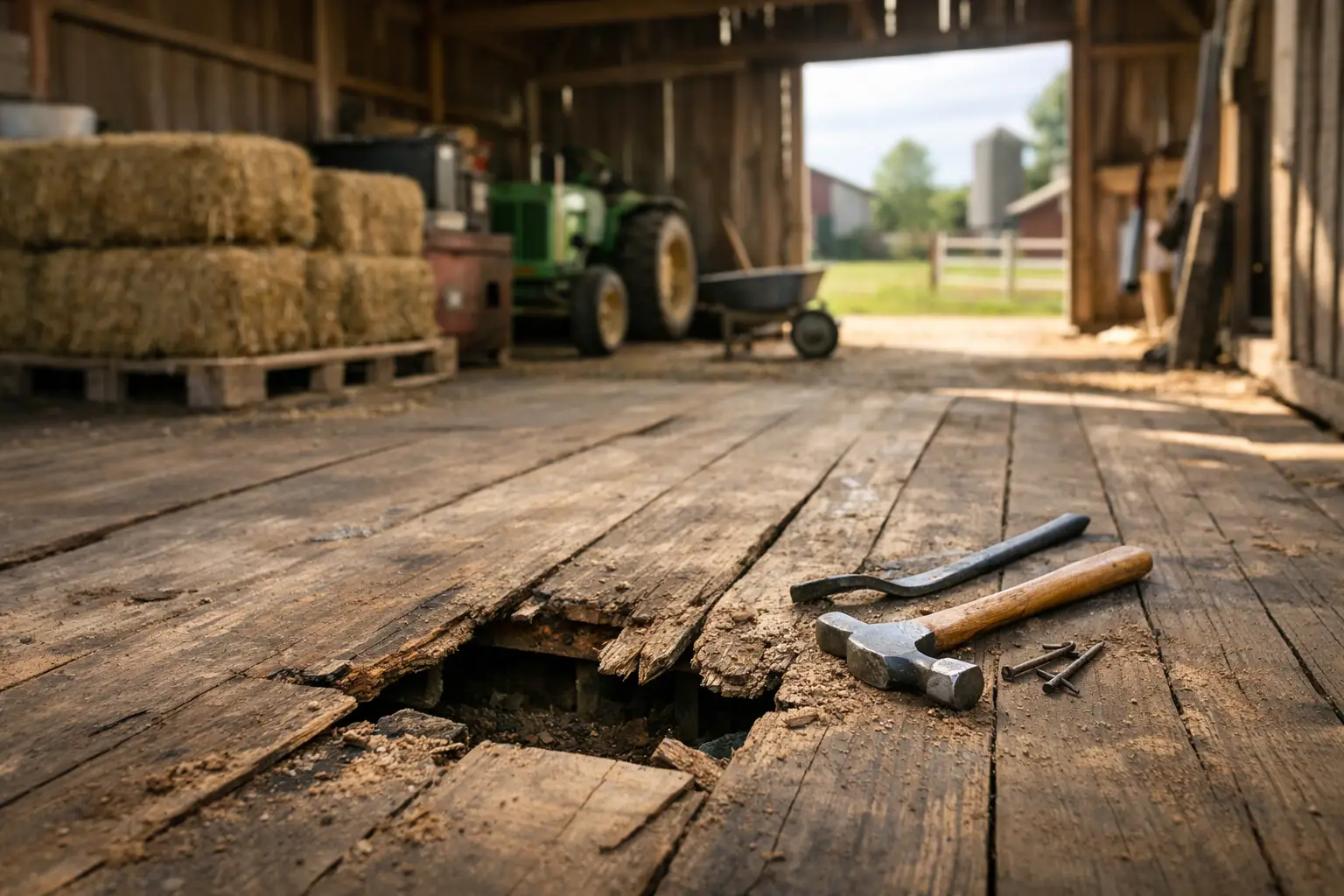
A shed floor rarely fails all at once. More often, it starts with cattle hesitating at a doorway, water sitting where it used to drain cleanly, or a surface that feels polished instead of grippy underfoot. Knowing when to repair shed flooring matters because small concrete issues can quickly turn into hoof problems, slips, slower stock flow and more pressure on day-to-day operations.
On a working farm, flooring is not just a hard surface. It has a job to do under weight, moisture, manure, machinery and constant animal traffic. If that surface stops providing traction, drainage or stability, the cost is felt well beyond the concrete itself. Repairs done at the right time protect livestock, reduce disruption and usually cost less than leaving the damage to spread.
When to repair shed flooring before it gets worse
The right time to act is usually earlier than most people think. Farmers often wait until a floor looks obviously broken, but by then the problem has often moved from a maintenance issue to an animal welfare and productivity issue. Concrete can still appear structurally sound while already causing slips, hoof wear or pooling water.
One of the clearest signs is loss of surface grip. In dairy sheds, feed areas, holding yards and laneways connecting to covered spaces, concrete gradually wears smooth under repeated hoof traffic. Add water, effluent or washdown, and the floor becomes unpredictable. If stock are shortening their stride, baulking, or shifting awkwardly around corners and gateways, that is often a flooring problem before it becomes a handling problem.
Cracking is another sign, but not all cracks mean the same thing. Fine hairline cracking can be cosmetic, especially in older slabs. Wider cracks, moving cracks or cracked sections that hold water are different. These can indicate slab movement, poor drainage, edge breakdown or repeated stress from machinery and livestock. Once cracks start collecting moisture and waste, they become harder to keep clean and more likely to deteriorate further.
Surface spalling also deserves attention. When the top layer of concrete starts breaking away, exposing rough aggregate or pitted sections, the floor becomes inconsistent underfoot. That can be uncomfortable for livestock and hazardous for both animals and staff. In some areas, spalling is mostly a wear issue. In others, it can point to underlying moisture, poor finishing, chemical attack or repeated scraping damage.
The farm signs that tell you repairs are due
Some of the best indicators are operational rather than visual. If your shed takes longer to wash down, if water no longer runs where it should, or if one area stays dirty despite regular cleaning, the floor is telling you something. Poor drainage is not just a nuisance. It keeps surfaces wet for longer, increases slip risk and creates conditions that are harder on hooves.
You may also notice changes in animal movement. Cows do not need to be falling over for the floor to be affecting them. Reluctance to move through a race, bunching at entrances, shorter steps, or visible caution on turning points can all point to worn or uneven concrete. These behaviours are easy to write off as stock temperament, but they often trace back to traction and comfort.
Lameness trends can be another prompt to inspect the floor more closely. Flooring is not the only cause of lameness, but it is a major contributor when surfaces are slippery, abrasive in the wrong way, or constantly wet. If hoof issues are appearing alongside worn concrete, it is worth treating the flooring as part of the problem rather than a separate maintenance job.
Machinery use also accelerates wear. Skid steers, scrapers, feed-out equipment and repeated wheel traffic can grind high-use zones faster than the rest of the shed. That is why damage often appears first near entrances, feed faces, corners and washdown areas. These spots should be checked regularly, even if the rest of the floor still looks serviceable.
Not every floor needs replacing
One of the biggest mistakes is assuming the only fix is a full replacement. In many cases, targeted repair work can restore performance without tearing out large sections of concrete. That depends on the type of damage, the age of the slab and whether the issue is surface wear, drainage failure, structural movement or a mix of all three.
If the slab is fundamentally sound but has become smooth, surface treatment may be enough to bring back traction. Concrete grooving or bush hammering can improve grip and make the floor safer in wet, high-traffic areas. This is often the right option when the concrete still has strength, but the surface has lost the texture livestock need.
If isolated sections are cracked, broken or holding water, patching or section repairs may be more suitable. The key is making sure the repair matches the surrounding levels, drainage falls and traffic demands. A quick patch that creates a lip or uneven transition can cause almost as many problems as the original damage.
Where widespread movement, deep cracking or poor original construction is involved, broader remedial work may be the better long-term call. There is always a trade-off between short-term cost and long-term performance. A cheaper repair is not better value if it leaves you redoing the same area in twelve months.
When to repair shed flooring in high-risk areas
Some parts of a farm shed should move to the front of the queue because the risk is higher there. Entry and exit points are one example. Stock bunch, turn and change pace in these areas, which puts more demand on traction. If the surface is worn smooth or broken up, slips are more likely.
Holding areas and collecting yards also deserve close attention. These spaces combine moisture, manure and heavy stocking pressure, which means the floor needs both grip and proper drainage. If water is ponding or the surface has become polished, repairs are usually worth doing sooner rather than later.
Feed zones are another priority. Animals spend time standing, shifting weight and competing for space there. Uneven or slick flooring in these areas can increase stress on hooves and joints. The same goes for any part of the shed where staff are moving quickly, washing down, or operating machinery in low-traction conditions.
Timing repairs to reduce disruption
The best repair timing is not only about the condition of the floor. It is also about how the work fits your operation. Leaving repairs until the busiest part of the season often means either delaying the job further or rushing it under pressure. Neither is ideal.
A planned inspection before peak use periods can help you stay ahead of that cycle. It gives you a chance to pick up wear early, scope the right repair and book the work when access is easier. For many farms, after-hours or staged repair work makes more sense than trying to shut down a critical area during full production.
Weather and moisture conditions matter too. Concrete repairs and surface treatments perform best when the site can be prepared properly and curing conditions are managed. A rushed job in poor conditions may not last. Good repair work is not only about fixing visible damage. It is about restoring safe use and getting service life back from the slab.
What a proper flooring assessment should consider
A useful assessment goes beyond asking whether the concrete is cracked. It should look at traction, drainage, slope, wear patterns, animal flow and how the area is being used every day. A floor that is acceptable in a low-traffic storage shed may be completely wrong for a dairy holding area.
It should also consider the balance between grip and cleanability. Too smooth is unsafe. Too aggressive in the wrong setting can create unnecessary hoof wear or make cleaning harder. That is why farm flooring needs a specialist approach rather than a generic concrete fix.
This is where experienced agricultural concrete contractors add value. Companies such as Happy Hoof look at the floor as part of the whole working environment – livestock safety, hoof health, washdown performance and operational continuity – not just the slab itself.
If you are unsure whether the issue is urgent, ask a simple question: is this floor still doing its job safely, every day, under real farm conditions? If the answer is no, or even maybe not, it is time to look at repairs before the problem costs more in slips, lameness and downtime than the concrete work ever would.
A good shed floor should help stock move confidently, drain properly and stand up to hard use without becoming a risk. Once it stops doing that, waiting rarely improves the situation.