A cow that shortens her stride, hesitates at the yard exit or avoids turning is giving an early warning that should not be ignored. Knowing how to reduce lameness from concrete starts with looking at the surface underfoot, especially in high-traffic areas where wet conditions, manure, sharp turns and worn concrete combine. Good flooring will not solve every hoof problem, but it gives livestock a safer, more confident place to move.
For dairy, beef and sheep operations, concrete has to carry constant traffic while coping with slurry, wash-down water, feed and changing weather. The goal is not simply to make concrete rough. It is to create reliable traction, allow water to leave the surface and avoid damage to hooves and joints over thousands of passes.
Why concrete contributes to lameness
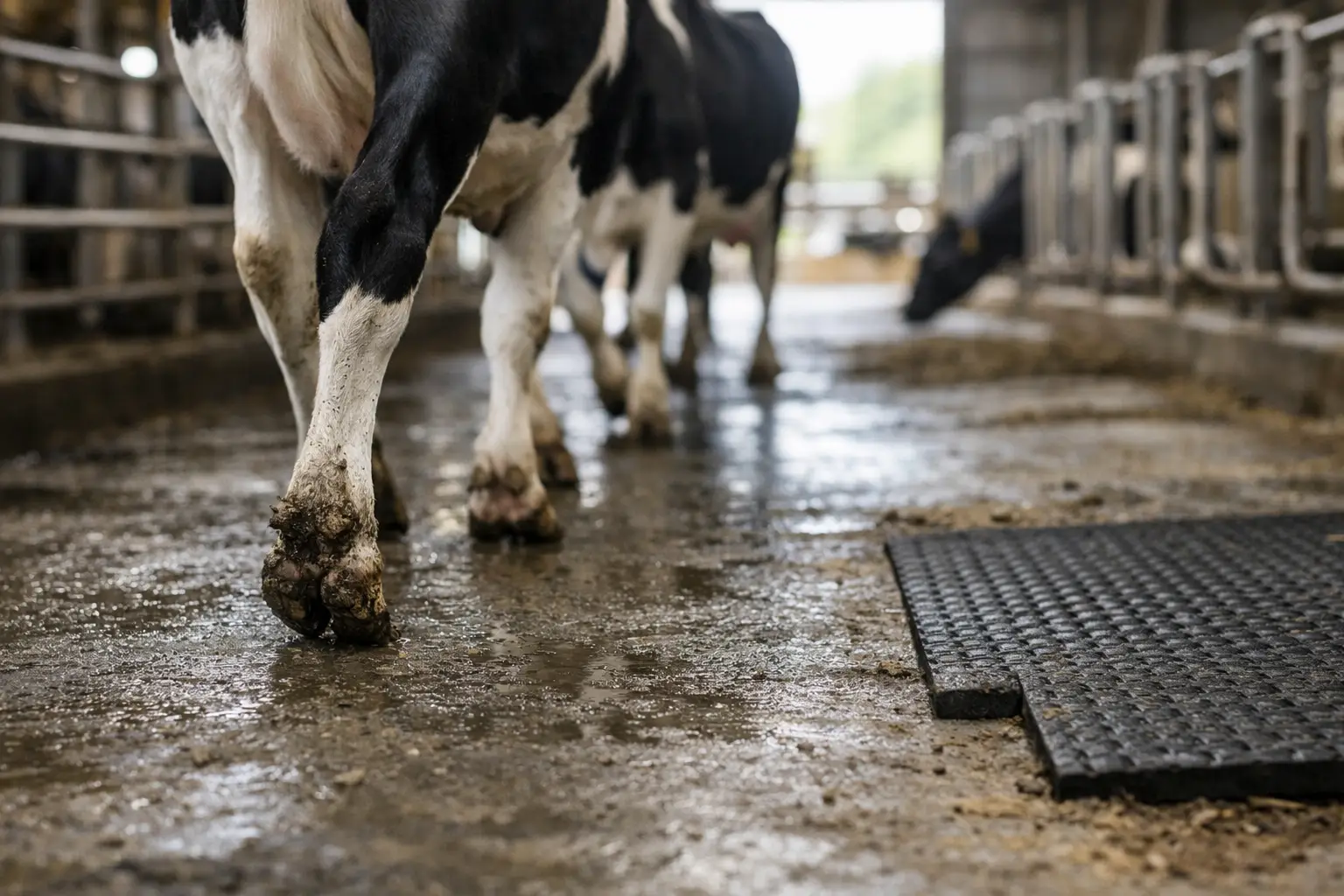
Concrete becomes a lameness risk when animals cannot get secure footing. A polished surface can be slippery even when it appears clean and sound. Add water, manure or feed residue, and the hoof may slide as an animal pushes off, stops or turns. That single slip can cause a strain, but repeated uncertainty also changes the way animals walk.
Cows in particular need confidence to place each foot properly. When they brace themselves on a slick surface, take short steps or turn cautiously, pressure patterns through the hoof and leg change. Over time, this can contribute to sole bruising, white line problems and joint stress. Affected animals may spend less time feeding, walking or showing normal behaviour, with flow-on effects for production and labour.
The opposite problem can also occur. Concrete that is excessively harsh, broken or poorly repaired can wear hooves unevenly and create concentrated pressure points. Effective surface treatment is a balance. It needs enough grip for wet conditions without becoming so aggressive that it creates unnecessary hoof wear.
Lameness is rarely caused by flooring alone. Nutrition, hoof trimming, cow tracks, heat stress, standing time and infectious hoof conditions all matter. However, if the concrete is slippery, puddled or damaged, it can undermine the benefits of good management everywhere else.
How to reduce lameness from concrete in high-traffic areas
Start with the places where stock are most likely to slip or hesitate. These are usually dairy yards, collecting areas, feed pads, entry and exit lanes, races, shed approaches, holding pens and tight turning points. The surface may be acceptable in straight, dry sections but unsafe where animals bunch up or change direction.
Walk these areas during normal use, not only when the yard is empty and dry. Watch for cows spreading their legs, dropping their heads to concentrate, stopping at a particular point or leaving uneven marks in wet slurry. Look closely at the concrete for smooth polished patches, shallow puddles, cracked edges and old repairs that sit proud of the surrounding surface.
A practical inspection should also consider how people move through the same area. If staff are walking cautiously on the concrete, livestock are likely struggling for traction as well. Near-misses, falls and increased hesitation at gateways are operational signals, not just inconveniences.
Restore traction with the right surface treatment
When concrete has become smooth, professional grooving or bush hammering can restore grip without the cost and disruption of replacing an entire slab. The best method depends on the concrete condition, the traffic pattern, the slope and how the area is cleaned.
Concrete grooving creates a controlled pattern that helps hooves gain purchase and gives water and slurry a route away from the contact surface. It is particularly useful on worn areas where cattle need secure footing while moving forward or turning. The groove direction, spacing and depth need to suit the location. A pattern that works on a straight exit lane may not perform as well in a turning area or on a slope.
Bush hammering creates a more textured finish across the surface. It can be an effective option where a broad area has become polished and needs consistent slip resistance. Like grooving, it must be carried out with hoof health in mind. Randomly roughening concrete with unsuitable equipment can leave sharp high points, inconsistent grip and a surface that is difficult to clean.
A specialist assessment avoids treating every slab the same way. At Happy Hoof, the focus is on a surface that improves animal confidence while standing up to heavy farm use, rather than a one-size-fits-all concrete finish.
Fix drainage before it becomes a hoof problem
Water is often the difference between concrete that feels safe and concrete that becomes a slip hazard. If wash-down water, rain or effluent sits in low spots, even a reasonably textured surface can lose traction. Standing water also keeps hooves wet for longer, which may soften horn and increase susceptibility to damage.
Check whether drainage points are actually receiving water or whether the slab has settled, worn or been patched in a way that creates dams. Cracks, failed joints and uneven repairs can all hold slurry. In some cases, local concrete cutting, repair work or slope correction is needed before surface texturing will deliver its full benefit.
Keep drains and channels clear as part of routine yard maintenance. A well-designed floor cannot perform properly if drains are blocked with solids. Where possible, reduce the amount of water introduced during cleaning while still maintaining hygiene standards. The right cleaning approach leaves a clean, draining surface instead of a slick film under livestock traffic.
Repair damaged concrete promptly
Broken concrete is more than a maintenance issue. Crumbling edges, exposed aggregate, cracked joints and uneven patches can catch a hoof or force animals to alter their step. Livestock may learn to avoid a damaged spot, causing bunching and pressure elsewhere in the flow.
Repairs need to create a level, durable transition with compatible traction. A smooth patch in the middle of textured concrete can become the next slippery point. Conversely, a rough repair that stands above the slab can create abrasion or trip risk. Once repairs have cured, assess the finished surface under wet working conditions rather than assuming it is safe because it looks new.
It is also worth checking interfaces between different surfaces. The change from concrete to rubber, tracks, grates or ramps is a common point of hesitation. Gradual, level transitions reduce abrupt loading on hooves and help animals keep moving calmly.
Improve cow flow to reduce slips and strain
Flooring works together with layout and stock handling. A well-textured yard can still cause problems if cattle are rushed into sharp turns, stopped suddenly at gates or crowded into a narrow exit. When animals are pressured from behind, they are less able to choose a safe footing and more likely to slip.
Review bottlenecks around the dairy, drafting gates and water crossings. Remove unnecessary obstacles, maintain enough space for animals to turn without being forced into tight circles, and avoid pushing cattle faster than the surface allows. This is particularly important when conditions are wet or when animals are coming off a long walk.
For beef and sheep, the same principle applies at handling facilities, loading areas and covered pens. Smaller hooves do not remove the risk of slick concrete. Sheep can lose confidence quickly on wet surfaces, while heavier cattle place considerable force through a hoof when stopping or turning.
Build flooring checks into your lameness plan
A flooring inspection should sit alongside regular hoof checks, trimming records and lameness observations. Do not wait for a fall or a noticeable rise in lame animals. High-use concrete gradually wears smoother, drainage patterns change, and small damage becomes more significant under constant traffic.
Review the condition of key surfaces before wet seasons and after periods of heavy use. Pay close attention after altering wash-down routines, installing new gates, changing animal numbers or completing nearby construction work. These changes can shift traffic patterns and reveal weaknesses in a floor that previously seemed adequate.
When assessing a surface, focus on four practical questions:
- Can animals walk and turn without slipping or bracing?
- Does water drain away quickly after washing or rain?
- Is the texture consistent, without sharp damage or polished patches?
- Are repairs level and secure under heavy traffic?
If the answer is no to any of these, address the cause early. Targeted grooving, bush hammering, drainage improvements and concrete repairs are usually far more manageable than dealing with injuries, disrupted milking or chronic hoof issues later.
The best concrete surface is one animals barely have to think about. When stock can move with steady, confident steps through the shed and yard, you are protecting hoof health, making work safer and giving the whole operation a stronger footing for the season ahead.