A dairy shed exit that looks sound can still be a high-risk surface. When concrete becomes smooth through constant hoof traffic, slurry, water and feed residue, animals can lose confidence and footing quickly. So, what is bush hammering concrete? It is a mechanical surface treatment that roughens hardened concrete to create reliable grip where livestock and people need it most.
For farms, bush hammering is not about making concrete look decorative. It is about changing the surface texture to improve traction, reduce slips and support steadier animal movement through sheds, yards, races and handling areas.
What is bush hammering concrete?
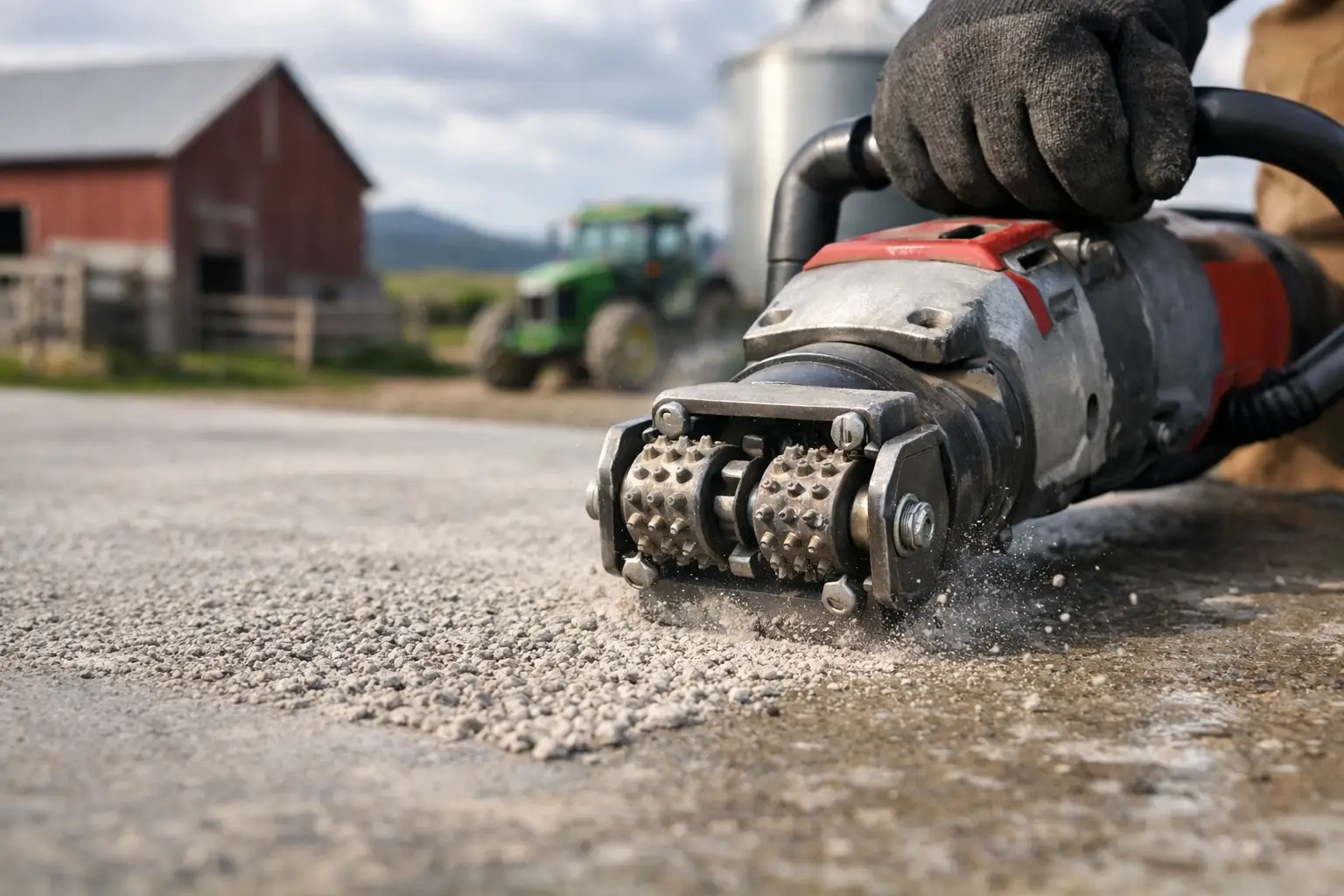
Bush hammering is a concrete texturing process completed with a specialised rotary tool fitted with a bush hammer head. The head has a series of hard, closely spaced points that repeatedly strike the concrete as the machine passes over it. This chips away the top skin of the slab and leaves a dense, stippled texture.
The finished surface has thousands of small indentations rather than long, cut channels. Those indentations increase the contact between the hoof and the concrete, particularly when the floor is wet. They also help break the slippery surface film created by water, manure and fine residue.
On agricultural concrete, the aim is controlled texture. The surface needs enough grip to support animals under normal farm traffic, but it must not be left overly aggressive or uneven. Good bush hammering creates consistent traction across the treatment area while preserving the slab’s overall profile and drainage fall.
Why smooth concrete becomes a farm safety problem
Concrete is hard-wearing, but it does not stay the same under years of livestock use. Hooves polish the surface, especially at shed exits, backing gates, collecting yards, troughs, feed pads and turning points. Water and organic material then sit on that polished concrete, creating a surface that can become slippery without much warning.
A slip is not always a dramatic fall. Often it shows up as cattle taking shorter steps, hesitating at an exit, spreading their stance, turning slowly or refusing to move through a familiar area. These behaviours can indicate that the animals do not trust the footing. In a busy milking routine, that hesitation can disrupt flow and place extra pressure on both livestock and staff.
The cost can extend beyond the immediate incident. Poor traction raises the risk of strains, bruising and injuries, while repeated slipping can contribute to lameness pressure and reduced confidence in the herd. For workers, a slippery yard also makes routine tasks more hazardous. Improving the concrete surface is a practical way to address a risk that affects welfare, labour efficiency and day-to-day operation.
How bush hammering improves traction
Bush hammering improves grip by increasing the surface’s micro-texture. A hoof does not rely only on deep grooves to find purchase. It also benefits from a rough, open surface that resists polishing and gives moisture somewhere to disperse beneath the contact point.
That makes bush hammering particularly useful on broad concrete areas where long grooves may not be the best fit. It can restore traction over a worn surface without the need to remove and replace an otherwise serviceable slab. For many farm operators, that means less disruption and a more targeted spend than full concrete replacement.
The result still depends on conditions. No textured surface can compensate for poor drainage, heavy slurry build-up or an unsuitable slope. Bush hammering works best as part of a practical flooring plan that considers cleaning, water flow, traffic direction and the way animals move through the area.
Bush hammering versus concrete grooving
Bush hammering and concrete grooving both aim to improve traction, but they create it in different ways. Grooving cuts defined channels into the slab. These channels can direct water and slurry away from the hoof contact area and provide a clear edge for grip, making grooving a strong option in many high-traffic livestock areas.
Bush hammering roughens the full face of the concrete rather than cutting lines into it. It is often well suited to areas where broad, all-over texture is needed, including turning zones, holding areas, ramps and worn patches where cattle approach from different angles.
The right treatment depends on the location and the condition of the slab. A straight run with predictable stock movement may benefit from a grooving pattern designed around travel direction. A large area that has become polished may be better suited to bush hammering. Some farms need a combination of both, selected around the site rather than applied as a one-size-fits-all solution.
Where bush hammering is commonly used on farms
The most suitable locations are usually the areas that stay wet, carry frequent hoof traffic or show visible polishing. Dairy shed exits and entrances are common examples, as cattle can bunch, turn and accelerate through these points. Collecting yards, underpasses, feed areas and wash-down zones can also benefit when the existing concrete is slippery but structurally sound.
Bush hammering can be useful around stock handling facilities as well. Cattle yards, loading points and areas beside troughs often receive concentrated traffic and moisture. On beef and sheep properties, the same principle applies: if animals are hesitating, slipping or wearing a clear polished route into the slab, the surface deserves inspection.
Not every concrete surface needs treatment. Fresh concrete with suitable texture, good drainage and low traffic may perform well as it is. The priority should be locations where the surface condition is affecting animal movement or creating a genuine safety concern.
The bush hammering process
A professional assessment starts with the concrete itself. Before any treatment, the slab should be checked for cracking, loose material, severe spalling, drainage issues and areas that have settled. Bush hammering is a surface treatment, not a repair for a failed slab. If the concrete is breaking down, repair work may be needed first to provide a stable base.
The work area is then cleaned and planned around stock movement and farm routine. The operator selects suitable equipment and works methodically across the slab to achieve a consistent finish. Attention is needed at edges, transitions, slopes and existing drains so the treatment improves grip without creating trip points or interfering with water movement.
The work produces concrete dust and debris, so safe site preparation and clean-up matter. On operating farms, timing is equally important. Completing work outside normal stock flow, including after-hours where practical, can reduce disruption to milking and handling routines.
At Happy Hoof, the focus is on matching the texture and treatment area to the conditions underfoot, rather than treating every slab the same way. The goal is practical traction that holds up under real livestock traffic.
Durability, maintenance and realistic expectations
Bush hammered concrete is durable because the texture is formed directly into the existing slab rather than added as a coating. There is no surface layer to peel away. However, like any working farm surface, it still needs sensible maintenance.
Regular cleaning helps the texture do its job. When manure, algae, feed waste or compacted fines fill the surface indentations, traction can reduce. Good wash-down practices and functioning drainage are essential, especially in areas that are continually wet. Periodic inspection is worthwhile too, as heavy traffic can gradually wear any concrete texture over time.
The texture should also be appropriate for livestock. More aggressive is not automatically better. A finish that is too harsh can increase wear on hooves and make cleaning more difficult. An experienced contractor will balance traction with hoof comfort, the age and condition of the slab, and the type of animals using the area.
When to consider bush hammering
Look closely at concrete when cattle begin to slow down at a particular point, when you see repeated slips, or when a once-textured slab has become visibly shiny. Pooled water, regular slurry build-up and worn turning areas are further signs that the current surface may no longer be performing.
Treating these areas early can be a far better option than waiting for injuries, lost flow or widespread slab deterioration. A site-specific inspection can identify whether bush hammering, grooving, repairs or drainage improvements will give the most useful result.
A safer floor gives livestock the confidence to move naturally. That confidence is worth protecting, one well-planned concrete surface at a time.