A dairy yard can look clean, hard and sound yet still become one of the riskiest places on the farm. Understanding what causes concrete to polish smooth helps explain why cows start slipping at the shed entrance, why hooves wear unevenly, and why a surface that once had grip no longer performs in wet conditions. Smooth concrete is not usually a sudden failure. It is the result of constant traffic, moisture and abrasion gradually wearing away the texture livestock rely on.
For dairy, beef and sheep operations, this matters well beyond appearance. A polished surface can increase slips, splits, bruising and lameness risk, particularly where stock are turning, bunching, standing to wait or moving over slurry. It can also put staff, contractors and visitors at risk. Treating the issue early protects the concrete, supports hoof health and helps keep stock moving calmly through the yard.
What Causes Concrete to Polish Smooth?
Concrete polishing smooth happens when its top surface, known as the cement paste and fine aggregate layer, is worn down by repeated friction. New concrete may have enough natural texture to provide reasonable grip. Over time, thousands of hoof passes, vehicle tyres, washing, feed residue and grit work across the same paths and flatten the tiny high points in the surface.
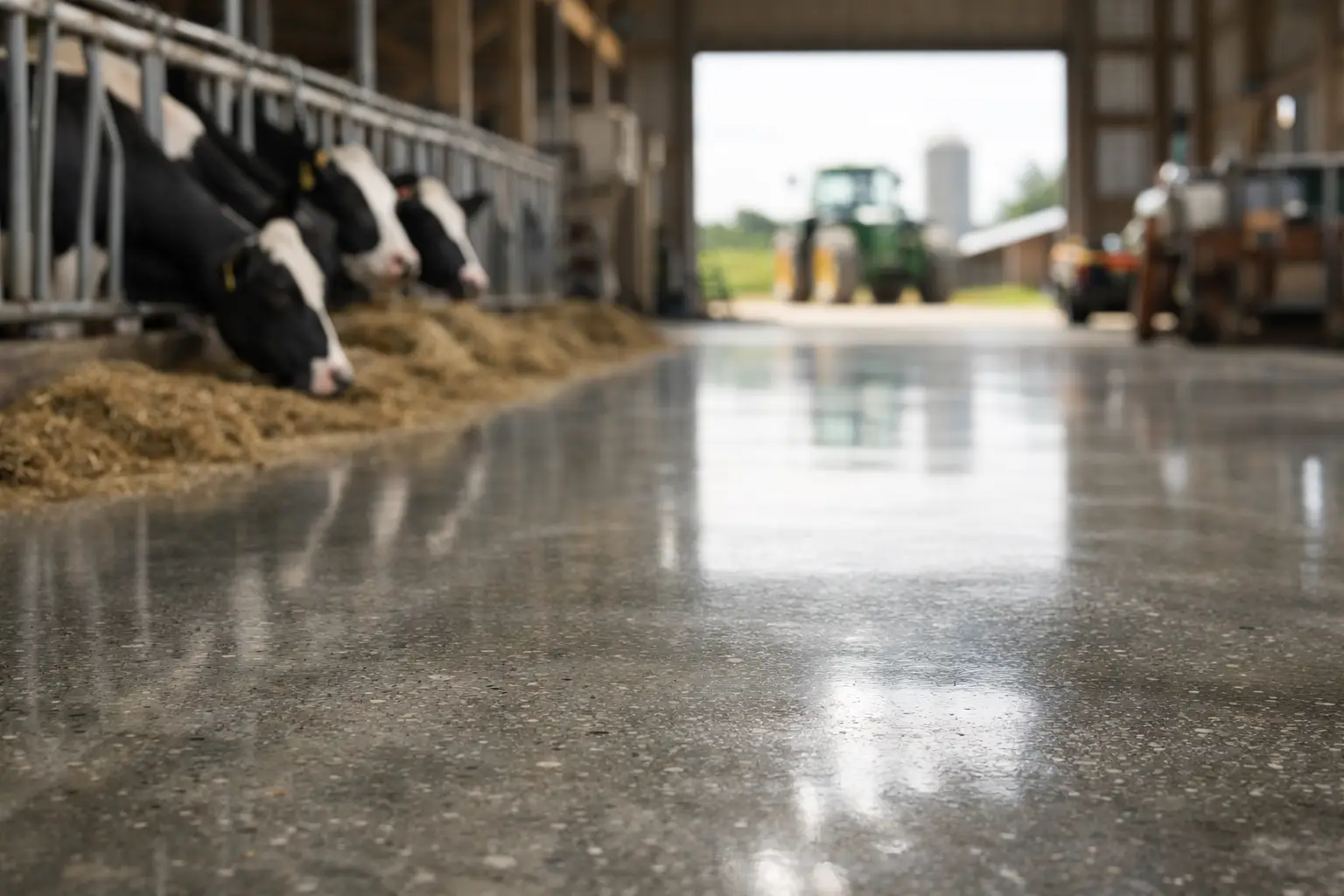
The result is a denser, flatter face that can look slightly shiny, especially when wet. While this may be desirable in an indoor commercial floor, it is a poor outcome for livestock areas. Cows need a stable, textured footing that allows the hoof to engage with the surface without excessive wear or sudden loss of grip.
How quickly concrete becomes smooth depends on the mix design, original finish, traffic levels, drainage and maintenance. Two yards poured in the same season can perform very differently if one has heavy cow flow through tight turns and the other has better drainage and a more suitable surface profile.
Heavy hoof traffic in the same travel lines
Livestock do not spread their movement evenly across a yard. They follow established tracks from the dairy exit to the collecting yard, along race entrances, around gates and through backing areas. These high-use lines receive concentrated pressure every day.
Hooves carry fine sand, stones and grit that act like abrasive paper. Under repeated loading, the surface texture slowly wears away. Turning points can polish especially quickly because the hoof twists against the concrete rather than simply stepping forward. A corner that is safe in dry weather may become hazardous after rain or wash-down once the original texture has worn flat.
Water, slurry and poor drainage
Water does not by itself polish concrete, but it makes a smooth surface much more dangerous. Slurry, manure, feed residue and algae create a lubricating layer between the hoof and the floor. Where drainage is slow or falls are poor, this layer remains longer and exposes cows to slip risk for more of the day.
Standing water also encourages traffic to concentrate on the driest available line. That can accelerate wear in narrow strips while leaving the rest of the yard less affected. Low spots near yard exits, troughs, feed pads and wash-down zones deserve close attention because they combine moisture, traffic and contamination.
A hard trowelled or overly smooth original finish
Some concrete is smooth from the day it is poured. A hard steel-trowelled finish can close the surface and leave little meaningful texture for livestock, even though it appears neat and easy to clean. This finish is not suited to areas where animals are regularly walking, turning or standing in wet conditions.
A smooth finish may also be chosen for ease of machinery movement or washing. That is a real consideration, but it must be balanced against traction. Flooring in a stock handling area has a different job from concrete in a workshop or general storage shed. For livestock, surface grip and hoof-friendly texture should be part of the original design, not an afterthought.
Weak surface paste and poor curing
Concrete needs proper finishing and curing to develop a durable working surface. If the top layer is weak, dusty, poorly cured or affected by excess water during placement, it can wear faster than expected. As the weak paste breaks down, the floor may first become rough or patchy. Continued traffic can then expose and round off fine aggregate, eventually leaving worn, smooth travel paths.
Early damage is not always obvious. A surface may look acceptable at a glance while becoming noticeably slick once wet. In working farm environments, regular inspections are more useful than waiting for visible failure or a run of slipping incidents.
Tyres, machinery and abrasive cleaning
Farm machinery can contribute to surface wear, particularly where loaded vehicles turn sharply, skid-steer tyres pivot, or feed equipment follows the same route. Tyre scrubbing can wear the surface and reduce texture at gateways, loading points and tight corners.
Cleaning practices also matter. High-pressure washing is useful for hygiene, but it cannot compensate for poor drainage or a polished slab. Aggressive cleaning methods can remove weak material from already worn areas, while hard bristles, grit and repeated scrubbing add abrasion. The aim is not to avoid cleaning. It is to ensure the concrete surface is designed and maintained to stay safe under normal wash-down routines.
Why Smooth Concrete Raises Hoof Health Risks
A cow that does not trust the ground changes how she moves. She may shorten her stride, hesitate at gateways, bunch behind other animals or place extra strain on joints and hooves. Those changes can slow cow flow and add pressure during milking, particularly when the yard is wet or animals are being moved quickly.
Slips can cause immediate injury, but the longer-term issue is often repeated instability. A cow compensating for low traction may put uneven pressure through the hoof. Over time, that can contribute to sole damage, white line issues and lameness pressure alongside other management factors such as nutrition, track condition and moisture exposure.
The surface should not be so aggressive that it excessively abrades the hoof, either. This is where specialist assessment matters. The right treatment creates consistent grip, manages water and supports confident movement without turning the floor into an unnecessarily harsh surface.
Where to Check First on Your Farm
Polishing is rarely uniform. Walk the yard after a wash-down or rain event and pay attention to where stock slow down, spread their legs, shuffle or avoid stepping. These behaviour changes can reveal a traction issue before the surface looks obviously different.
Focus on high-risk locations such as:
- dairy exits and entry lanes where cows transition between surfaces
- collecting yard turns, backing gate areas and tight corners
- holding areas where cows stand for long periods
- feed pads, trough surrounds and wash-down zones
- ramps, slopes and gateways used by people, livestock and machinery.
Look for a darkened or slightly reflective finish, shallow puddles, worn wheel paths and areas where slurry is difficult to clear. A simple wet boot test may suggest a problem, but it is not a substitute for assessing the full stock movement pattern, slope, drainage and existing surface condition.
Restoring Grip Without Replacing the Whole Slab
A polished slab does not automatically need to be removed and repoured. In many cases, mechanical surface treatments can restore traction while retaining sound concrete underneath. The best option depends on how smooth the surface has become, the condition of the slab, the type of livestock traffic and the location of the problem area.
Concrete grooving creates controlled channels that improve hoof purchase and help direct water away. It is particularly effective in dairy yards, exits, races and other areas where cows travel in predictable directions. Groove spacing, depth and orientation need to suit the layout and animal flow. Poorly planned grooving can hold contamination or create an uncomfortable pattern, so it should be designed for the specific area rather than applied as a one-size-fits-all fix.
Bush hammering is another effective option for restoring a more evenly textured finish across worn concrete. It mechanically roughens the surface, improving traction where grooves alone may not provide enough coverage. This can suit broad standing and turning areas, provided the concrete has sufficient strength and the work is carried out evenly.
Where there are cracks, spalls, broken edges or low spots, repairs should be addressed before or alongside surface treatment. Grooving a failing slab will not resolve water ponding or structural deterioration. Good results come from dealing with the full cause: surface texture, drainage, traffic direction and concrete condition.
Preventing Concrete From Polishing Again
No working farm surface stays unchanged forever. The practical goal is to slow wear and identify high-traffic areas before traction falls away. Keep drains and channels clear, manage wash-down water, repair low spots and monitor the places where stock turn or bunch. If machinery has to pivot regularly in a livestock zone, consider whether its travel route can be adjusted to reduce tyre scrubbing on the same patch of concrete.
When planning new yards, feed pads or shed upgrades, specify a livestock-appropriate finish from the beginning. Allow for drainage, slope, cow flow and the need to safely wash the area. A floor that performs well under wet hooves is an investment in fewer disruptions, safer handling and healthier animals.
If a surface feels slick underfoot or cows are losing confidence on it, do not wait for an injury to confirm the risk. A targeted inspection and the right concrete treatment can return grip where the farm needs it most, helping every animal move with more confidence through the working day.