When cows start hesitating at the yard entrance or slipping on the way to the shed, the floor is already costing you money. The best flooring for dairy sheds is not simply the hardest-wearing option on paper. It is the surface that keeps cows moving confidently, protects hoof health, drains well, and stands up to constant traffic, washdown, manure and machinery.
That matters because dairy shed flooring affects more than footing. It influences lameness risk, cow flow, worker safety, cleaning time and ongoing maintenance. A shed floor that looks solid but turns slick under slurry can create problems fast, especially in high-traffic zones like collecting yards, backing gates, feed areas, races and exits.
What makes the best flooring for dairy sheds?
On working dairy farms, good flooring has to do four jobs at once. It needs reliable grip in wet conditions, enough durability to handle stock and equipment, a surface profile that does not punish hooves, and drainage that prevents water and effluent from pooling.
That is why there is rarely one universal answer. The best flooring for dairy sheds depends on where the surface sits in the system and how cows use it. The holding yard has different demands from the milking platform, the exit lane or the feed pad. A surface that performs well in one area may be the wrong choice in another.
In most sheds, concrete remains the base material of choice because it is strong, practical and suited to heavy agricultural use. But plain concrete is not the same as fit-for-purpose dairy flooring. Surface finish is what usually determines whether it performs safely over time.
Why plain smooth concrete often falls short
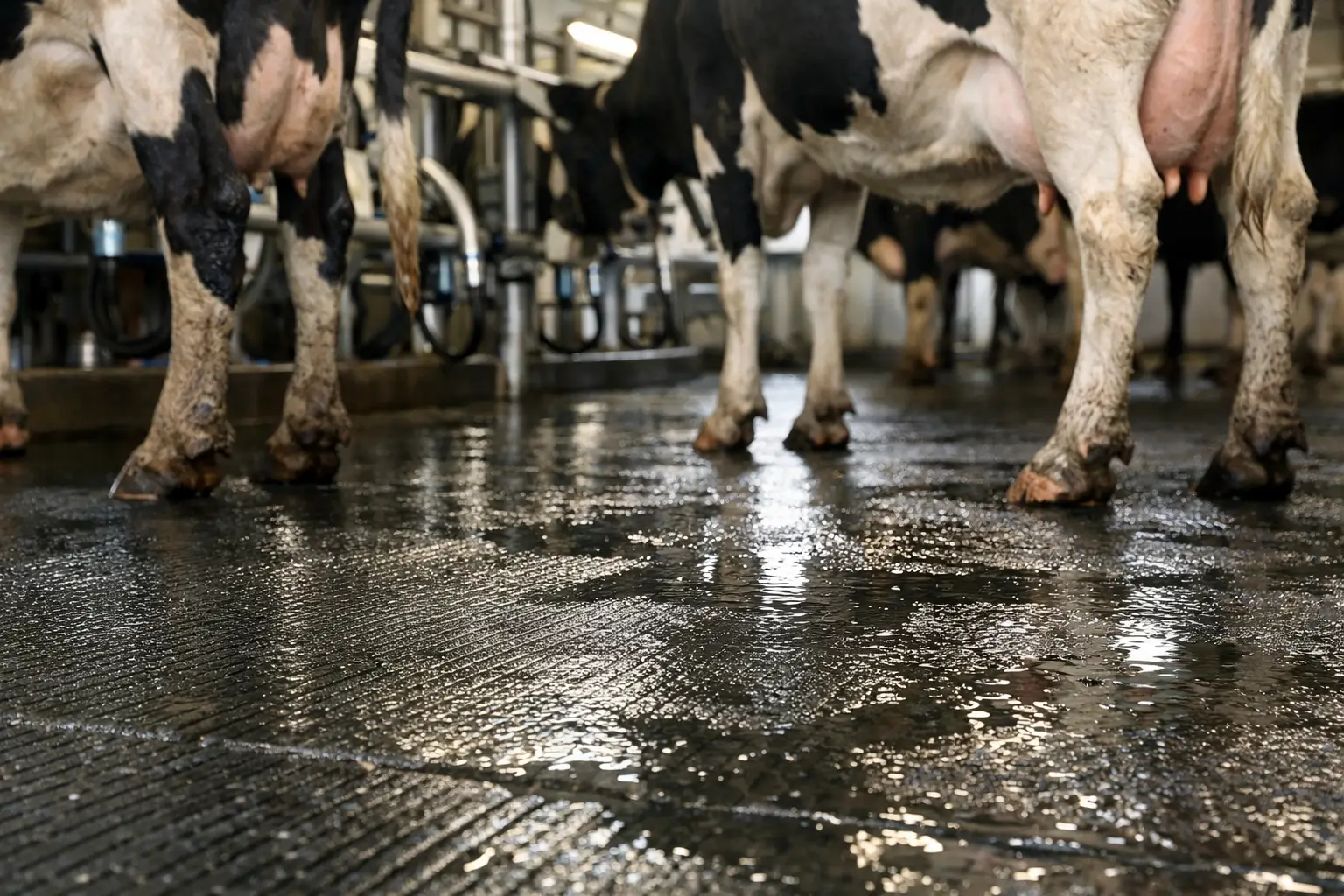
Freshly poured concrete can look tidy and easy to clean, but if the finish is too smooth it will become slippery under water, fats, manure and regular washdown. That puts pressure on cows to tense up as they walk, especially around corners or in crowded areas. Over time, poor grip can contribute to falls, bruising, white line issues and lameness.
There is a second problem with smooth surfaces. Once cows start losing confidence, flow slows down. You end up with bunching, baulking and extra labour at milking time. Staff are also exposed to more slip risk, which matters just as much in sheds where people are moving quickly around stock and machinery.
The issue is not concrete itself. The issue is untreated or poorly finished concrete in a wet livestock environment.
Concrete with the right surface treatment is often the best option
For many dairy operations, properly finished and professionally treated concrete is the best flooring solution because it balances traction, durability and long-term value. The key is getting the surface profile right.
Grooved concrete for traction and cow flow
Concrete grooving is one of the most effective ways to improve slip resistance in dairy sheds and yards. Well-designed grooves help water and slurry move away from the hoof while giving cows a more secure point of contact. That can improve confidence, reduce slipping and support steadier movement through the shed.
Done properly, grooving is not just about cutting lines into concrete. Groove depth, width, spacing and direction all matter. If grooves are too aggressive, they can be uncomfortable and harder to clean. If they are too shallow or spaced poorly, they may not provide enough grip. High-traffic routes, entry points and turning zones often need particular attention because that is where slips tend to happen.
Bush-hammered concrete for consistent surface grip
Bush hammering creates a textured surface across the concrete rather than a channelled pattern. In the right setting, that can provide excellent grip and a more even finish underfoot. It is often a strong option where broad-area traction is needed and where the floor has become polished or worn over time.
This approach can work especially well for restoring older concrete that is structurally sound but no longer safe. Instead of replacing the slab, the surface can be retextured to improve performance. That can be a far more practical investment than living with a slick floor or pouring new concrete too early.
Rubber matting has a place, but not everywhere
Rubber flooring is often discussed in dairy systems because it offers cushioning and can reduce concussion in some applications. In selected areas, such as standing zones or particular indoor setups, it may help with comfort. But it is not automatically the best flooring for dairy sheds across the whole operation.
Rubber can be expensive to install at scale, and in wet, high-effluent areas it may create maintenance challenges if drainage and fixing methods are not right. Some products also wear unevenly, shift under traffic or become difficult to keep clean. On farms with heavy daily use, the long-term cost and practicality need a hard look.
That is why many operators use rubber strategically rather than universally. It can complement a well-designed concrete system, but it usually does not replace the need for durable, slip-resistant concrete in the main traffic and washdown areas.
Where drainage changes the answer
Even the best surface texture will struggle if water and effluent have nowhere to go. Flooring performance is tied directly to slope, drainage design and cleaning routines. If the floor holds moisture, cows spend more time walking on slurry film instead of the concrete surface itself.
Good dairy shed flooring should help move liquid away quickly without creating awkward steps, ridges or hollows. Falls often happen not because the floor lacks texture everywhere, but because one section has poor fall, worn channels or ponding around gates and corners.
This is where site-specific advice matters. The right flooring solution is not only about the top layer. It is about how that layer works with the shed layout, effluent system and traffic pattern. A high-performing surface in a badly drained shed will still underperform.
Matching flooring to the area of the shed
Different parts of the dairy operation ask different things from the floor. In collecting yards and entry lanes, grip and cow flow are the priority because animals are moving in groups and often under pressure. In the milking shed itself, you need a balance of traction, hygiene and durability under repeated washdown. Exit areas need cows to move away confidently without slipping, especially when hooves are wet and traffic is constant.
Feed pads, races and service areas bring their own wear patterns too. Machinery traffic, scraping, turning points and edge breakdown all affect what surface will last. That is why a one-size-fits-all flooring decision can miss the mark. The better approach is to look at where slips happen, where cows hesitate, and where the existing concrete is breaking down.
New build versus upgrading existing concrete
If you are building new, the best result usually comes from planning the finish from the start. That means getting the slab, slope, drainage and surface treatment aligned before the shed is in full use. Waiting until after the concrete has polished over can leave you solving a preventable problem.
If the shed is already operating, replacement is not always necessary. Many farms can improve safety and performance by treating existing concrete through grooving, bush hammering, repairs or targeted cutting work. That is often the most cost-effective path when the base slab is still sound.
This is also where timing matters. On working farms, flooring upgrades need to fit around milking schedules and minimise disruption. Practical service planning, including after-hours work where available, can make a major difference to how easily improvements are carried out.
What to look for before you choose
Before deciding on any flooring option, look beyond the sales pitch and ask how it performs in real dairy conditions. Does it maintain traction when wet? Will it support hoof health instead of creating excessive wear? Can it cope with scraping, washdown, manure acids and constant stock traffic? And can it be maintained without turning into an ongoing headache?
It also pays to think in terms of return, not just upfront cost. Flooring that reduces slipping, supports cow movement and lowers lameness pressure can pay back through fewer injuries, better production flow and less reactive repair work. Cheap flooring is expensive when cows stop trusting it.
For many farms, the smartest answer is not exotic. It is well-installed concrete with the right surface treatment, the right drainage and the right maintenance plan. That is usually what delivers dependable traction and long service life in the places that matter most.
If your shed floor is slick, polished, uneven or holding water, the problem is unlikely to fix itself. A proper assessment of the concrete, traffic pattern and drainage can show whether grooving, bush hammering, repairs or a more targeted upgrade will give you the safest result. Happy Hoof works with those real-world conditions every day, with a clear focus on safer surfaces, healthier hooves and flooring that earns its keep on farm.
The best dairy shed floor is the one cows can trust every time they step on it.