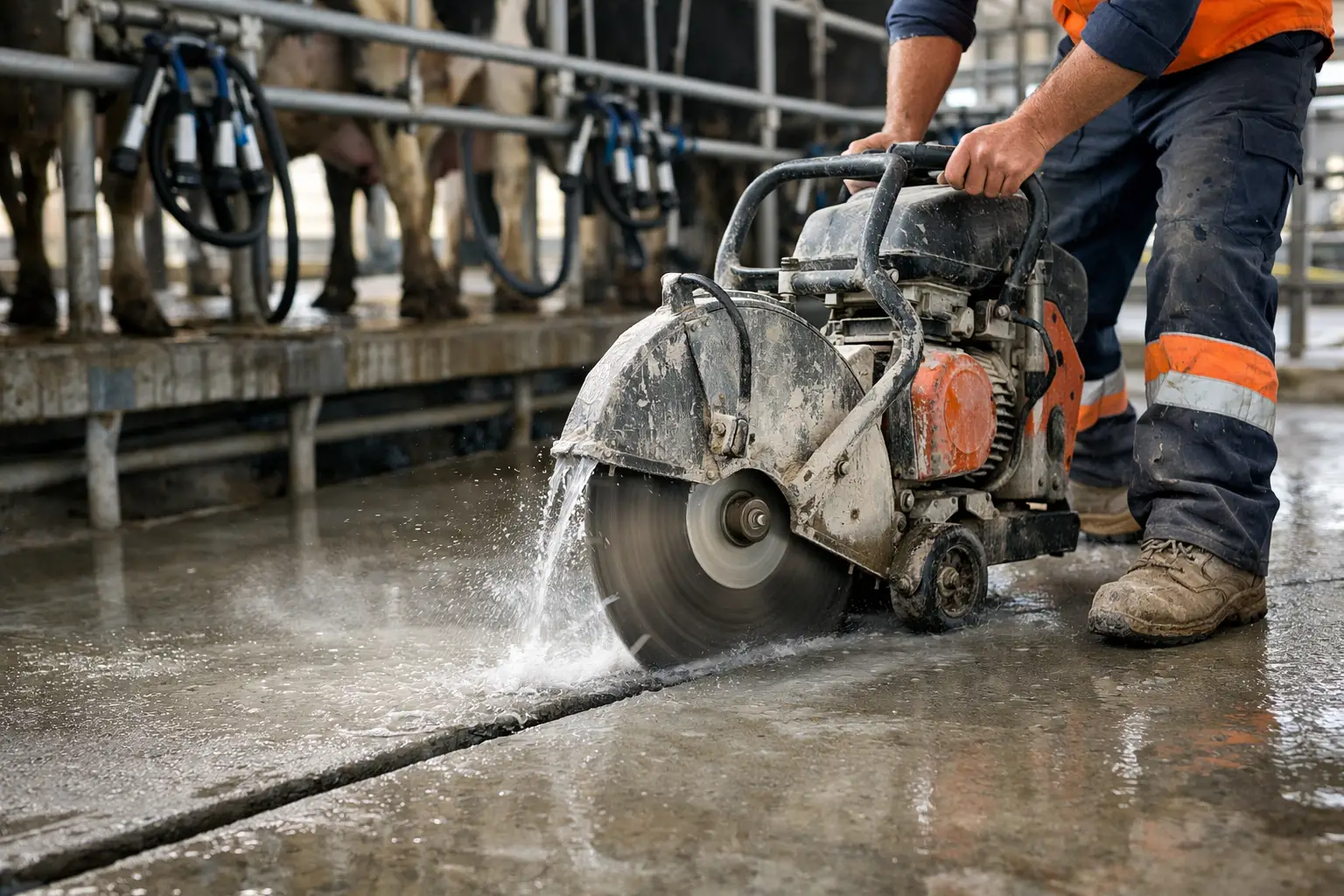
A milking shed floor tells you a lot before a cow even steps onto the platform. If water sits where it should drain, if cows hesitate at turns, or if staff are constantly washing down slurry that never seems to clear properly, the concrete is no longer doing its job. Concrete cutting for milking sheds is not just about changing the surface. It is about improving traction, drainage and hoof safety in one of the hardest-working areas on the farm.
Milking sheds deal with constant moisture, manure, cleaning chemicals, machinery traffic and daily stock movement. That combination wears smooth concrete quickly, especially in high-pressure zones like entry lanes, backing gates, holding areas and exits. Once the surface loses grip, you are not just looking at a maintenance issue. You are looking at a welfare problem, a safety risk and a productivity cost.
Why concrete cutting matters in milking sheds
A slippery shed changes cow behaviour fast. Animals shorten their stride, bunch up, baulk at corners and shift weight unnaturally to stay upright. That puts pressure on claws and joints, increases stress and raises the likelihood of slips and falls. It also slows movement through the shed, which affects milking flow and creates more work for staff.
Concrete cutting helps restore a functional surface by creating pattern, texture and channels that improve underfoot grip and support water runoff. In the right setting, cut grooves can make a clear difference to confidence and movement, particularly where smooth or worn concrete is causing hesitation.
The key point is that not every milking shed needs the same cut pattern or depth. The best result depends on cattle traffic, shed design, washdown practices, slope and the condition of the existing slab. A generic approach often looks fine on day one but underperforms once the shed is back in full use.
Concrete cutting for milking sheds and farm performance
When farmers think about flooring, they often start with the obvious issue – slips. That is fair enough, because slips are visible and immediate. But the flow-on effects matter just as much.
Poor traction can contribute to lameness over time, especially when cows are repeatedly walking on hard, polished or poorly drained concrete. If cattle are standing awkwardly during milking or pushing through wet holding areas with limited grip, the surface is adding strain every day. Better footing supports more natural movement, reduces stress in the shed and helps protect hoof condition over the long term.
There is also the human side. Milking sheds are busy workplaces. Staff move quickly, hoses are running, machinery is operating and routines are tight. A floor with poor drainage and low grip raises the chance of injury for people as well as stock. Good concrete work improves confidence underfoot for everyone using the shed.
Then there is the practical cost. Injured stock, delayed milking, patch repairs and avoidable downtime all chip away at margins. Concrete cutting is often a smaller intervention than full slab replacement, but it can have a strong return where the base concrete is still structurally sound.
Where cutting is usually needed most
Some areas of a milking shed wear harder than others. Entry and exit points often take the worst punishment because cows are changing pace, turning and bunching in tighter spaces. Holding yards and backing gate zones stay wet and dirty, which accelerates polishing of the surface. Around cups-on areas and washdown points, constant moisture can make even a slight loss of texture a problem.
That is why a proper assessment matters. One shed may need targeted cutting only in high-risk traffic zones. Another may benefit from a broader treatment across the main working surface. It depends on where cows are slipping, where water is pooling and how the shed is used across the season.
Older sheds can be especially variable. One section of concrete might still be serviceable, while another has worn smooth from years of traffic and cleaning. In those cases, selective cutting can be the most sensible option, provided the slab is in suitable condition.
What good concrete cutting should achieve
The job is not simply to cut lines into concrete. The goal is to create a surface that works with livestock movement and farm operations.
That means improving grip without making the surface too aggressive. Overly harsh profiles can create their own problems, especially if they increase hoof wear or become difficult to clean. The right finish needs enough texture for traction while still allowing effective washdown and manure management.
Drainage is another part of the equation. In many sheds, the issue is not just the surface itself but how water behaves on it. A well-planned cut pattern can help direct water, reduce surface film and limit the slick conditions that build up between cleans. If the slab already has poor fall, though, cutting alone may not solve everything. Sometimes concrete repairs, reprofiling or complementary treatments are needed to get the full result.
Durability matters too. Milking sheds are not gentle environments. The finished surface has to cope with repeated hoof impact, chemical exposure, washdown pressure and equipment traffic. A specialist contractor should be thinking beyond the first week and focusing on how the floor will perform after months and years of use.
Why farm-specific experience makes a difference
Concrete work in agricultural settings is different from standard commercial or residential cutting. A milking shed has unique demands, and the wrong pattern or technique can leave you with a floor that is harder to clean, rougher on stock or less effective than expected.
That is where specialist experience counts. A contractor who understands livestock movement, slurry management, shed routines and hoof health is far better placed to recommend the right approach. They will know that traction is only one part of the job. Surface comfort, cleanliness, drainage and daily operability all have to work together.
Timing also matters on farms. In many cases, work needs to be planned around milking schedules to minimise disruption. For some operations, after-hours or staged work is the practical answer. That kind of flexibility is not a bonus. It is part of delivering a service that fits real farm conditions.
When concrete cutting is the right solution – and when it is not
Concrete cutting for milking sheds is highly effective in the right circumstances, but there are cases where another treatment may be more suitable.
If the slab is structurally sound but polished and slippery, cutting can be an excellent option. If the concrete is badly spalled, cracked, uneven or holding water because of poor levels, repair work may need to come first. In some areas, grooving or bush hammering may offer a better traction profile depending on how cows use the space and how wet the surface stays.
That is why inspection matters. The best recommendation is based on the floor in front of you, not a standard package. A surface that looks similar from one shed to the next can behave very differently once stock traffic, slope and cleaning systems are taken into account.
What to expect from a professional assessment
A proper site assessment should focus on outcomes, not just measurements. Yes, the contractor should look at slab condition, wear patterns and drainage, but they should also ask how the shed operates day to day. Where do cows hesitate? Where do staff notice recurring slip risks? Which zones stay wet longest? Has lameness increased, or are you seeing more hoof issues after milking?
Those answers help shape the right treatment plan. They also help avoid over-servicing areas that do not need it, while making sure problem zones are not missed.
At Happy Hoof, that practical, farm-first approach is what turns concrete work into a useful investment rather than another short-term fix. The aim is not just to alter the floor. It is to improve how the shed functions for stock and staff every day.
The long-term value of getting it right
A safer shed floor does more than reduce the chance of a fall. It supports steadier cow flow, lowers strain on hooves, makes washdown more manageable and gives staff better footing in a demanding environment. Those gains are not flashy, but they matter because they show up in daily routines and long-term herd performance.
The best concrete work on farms often goes unnoticed once it is done. Cows move through with less hesitation. Water clears better. Staff stop second-guessing slippery spots. The shed simply works the way it should.
If your milking shed concrete is worn, slick or no longer draining properly, it is worth treating the floor as part of your production system, not just part of the building. A well-cut surface can make the whole shed safer, calmer and easier to run – and that pays off long after the job is finished.