A yard that stays wet, a shed floor that has gone smooth, and cows starting to hesitate where they used to walk freely – that is usually when a cow shed concrete cutting service stops being a maintenance job and starts looking like a farm performance decision. On working farms, concrete does not fail all at once. It wears down under traffic, moisture, effluent and daily pressure, and the result shows up in slips, hoof stress and slower movement through the shed.
Concrete cutting in a cow shed is not about making a floor look new. It is about restoring the grip and surface function that livestock need every day. When the surface texture is right, cows walk with more confidence, handlers work in safer conditions, and the shed keeps moving the way it should.
What a cow shed concrete cutting service actually does
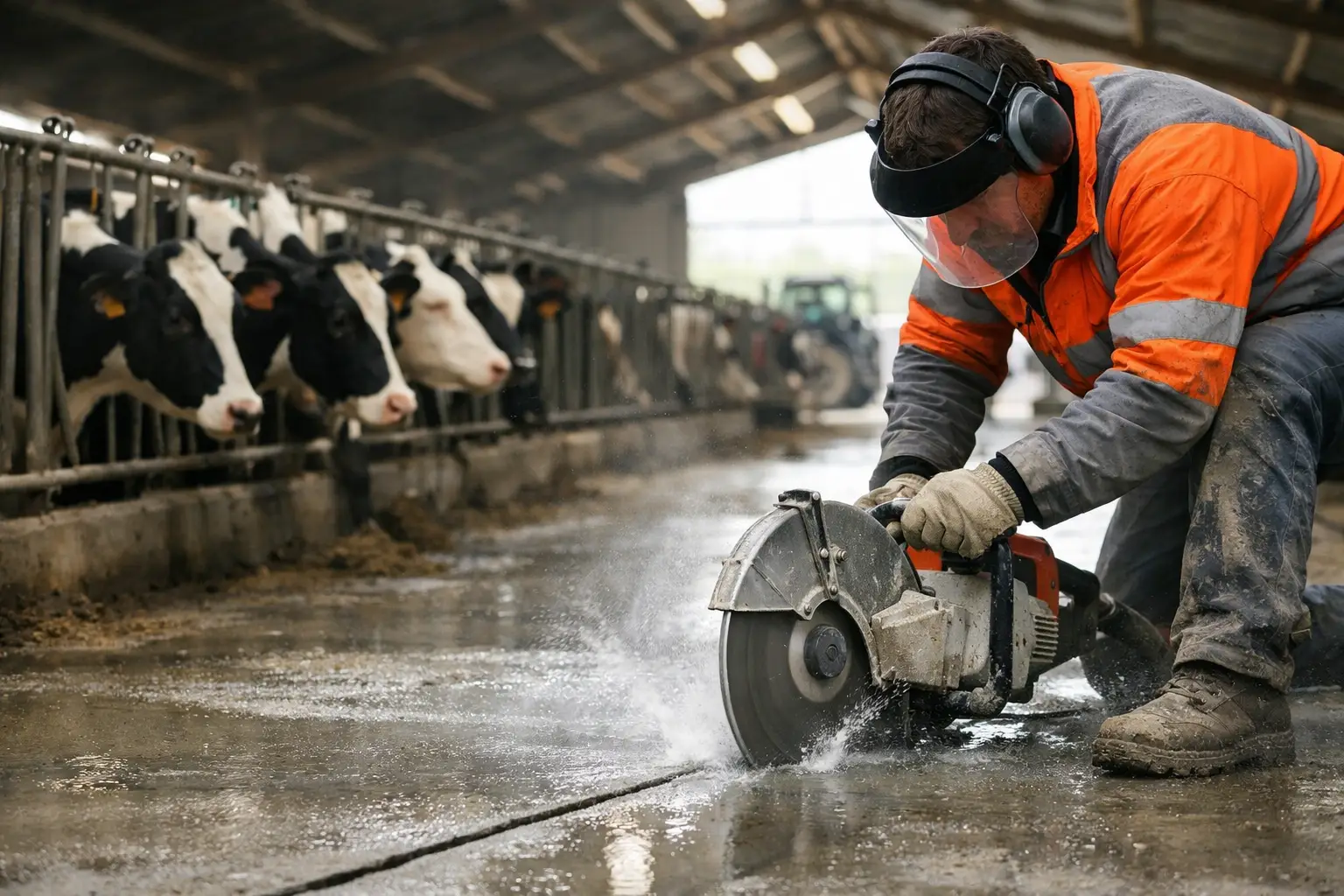
In simple terms, cow shed concrete cutting service involves cutting grooves into existing concrete to improve traction and help manage water and effluent on the surface. Those grooves create a more secure underfoot pattern, giving hooves something to bite into instead of skating across polished concrete.
That matters most in high-traffic areas. Entry and exit lanes, backing gates, holding areas, feed pads and internal shed floors all cop heavy use. Over time, even well-finished concrete can become slick. Once that happens, the surface may still look structurally sound, but it is no longer doing its job properly for livestock.
The best results come when the cutting pattern suits the way the area is used. A dairy holding yard has different demands from a feed passage or an approach lane. The right spacing, depth and layout depend on stock movement, drainage, slope and how aggressively the surface has worn.
Why cutting matters for hoof health and animal flow
Cows are heavy animals moving on relatively small weight-bearing points. If the floor offers poor traction, the strain goes straight into hoof wear, joint stress and awkward movement. That can build into bigger issues over time, especially where animals are walking daily across wet concrete.
A properly cut surface helps reduce slipping and scrambling. That sounds basic, but the knock-on effect is significant. Better grip supports steadier walking, cleaner turns and less panic at pressure points. In practical terms, that can mean fewer knocks, less bruising and less reluctance when cows enter the shed.
Hoof health is also tied to confidence. A cow that feels unsure on a floor changes the way she moves. She may shorten her stride, brace through corners or bunch up near transitions. Those patterns are hard on animals and hard on the flow of the operation.
Where cow shed concrete cutting service delivers the biggest return
Not every concrete area on a farm wears at the same rate. Some sections need urgent attention, while others may still have enough texture left to perform well. That is why a good assessment matters before any cutting starts.
The biggest gains usually come in places where moisture and traffic combine. Holding yards are a common example because they stay damp, carry heavy stock density and take constant hoof action. Entry races and exits also matter because cattle tend to push forward, bunch up and turn in these areas. If the surface is smooth, slips are far more likely.
Inside the shed, problem spots often build around the bail area, corners, crossovers and any place where washdown water sits. Feed areas are another one to watch. Cows spend time there every day, and repeated traffic can polish the surface surprisingly quickly.
In some sheds, concrete cutting is the right solution across a broad area. In others, a targeted approach makes more sense. It depends on wear patterns, drainage and whether the slab is otherwise in good condition.
When cutting is the right fix – and when it is not
Concrete cutting is highly effective, but it is not a cure-all. If the slab is badly broken, heaving, crumbling or holding water because of poor falls, cutting alone may not solve the problem. You can improve surface grip, but you cannot groove your way out of major structural faults.
That is why the condition of the slab matters. If the concrete is sound but smooth, cutting is often a smart and cost-effective way to extend its working life. If there are cracks, spalling or drainage failures, repairs may need to happen first or at the same time.
This is where farm-specific advice counts. The right service is not always the biggest job. Sometimes the best outcome comes from combining cutting with repairs or using another surface treatment in selected areas. A specialist should be looking at how the floor performs under livestock, not just whether it can be cut.
What to expect from the process
A professional cow shed concrete cutting service should start with a clear look at the site. That includes surface wear, stock traffic, moisture, slopes, drainage paths and any existing damage. There is no value in applying the same pattern everywhere if the farm layout says otherwise.
Once the plan is set, cutting is carried out with purpose-built equipment designed to create consistent grooves without unnecessary damage to the slab. Consistency matters. Uneven or poorly spaced cuts can leave a surface that performs patchily or wears unevenly.
Dust, slurry and disruption also need managing. On an active farm, timing is part of the service. Many operators prefer work outside peak movement periods or after hours so normal routines are not thrown off more than necessary. That practical side matters just as much as the cutting itself.
A good operator will also leave you with a surface that is ready to perform, not one that creates a fresh maintenance headache. Clean-up, safe access and a realistic explanation of how the area will bed in after cutting should all be part of the job.
How long the result lasts
Durability depends on traffic, concrete quality and how the area is managed afterwards. A well-cut surface on sound concrete can deliver strong long-term value, especially when water and effluent are moving off the floor properly. But like any working surface on a farm, it will wear over time.
The main factors that shorten life are constant wetness, abrasive contamination, poor drainage and high-density traffic concentrated into small zones. If cows are repeatedly bunching in one slick corner, that patch will age faster than the rest of the yard.
That does not mean cutting is a short-term fix. It means realistic planning matters. Farms that treat flooring as part of ongoing infrastructure maintenance generally get better results than farms that wait until slips become a daily problem.
Choosing a contractor who understands livestock surfaces
There is a difference between a contractor who can cut concrete and one who understands cow sheds. On a farm, the job is not judged by how neat the grooves look on day one. It is judged by how the surface performs under livestock, in wet conditions, under real daily use.
That means the contractor should understand hoof traffic, drainage behaviour, surface wear and the operational pressure points in dairy and livestock facilities. They should be able to explain why a certain pattern suits one area and not another. They should also be honest if cutting is only part of the answer.
Happy Hoof works in that specialist space – focused on concrete performance where animal safety and hoof health are directly tied to farm productivity. That kind of service is less about generic construction and more about getting practical results where livestock actually move.
The real cost of leaving smooth concrete too long
Many farms put off surface work because the slab still looks usable. That is understandable. Concrete rarely announces itself dramatically. It just gets a bit slicker, a bit harder on hooves, a bit less forgiving in wet weather.
But the cost tends to show up elsewhere. A slip here, a baulking point there, more pressure on handlers, more stress on stock, and avoidable wear on animals moving across the same poor surface every day. Those are not cosmetic issues. They affect welfare, workflow and the bottom line.
A good cow shed floor should help the shed run calmly. When cows can move with confidence, everything downstream becomes easier to manage. If the surface is telling you otherwise, it is probably time to act before small signs turn into expensive ones.
The best flooring decisions on a farm are usually the ones that prevent trouble rather than react to it. If your shed concrete has gone smooth, cutting it properly can be one of the most practical upgrades you make.