A feed pad can look serviceable from the ute, yet still create problems where they matter most: under the feet of cattle moving through water, manure and feed. Knowing when should feed pad concrete be repaired helps you act before worn surfaces contribute to slipping, hoof damage, lameness, drainage issues and avoidable downtime.
Concrete on a working farm does not fail all at once. It wears under constant hoof traffic, machinery, effluent, weather and cleaning. The right time to repair is usually when the surface begins affecting traction or water movement – not when sections have broken away so badly that stock and machinery have no choice but to work around them.
When should feed pad concrete be repaired?
Feed pad concrete should be assessed for repair as soon as it loses grip, develops cracking or breaks down at joints, particularly in high-traffic areas. Cattle do not need a large pothole to lose confidence. Smooth, polished concrete and shallow ponding can be enough to make animals shorten their stride, hesitate at gateways or bunch together.
The urgency depends on the defect, its location and the conditions on your farm. A small, stable crack at the edge of a low-use area may only need monitoring. A worn strip near the feed face, water trough, entrance, exit or collecting area is different. These are places where cattle turn, stop, compete for space and place high pressure on the surface. A traction issue there can quickly become a safety and welfare concern.
Repair work is also more economical while the concrete is still structurally sound. Addressing local damage early can avoid a larger rebuild later, while preserving the fall and drainage that keep the pad functional.
Signs the surface is no longer doing its job
Polished or slippery concrete
A glossy or visibly smooth surface is one of the clearest warning signs. Repeated hoof and tyre traffic can wear away the texture that once gave animals purchase. Add rain, wash-down water, effluent or loose feed and a surface that was acceptable in dry weather may become hazardous.
Watch cattle rather than relying only on how the concrete looks. Signs include tentative walking, slipping during turns, spreading legs for balance, reluctance at a particular point or animals taking an unusual route around a worn section. Staff may notice it first too, especially when cleaning or moving stock in wet conditions.
Where the slab itself remains sound, specialist surface treatments such as concrete grooving or bush hammering may restore traction without the cost and disruption of replacement. The right treatment depends on the existing concrete, the area’s slope, drainage and the type of traffic it carries.
Cracks that are opening, moving or holding water
Not every crack means a feed pad needs immediate major work. Hairline shrinkage cracks can occur in sound concrete and may remain stable for years. The concern is cracks that widen, have uneven edges, allow water in, break away under tyres or collect manure and slurry.
Cracks often reveal a deeper issue, such as movement beneath the slab, poor drainage, insufficient joint performance or concentrated machinery loads. Simply filling a crack without understanding why it formed can lead to the same problem returning. A proper inspection should consider the crack pattern, condition of the base, nearby drainage and whether the slab has dropped or lifted.
Spalling, potholes and broken edges
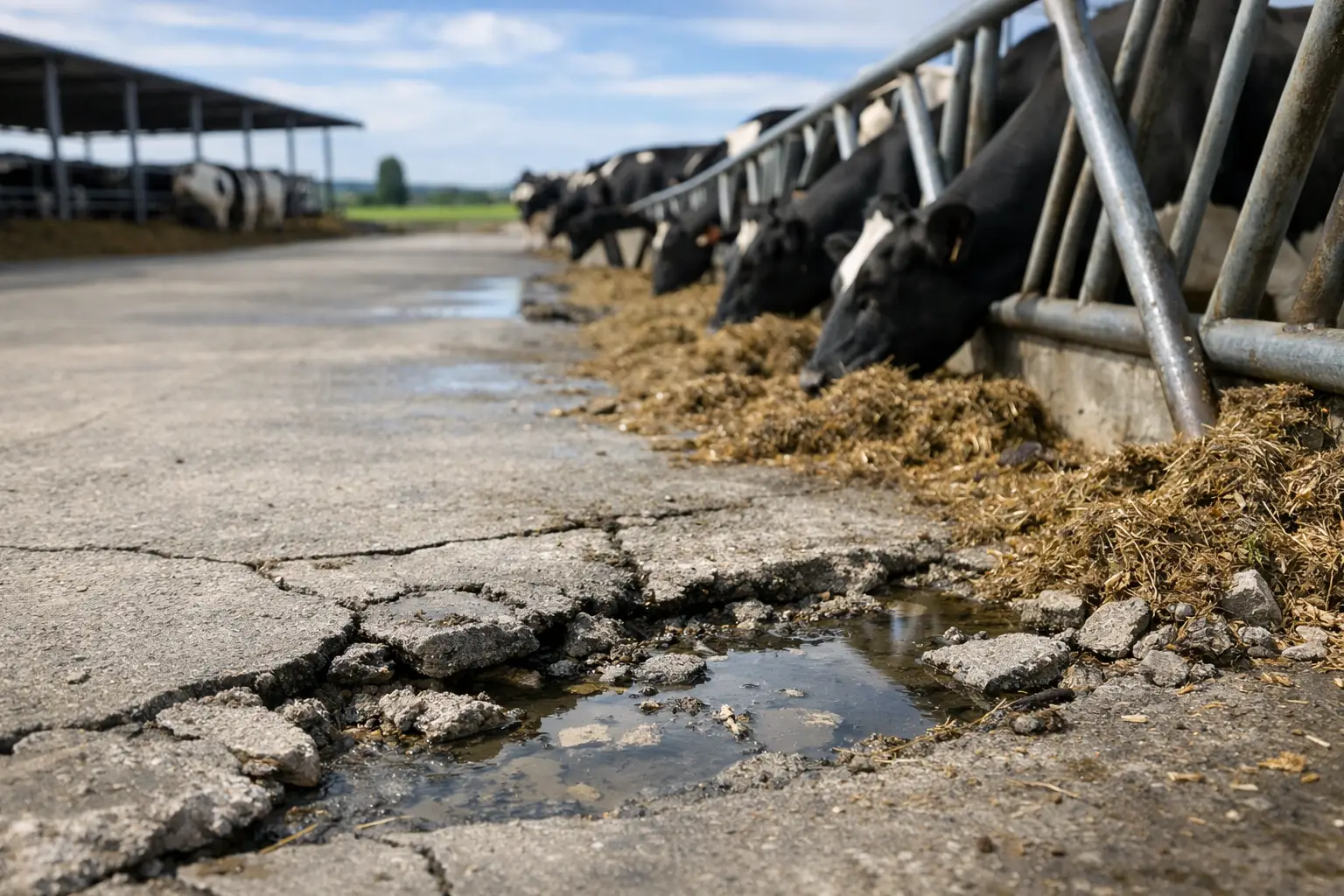
Spalling is when the surface flakes, chips or breaks away. It commonly appears around joints, drains, feed barriers, corners and places where machinery turns. Once the top layer is gone, the damaged area can enlarge quickly under hoof impact and vehicle traffic.
Potholes and broken edges are more than a maintenance nuisance. They can trap water, catch a hoof, create sharp transitions and make scraping less effective. If cattle are regularly stepping through damaged sections, repair should not be put off until the quiet season. Temporary management may reduce exposure, but it does not restore a safe walking surface.
Ponding water and poor runoff
Standing water after normal wash-down or rainfall is a sign worth taking seriously. It may result from worn concrete, settlement, blocked drainage or an original fall that no longer suits the way the pad is used. Water softens manure, increases slip risk and keeps the surface dirty for longer. It also makes cleaning harder and can accelerate deterioration around cracks and joints.
The repair solution may be local levelling, drainage work, joint repairs or a more substantial correction to the slab. The key is to solve the cause rather than covering a low spot that will reappear under traffic.
Failed joints and uneven slab levels
Joints allow concrete to move, but they need to remain clean, supported and safe under hooves and tyres. When joint edges crumble or adjacent panels become uneven, cattle can lose footing as they cross them. Scrapers and loaders can also strike raised edges, worsening the damage.
An uneven joint may point to slab settlement or loss of support below. That calls for more than cosmetic patching. Repair needs to restore a durable transition and address the reason the slab moved in the first place.
High-risk areas deserve earlier action
The whole feed pad matters, but some locations deserve closer inspection because they carry more pressure and more risk. Entrances and exits experience stopping, turning and bunching. The feed face sees repeated hoof traffic and feed machinery. Water troughs create regular wet patches, while corners and turning zones take concentrated tyre loads.
Drainage channels, wash-down points and transitions between surfaces should also be checked. A small lip between the feed pad and a lane can affect both animal flow and machinery access. If cows consistently slow down or avoid one of these areas, treat that behaviour as useful information. It often identifies surface issues before major physical damage is obvious.
Repair, resurface or replace?
The best option depends on whether the issue is traction, surface damage or structural failure. Grooving or bush hammering can be highly effective where concrete is sound but has become too smooth. These treatments provide a more slip-resistant finish while retaining the existing slab, and can often be planned to limit interference with daily farm operations.
Local repairs suit isolated spalls, damaged joints, small failed areas and minor cracking where the surrounding concrete and base remain stable. Good preparation matters. Weak or contaminated material needs to be removed, edges prepared properly and repairs matched to the traffic and moisture conditions of the area.
Replacement becomes more likely when large sections are settled, repeatedly breaking up, badly cracked or unable to drain correctly. It costs more upfront and requires careful planning, but patching a failing slab year after year can cost more in disruption, labour and animal risk. A specialist assessment should give you a clear view of what can realistically be repaired and what should be rebuilt.
Plan repairs around stock flow, not just the concrete
A technically sound repair is only useful if it works within the farm’s daily routine. Before work begins, consider how stock will enter and leave the area, where feed and water access will be maintained, and how machinery will operate around curing concrete or work zones.
For many farms, after-hours or night work can reduce disruption, especially for traction treatments that do not require full slab replacement. Timing still matters. Repairs need suitable surface conditions, access for equipment and enough protection from livestock until the treated area is ready for use.
Do not overlook the lead-up work either. Cleaning, removing feed residue and managing wash-down water helps a contractor see the true condition of the concrete. It also allows repairs and traction treatments to bond and perform as intended.
Build inspections into routine maintenance
The most practical approach is to inspect the feed pad at least before wet weather, after periods of heavy use and whenever animal movement changes. Walk the surface, look along it in low light to spot ponding and unevenness, and pay close attention to the routes cattle use most. Check after cleaning too, because wet concrete gives a more honest picture of traction and drainage.
Record recurring damage rather than treating every defect as isolated. If the same joint fails, the same corner chips or the same low spot holds water, there is usually an underlying cause worth fixing. This information also helps plan maintenance before the problem forces an urgent decision.
A safe feed pad supports calmer stock movement, more effective cleaning and fewer interruptions to the working day. If the surface is becoming slippery, broken or hard to drain, early specialist advice can turn a growing risk into a planned repair – and keep the pad working for the animals and people who rely on it.