A cracked dairy yard or worn feed pad is not just a maintenance issue when cattle are crossing it several times a day. It can become a slip point, a hoof-health problem and a source of delays when animals hesitate or workers need to move more carefully. This guide to concrete repairs on farms explains how to assess damage properly, choose a repair that suits the job, and protect the surface for the long haul.
Start with the farm risk, not the crack
Concrete on farms works harder than concrete in most commercial settings. It carries livestock traffic, machinery, feed, effluent, water, cleaning chemicals and repeated wet-dry cycles. A repair that looks tidy but does not address the cause of the damage can fail quickly, leaving the same safety issue in place.
Begin by looking at where the damage sits in the daily flow of stock and machinery. A shallow chip on the edge of a low-traffic shed bay may be mainly a durability concern. A worn, polished section at the dairy exit, backing gate, feed face or collecting yard demands more urgency because it can affect traction under hooves.
Pay close attention to four warning signs: loose or breaking concrete, cracks that open or move, standing water, and surfaces that have become smooth under constant traffic. Also look for areas where cows shorten their stride, bunch up, slip, or avoid placing weight evenly. Livestock behaviour often identifies a problem before the damage appears severe to the eye.
Separate surface damage from structural movement
The right repair depends on whether the slab is sound underneath. Surface deterioration can often be repaired locally. Structural movement needs a more considered approach, because patching over a moving base is unlikely to last.
Surface wear, scaling and spalling
Surface wear is common in high-use areas. The top layer can become rough, flake away or wear smooth, particularly where slurry, moisture and abrasive cleaning are part of the routine. This is often called scaling or spalling.
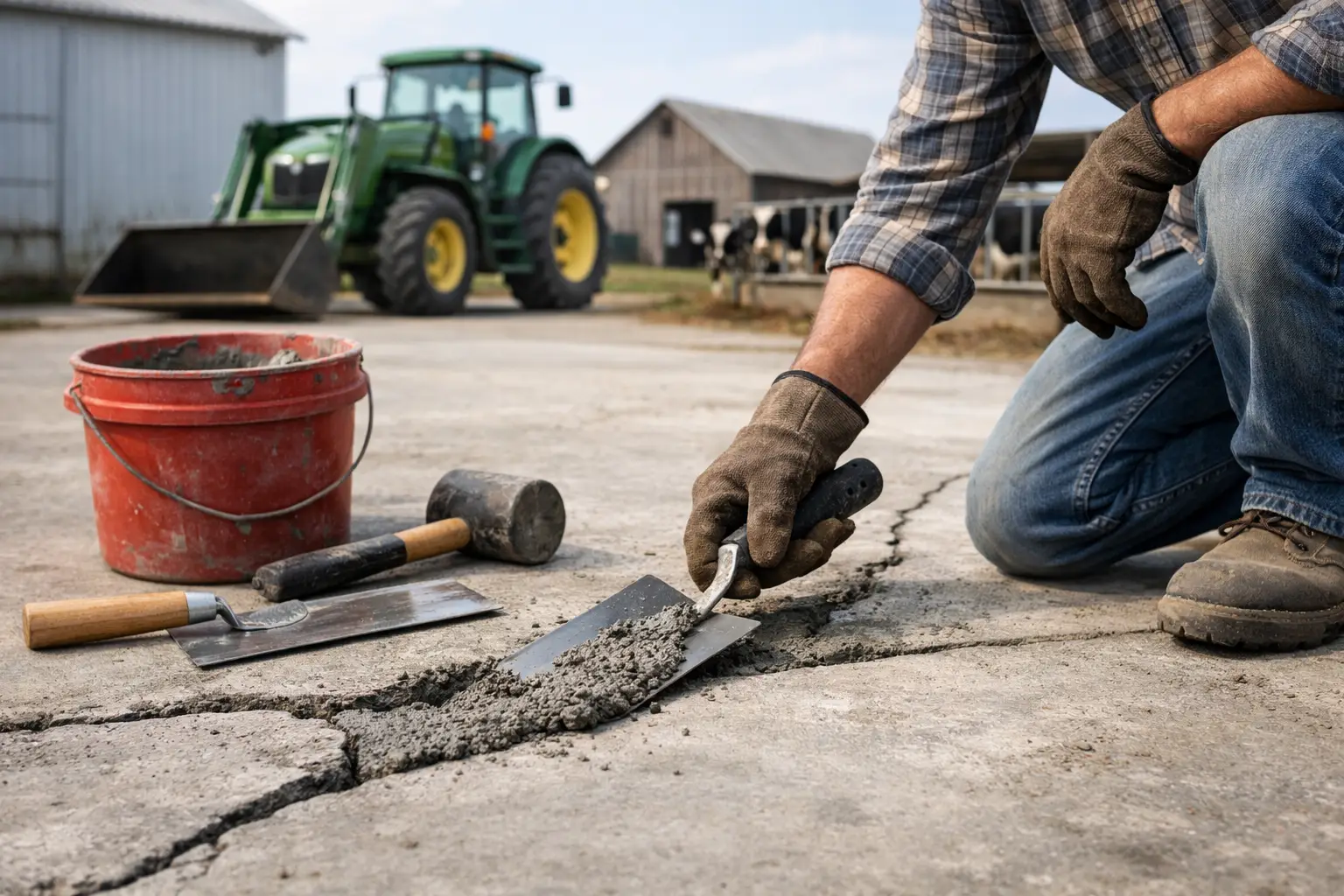
If the concrete beneath is solid, damaged material can be removed, the area prepared properly and repaired with a suitable concrete repair product. Preparation is the part that determines whether the patch bonds. Weak, contaminated or loose concrete must be cut back to a sound edge, then cleaned thoroughly before repair material is applied.
For livestock areas, matching the surface finish matters as much as filling the hole. A patch that is too smooth can create a traction difference across the yard. A repair that is too aggressive can be uncomfortable under hoof. The aim is a consistent, slip-resistant finish that supports confident animal movement.
Cracks and broken joints
Not every crack means the slab needs replacing. Fine, stable cracks can sometimes be cleaned, filled and monitored. Wider cracks, uneven edges or cracks that continue to open can point to movement beneath the slab, poor drainage, heavy loading or failed joints.
Expansion and control joints are designed to manage movement, but they can break down under hoof and machinery traffic. Once joint edges begin to crumble, they become trip hazards and allow water into the slab base. Repairing joint edges and resealing them can prevent further deterioration, provided the underlying movement is within normal limits.
Where one side of a crack has lifted or dropped, or a section rocks under machinery, treat it as a structural issue. The repair may require cutting out the affected area, rebuilding the base and reinstating the slab rather than applying a surface patch.
Potholes and local failures
Potholes are hard on hooves, tyres and people. They also collect water and manure, making cleaning more difficult and creating a slippery edge around the hole. Small potholes can grow quickly when livestock and machinery repeatedly strike the broken perimeter.
A lasting pothole repair needs square, sound edges rather than a feathered patch. The failed concrete should be cut out, not simply covered. Once the base is checked and compacted where needed, the replacement concrete can be placed, finished and cured to suit the area’s use.
Fix drainage before it ruins the next repair
Standing water is one of the clearest signs that a concrete repair needs more than new material. Water reduces grip, carries slurry across walking surfaces and can work into cracks, joints and slab edges. On dairy farms, poor drainage also means more time spent cleaning and more chance of cows walking through wet contamination.
Check whether water is pooling because a drain is blocked, a channel is too shallow, a slab has settled, or the original fall is not directing water away effectively. The solution may be as simple as restoring a drain or as involved as cutting and regrading a section of concrete.
This is where patch repairs have limits. Adding material to a low point can sometimes correct a minor fall, but it may create an abrupt edge if not designed and finished carefully. For broader ponding, cutting and reinstating the affected section is often the better investment. The repair should guide water where it needs to go without creating a surface that challenges stock movement.
Choose a finish that supports hoof health
Concrete does not need to be smooth to be cleanable, and it should not be treated so aggressively that it becomes punishing underfoot. Getting this balance right is central to farm concrete work.
In wet, high-traffic locations, concrete grooving or bush hammering may be needed alongside repairs. These treatments improve grip by creating a controlled texture. They are especially useful at dairy exits, return races, holding yards, ramps and other areas where cattle turn, stop or move over wet concrete.
The best treatment depends on the existing slab, its condition, drainage, slope and the animals using it. Grooves can direct water and provide traction, while bush hammering creates an even textured finish. Neither treatment will solve an unstable or badly deteriorated slab, so repairs should come first where the concrete is failing.
Avoid relying on a coating as the only answer to an unsafe livestock surface. Some coatings can be useful in specific applications, but they can wear under heavy agricultural use or become slippery if the finish is not suited to wet conditions. A durable repair and mechanically created surface texture generally provide a more reliable result for working farm areas.
Plan repairs around farm operations
Concrete work can disrupt a farm, but poor planning creates more disruption than the repair itself. The job needs to account for milking times, stock routes, machinery access, curing periods and weather.
Before work starts, identify how cattle will be moved safely around the area and whether temporary barriers or an alternative route are required. Fresh concrete and repair materials need adequate curing before they take livestock or vehicle traffic. Rushing this stage can damage the new work before it has reached strength.
For dairy operations, after-hours or night work can be a practical option for certain grooving, cutting and repair tasks. It can reduce interference with normal milking routines and keep stock movement more predictable. The exact schedule depends on the repair type, access and the time needed for curing, so it should be planned before a section is taken out of service.
Make inspection part of routine maintenance
Concrete repairs last longer when small defects are dealt with early. A quick inspection after wash-downs, heavy rain or busy seasonal periods can reveal loose edges, blocked drainage and emerging cracks before they become a major job.
Walk the main livestock routes regularly, particularly the dairy exit, collecting yard, races, feed areas and gateways. Look from the animal’s perspective: is there water underfoot, a sharp edge, a sudden change in texture, or a place where an animal must turn on a worn surface? Also inspect concrete where machinery brakes, turns or loads heavily, as these areas often fail differently from stock-only surfaces.
Keep records of repeated problem spots. If the same area keeps cracking or breaking, the answer is rarely another quick patch. It may need better drainage, a stronger slab edge, base repairs or a different traffic pattern.
When to call a farm concrete specialist
A capable contractor can repair simple damage, but specialist advice is worthwhile when livestock safety is involved. This is particularly true where there are recurring slips, lameness concerns, broad areas of smooth concrete, drainage failures, broken slab sections or repairs in high-use dairy infrastructure.
A farm concrete specialist should assess the surface as part of the whole operating area. That means considering stock flow, slope, cleaning practices, drainage, machinery loads and the level of grip required. Happy Hoof approaches repairs with that practical focus, because a good result is measured by safer movement and durable performance, not just how the patch looks on day one.
The most useful repair is the one that removes a daily hazard before it becomes a costly interruption. Address worn surfaces, broken edges and water problems while they are manageable, and your concrete will do its job quietly: giving livestock secure footing and giving your team a safer place to work.