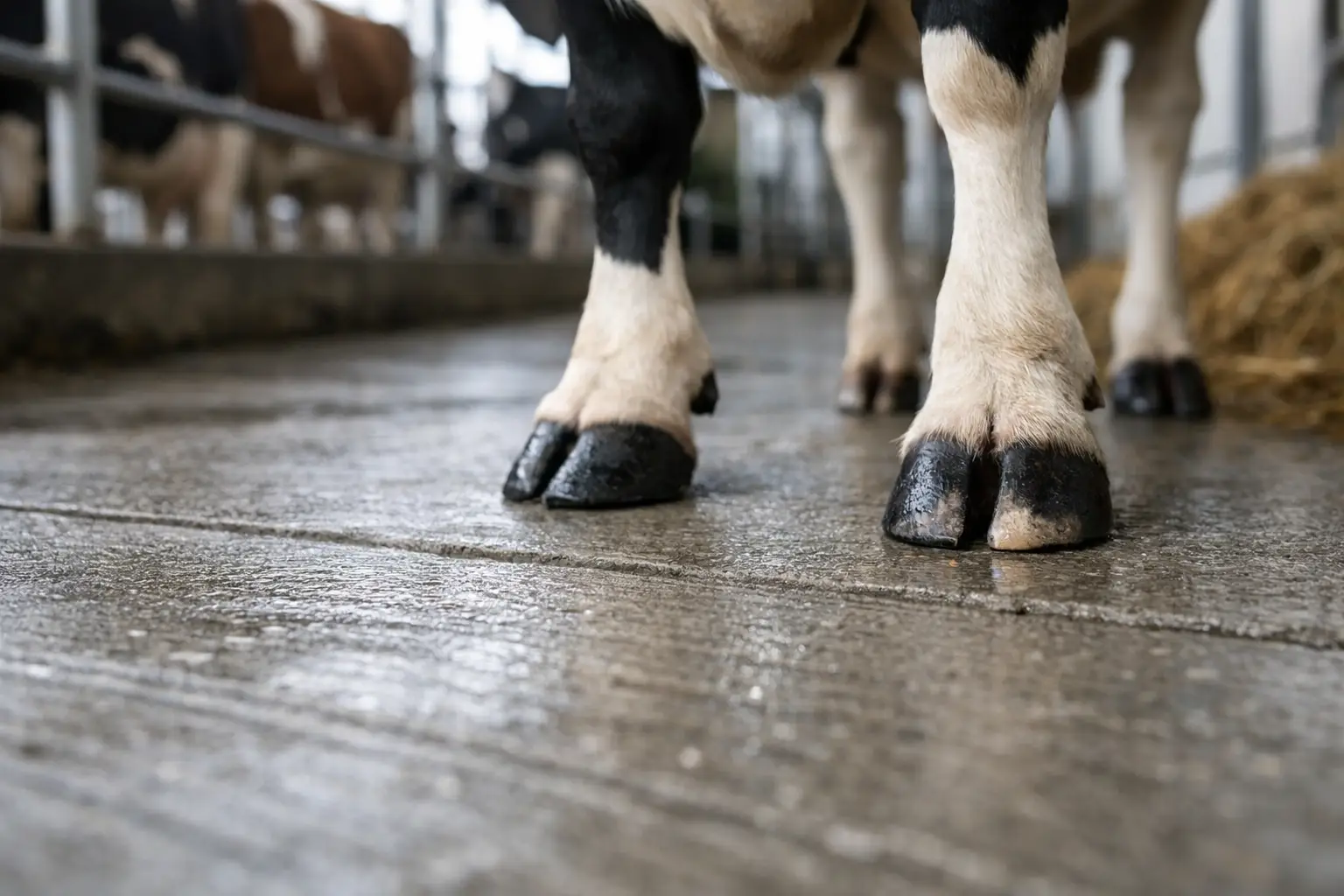
A cow that hesitates at the dairy entrance, braces on a turn or takes short steps across a wet yard is giving you useful information. The problem may not be the animal. It may be the livestock concrete beneath her feet. On a working farm, concrete is part of the daily animal-handling system. When it loses grip, holds water or breaks down around high-traffic areas, the cost can show up in lameness, injury risk, slower movement and disrupted routines.
Good farm flooring is not simply hard-wearing concrete. It needs to provide reliable traction without being so aggressive that it wears hooves unnecessarily. It must shed water, tolerate slurry and constant traffic, and remain practical to clean and maintain. Getting that balance right is where specialist agricultural concrete work earns its place.
What livestock concrete needs to do
Concrete around dairy sheds, feed pads, races, yards and holding areas works harder than most standard commercial slabs. It carries livestock day after day, often while wet, soiled and exposed to cleaning equipment. Cattle are also far less forgiving of poor footing than a ute or tractor. A surface that looks acceptable from the gate can still be slippery where animals turn, stop, bunch up or walk downhill.
The first job of livestock concrete is traction. Grooving or bush hammering creates a textured surface that gives hooves something to grip, particularly when water, mud or effluent is present. The right treatment depends on the existing slab, the traffic pattern and the area’s purpose. A dairy exit lane has different demands from a feeding area, and a tight turning point needs different attention from a straight race.
The second job is drainage. Standing water reduces grip, carries contaminants and speeds up surface deterioration. If water consistently pools in the same place, adding texture alone may not solve the issue. The slope, drainage route, damaged joints and surrounding ground levels all need to be considered together.
Finally, the surface needs to stay serviceable. Cracks, spalls, worn patches and broken edges create weak points that trap moisture and make cleaning harder. They can also change the way animals place their feet. Timely repairs are generally less disruptive and less costly than waiting for a damaged area to spread.
Grip without excessive hoof wear
More texture is not always better. The aim is controlled, consistent traction, not a surface that is harsh on hooves or difficult to wash down. This is one reason generic concrete finishing is rarely enough in livestock areas.
Grooving is often a strong option for sound concrete that has become smooth through wear. Carefully cut grooves improve grip while preserving the slab’s structure. The spacing, direction and depth should be matched to animal movement and the concrete condition. For example, cattle need support where they turn and push off, while grooves that work in one direction may be less effective on a cross-slope or curved route.
Bush hammering is useful where a more evenly textured finish is needed across a broader area. It roughens the concrete face to improve traction, and it can be an effective treatment for surfaces that are slick but structurally sound. However, it needs skilled application. Uneven or overly aggressive work can create cleaning issues, accelerate wear or leave an inconsistent walking surface.
For dairy cattle, footing should encourage a confident, natural stride. For beef operations, the priority may be safer movement through yards, ramps and loading areas. Sheep can also lose footing on wet, polished surfaces, especially in tightly managed handling areas. The principle remains the same: assess how animals move through the space before choosing the treatment.
High-risk areas deserve first attention
If a full-site upgrade is not practical straight away, start where a slip is most likely to happen or cause the greatest disruption. These are commonly dairy entries and exits, backing gates, collecting yards, wash-down zones, feed faces, water trough approaches, ramps, sharp turns and places where the concrete changes level.
Look for behaviour as well as visible wear. Animals slowing down, bunching, swinging wide around a corner or avoiding part of a yard can indicate a footing issue before a serious incident occurs. Staff may also notice that certain areas are harder to move through after rain or wash-down. Those observations are valuable when planning concrete work.
Drainage and layout matter as much as surface texture
A textured slab covered in water will never perform as well as a textured slab that drains properly. Water management should therefore be part of every livestock concrete decision, particularly in areas that receive regular wash-down or heavy rainfall.
Check whether water is moving away from livestock traffic routes, not across them. A low point at a dairy exit can become a recurring hazard, while poor falls around feed areas can keep hooves wet for longer than necessary. Drainage channels, slab falls and surface transitions need to work with the farm’s cleaning routine rather than against it.
There is also a practical trade-off. A surface designed with excellent grip but too many deep recesses may hold slurry and take longer to clean. Conversely, a surface that is easy to hose but polished smooth may become unsafe when wet. The best outcome is a texture that supports traction while still allowing effective cleaning and drainage.
Concrete cutting can help manage this balance where joints, channels or damaged sections need attention. In some cases, targeted cutting and repair is more sensible than replacing a large slab. It allows the work to focus on the part of the layout that is creating the operational problem.
When repair is the better investment
Replacement is sometimes necessary, especially where the slab has major structural failure, widespread movement or poor original falls. But many farm concrete issues can be addressed through maintenance and targeted repairs. That matters when access, downtime and budget all need careful management.
Surface wear may be improved with grooving or bush hammering. Localised cracking and broken edges can often be repaired before they become larger trip points or cleaning problems. Joint failure can be addressed to prevent water entering beneath the slab and weakening the base. The right approach depends on why the concrete failed in the first place.
A repair that ignores the cause will usually have a short life. If a section keeps breaking where machinery crosses, the repair needs to account for load and movement. If concrete is deteriorating in a wet area, drainage and cleaning practices should be reviewed alongside the repair. If cows are slipping on a corner, the solution should consider traffic flow, slope and surface treatment together.
Plan work around the farm, not the other way around
Concrete work on a livestock operation has to fit around milking, feeding, animal movement and weather. The quality of the finish matters, but so does the contractor’s ability to reduce disruption. Blocking a key route at the wrong time can create pressure on staff and animals alike.
Before work begins, map the affected area and identify alternative stock routes. Consider how machinery, wash-down and effluent management will operate while the area is being treated. For dairy farms, after-hours or night concrete grooving can be a practical option where it keeps the main routine moving and limits interference with milking.
A proper site assessment should also check slab condition, existing drainage, slopes, animal traffic direction and the most heavily used points. This turns a concrete job into a farm safety decision rather than a quick surface treatment. Happy Hoof takes this animal-first approach because the best flooring outcome is one that works under real farm pressure, not just on the day it is completed.
Keep safer surfaces performing
Even well-finished concrete needs routine attention. Regular cleaning prevents a build-up of slurry and algae that can reduce traction. Inspections after wet weather, busy calving periods or heavy machinery use can reveal cracks and worn areas early. Small repairs are easier to schedule before they affect a main livestock route.
It is also worth reviewing the surface whenever stock flow changes. A new gate position, altered feeding routine or different machinery path can concentrate traffic in places that were not previously under pressure. Concrete performance is tied to how the farm operates, so the maintenance plan should change when the layout does.
The most useful question is not whether your concrete looks rough enough. It is whether your livestock move across it confidently, cleanly and safely in the wet conditions that test it most. If the answer is no, a focused inspection of traction, drainage and damage can give you a clear starting point for improving the ground beneath every hoof.