A sheep yard can look serviceable right up until the first wet rush exposes the problem. Sheep bunch at the race entrance, handlers lose confident footing, and animals hesitate or slide where concrete has become smooth, worn or poorly drained. The right concrete solutions for sheep yards address those daily pressure points before they turn into injuries, hold-ups and costly repairs.
Sheep may be lighter than cattle, but that does not make yard surfaces less important. In fact, their movement patterns can put concentrated pressure on key areas. A mob turning tightly, crowding through a forcing pen or stopping at a drafting point can polish concrete over time. Add mud, manure, wash-down water and seasonal rain, and a once-safe surface can become a genuine risk for livestock and people.
Start with the areas that carry the most pressure
Not every square metre of a sheep yard needs the same treatment. A practical flooring plan focuses first on the places where animals turn, stop, bunch and change direction. These are the areas most likely to lose traction and show surface damage early.
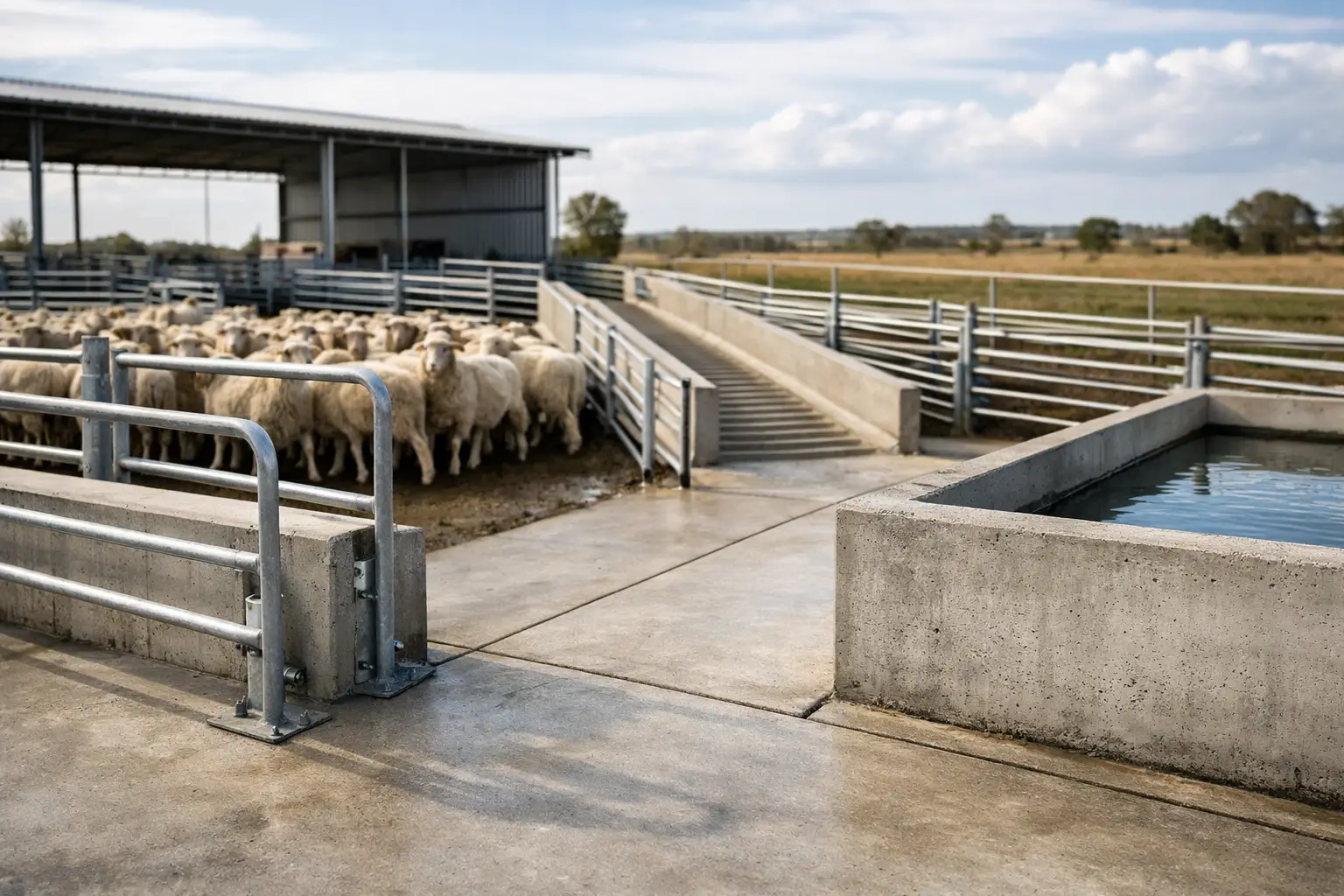
The race entrance, forcing pen, drafting area, loading ramp approach and any wash-down zone deserve close attention. So do yard corners and gateways where sheep crowd together. If dogs, handlers or machinery regularly move through the same sections, a slip-resistant finish protects people as well as stock.
Before choosing a treatment, inspect the surface in both dry and wet conditions. Look for smooth, shiny concrete, ponding water, worn aggregate, cracking, crumbling edges and places where sheep consistently baulk. A surface may appear sound from a distance while still offering too little grip under a moving mob.
Concrete solutions for sheep yards need traction and drainage
Traction is not simply about making concrete as rough as possible. A surface that is overly aggressive can be difficult to clean and may increase wear in high-traffic areas. The aim is a consistent, durable texture that gives sheep and people secure footing without creating unnecessary hoof wear or trapping excessive debris.
Grooving for controlled grip
Concrete grooving creates a patterned texture in the existing slab. When the groove spacing, depth and direction suit the way sheep travel, it gives hooves more purchase on wet concrete and helps water move away from the walking surface.
Grooving is particularly effective on sound slabs that have become polished with age. It can be a practical option for races, pens and approaches where the concrete remains structurally solid but traction has dropped away. The final pattern should be matched to livestock movement and the yard layout, rather than treated as a one-size-fits-all job.
For example, a race with a clear direction of travel may need a different approach to a forcing pen where sheep pivot and bunch. The slope also matters. Grooves can support drainage, but they cannot compensate for a slab that directs water towards the centre of the yard or holds water in low spots.
Bush hammering for broad, even texture
Bush hammering is another effective treatment for slick concrete. It mechanically textures the surface, creating an even, slip-resistant finish across larger areas. This can suit yards where the concrete is generally flat but has become smooth through years of hoof traffic, cleaning and weather exposure.
The benefit is not just immediate grip. A properly prepared surface can improve confidence through the yard. Sheep move more freely when they feel secure underfoot, and handlers spend less time dealing with stopped or unsettled animals at known trouble spots.
The trade-off is that surface texture must suit the job. A rougher finish may be appropriate around high-risk wet areas, while a more moderate texture may be better where cleaning and regular machinery access are priorities. An on-site assessment helps determine what the slab and the stock actually need.
Do not treat cracks and damage as cosmetic
Cracked or spalled concrete creates more than an untidy yard. Broken edges can catch a hoof, hold water and expand under constant movement, cleaning and changing weather. Small failures around drains, gates and race edges often become larger repair jobs if they are left through another busy season.
Concrete maintenance and repairs should restore the strength of the slab before a traction treatment is applied. This may involve removing failed concrete, repairing damaged sections, addressing unstable edges and ensuring repaired areas sit correctly with surrounding drainage falls.
It is tempting to focus only on the visibly worst patch. However, recurring damage often signals an underlying issue such as poor drainage, inadequate slab support, vehicle loading or a hard impact point near a gate. Repairing the surface without considering the cause can mean the same issue returns.
Drainage is part of hoof safety
Water is the enemy of safe yard concrete. Even a well-textured surface loses effectiveness when it is covered by standing water, slurry or fine mud. Good drainage reduces slipping risk, supports cleaner conditions and makes the yard easier to maintain.
Check whether wash-down water runs away promptly from races and working pens. Look at drain placement, grates, falls and low spots after rain. In some yards, the answer may be a targeted repair and regrading around a damaged section. In others, it may require changes to drainage channels or the way water is directed from nearby roofs and hardstand areas.
Drainage should work with the surface texture. Grooving or bush hammering can improve grip, but water still needs a clear path out of the working area. This is especially relevant in yards that see regular wash-downs or heavy use during wet weather.
Plan the work around farm operations
A sheep enterprise cannot always stop while concrete work is carried out. Lamb marking, shearing, weaning, drenching, drafting and transport schedules all place demands on the yard. The best concrete work is planned around those operational realities.
Night concrete grooving can be useful where after-hours work reduces disruption to livestock handling and staff routines. The right timing depends on curing requirements for repairs, weather conditions, access and how soon the area needs to return to use. A specialist contractor should set clear expectations on site preparation, exclusion areas and when stock can safely use the surface again.
Preparation also affects the quality of the result. Surfaces need to be assessed for contamination, existing damage and access constraints. Yard gates, rails, drains and equipment may influence where machinery can work and how the job is staged. A rushed treatment on an unprepared surface rarely delivers the same long-term value as a planned job.
Choose for long-term performance, not a quick visual fix
A clean-looking yard is not necessarily a safe yard. Paints, coatings and temporary abrasive products may appear to offer an easy answer, but they can wear unevenly under hooves, weather and wash-down. In a hard-working sheep yard, permanent mechanical texturing and properly completed repairs are often the more dependable option.
That does not mean every existing slab needs replacement. Where the concrete is structurally sound, grooving or bush hammering can extend its useful life and improve safety without the cost and disruption of a full rebuild. Where the slab is badly cracked, moving or incorrectly drained, repairs or replacement of the affected section may be the more sensible investment.
The decision comes down to condition, traffic, drainage and how the yard is used. A small handling yard used occasionally has different demands from a commercial operation putting large mobs through the same pens week after week.
A safer surface supports better stock handling
The value of a well-finished sheep yard shows up in the everyday jobs. Sheep move with less hesitation through known pinch points. Handlers have more stable footing when working gates and races. Wet-weather work becomes less risky, and the yard is easier to maintain before minor defects become major failures.
Happy Hoof approaches agricultural concrete as a livestock and farm safety system, not just a slab underfoot. The right surface treatment, drainage and repair work can protect the investment already in your yard while creating a safer place to work stock.
Walk your sheep yard after the next wash-down or rainfall and pay attention to where water sits, where sheep slow down and where your own boots lose grip. Those are the places where a targeted concrete solution can make the most practical difference.