A cow slips at the dairy exit, water pools around a cracked bay, or a broken slab starts catching scraper blades. The question is rarely whether the concrete needs attention. It is whether cow shed cutting versus replacement will give you the safest, longest-lasting result without creating unnecessary disruption.
The right answer depends on the condition beneath the surface, not just what the floor looks like on a wet morning. Targeted concrete cutting can remove a failed section and preserve sound surrounding concrete. Full replacement can be the better investment where damage is widespread, drainage is wrong, or the slab has reached the end of its working life.
For livestock areas, this is more than a construction decision. Floor condition affects footing, hoof wear, cow confidence, cleaning efficiency and the risk of lameness. A practical assessment should start with how the surface performs under stock and machinery, then work back to the repair method that solves the actual problem.
What cow shed cutting involves
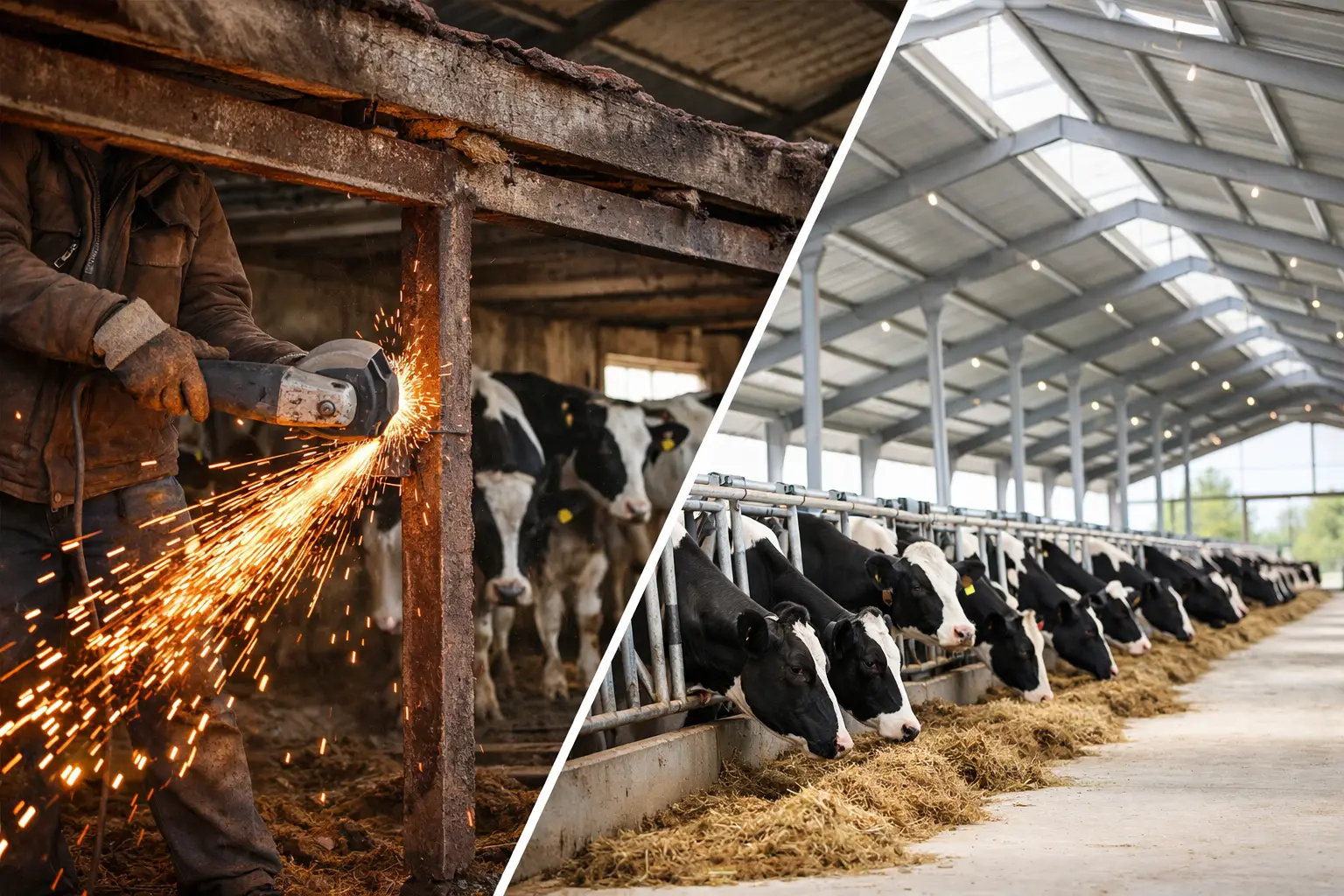
Cow shed concrete cutting is a controlled way of separating and removing a damaged part of a slab. Saw cuts create clean, defined edges around the repair area, allowing the failed concrete to be broken out without unnecessarily disturbing the rest of the floor.
This approach is often used for isolated cracking, spalling, broken edges, damaged feed-pad sections, failed drainage channels or areas where concrete has lifted or sunk. Once the unsound material is removed, the base can be inspected and repaired before new concrete is placed to the required level, fall and finish.
Cutting is not the same as grooving. Grooving improves traction by creating channels in sound concrete. Cutting for repair removes defective concrete so the underlying cause can be addressed. In many sheds, both services may be needed: repair the failed area first, then restore slip resistance across the working surface where appropriate.
The value of targeted cutting is control. If most of the slab remains structurally sound, there is little sense in replacing a whole yard or shed floor simply because one section has broken down. A well-planned repair can reduce concrete volume, downtime and cost while restoring a safer, more even surface.
When targeted cutting and repair is the better option
Cutting and repairing a section usually suits a localised problem with a clear cause. For example, a small area may have deteriorated around an old drain, a gate threshold may be chipped from repeated machinery traffic, or one bay may have suffered from poor compaction during the original pour.
It is a strong option when the surrounding slab is stable, the crack pattern is limited, and levels across the shed still direct liquids where they need to go. The repair needs to tie into the existing floor without creating a lip, hollow or sudden change in texture that could affect stock movement.
A targeted repair also makes sense where operational continuity matters. Dairy farms cannot simply stop moving cows because a concrete floor needs work. Planning the job around milking, stock flow and access routes can keep disruption contained. After-hours work may also help protect normal routines where the site and repair requirements allow it.
However, a repair is only as good as the preparation beneath it. Pouring fresh concrete over a weak base, active water issue or ongoing movement may make the floor look better for a short time, but the same fault can return. Cutting gives access to investigate the sub-base, drainage and slab edges before the new section is installed.
Signs a local repair may be enough
Look for damage that is confined rather than spreading. A single broken corner, an isolated pothole, surface scaling in one traffic point, or a crack that has not created movement across the slab may be suitable for cutting and repair.
The surrounding concrete should still be firm under machinery, reasonably level and free from widespread deterioration. If water does not pond across the area and there is no evidence of ongoing settlement, a targeted approach can be a cost-effective way to restore performance.
When full cow shed replacement makes more sense
Full replacement becomes the smarter decision when the problem is not limited to one section. A floor with widespread cracks, multiple soft or hollow areas, poor falls, severe surface wear or repeated patch failures is usually telling you that the issue sits deeper than the visible damage.
In these situations, continuing to patch sections can become false economy. Each repair may require its own mobilisation, curing time and stock-management plan, while the underlying floor continues to decline. The result is often an uneven surface made up of patches with different finishes and grip levels.
Replacement gives the opportunity to correct the fundamentals. The old slab can be removed, the base prepared properly, drainage and falls set for the way the shed is washed and used, and the new concrete finished with livestock movement in mind. It also allows the surface treatment to be planned as part of the job rather than added after problems occur.
For high-traffic areas, correct traction should be a core part of the specification. Cows need dependable footing when turning, exiting the dairy, moving through collecting areas or walking over wet concrete. The aim is not an aggressively rough floor that contributes to excessive hoof wear. It is a consistent, slip-resistant surface suited to the area, the stock class and the cleaning routine.
Warning signs that point to replacement
Replacement deserves serious consideration when cracks run through multiple areas, slabs are heaving or sinking, and water consistently pools where cows walk. Other warning signs include exposed aggregate across large sections, crumbling edges along joins, recurring repairs in the same locations, or a floor that has become difficult to clean effectively.
Pay close attention to drainage. Water, manure and feed residue reduce grip, particularly on smooth or worn concrete. If the floor fall is wrong across a large area, a patch may treat the symptom but not the source of the hazard. Replacing and regrading the slab can provide a more permanent improvement to cleanliness, safety and hoof health.
The key comparison: cost, downtime and lifespan
The upfront cost of cutting and repairing a section is generally lower than replacing an entire floor. Less concrete is removed and replaced, and the work can be focused on the affected zone. That makes it attractive when the rest of the shed has years of useful life left.
But the lowest initial price is not always the lowest cost over time. If repairs are needed every season, if staff must keep managing temporary hazards, or if cows are slipping around uneven patches, the costs add up beyond the concrete invoice. Lameness, treatment time, lost production and avoidable injuries can place a far greater burden on the business.
Replacement costs more because it involves larger-scale demolition, base work, concrete placement and curing. It may also require more detailed staging to keep livestock moving safely. In return, it can reset the floor’s service life and provide a consistent surface designed around drainage, traction and heavy farm traffic.
The practical question is this: are you repairing a contained failure, or repeatedly managing a floor that no longer supports the way your operation runs? An honest condition assessment is more useful than choosing solely on the size of the first quote.
Do not overlook surface finish after repairs
A repair can be structurally sound and still create a livestock safety issue if the finish does not match the surrounding floor. A new patch that is too smooth may become slippery when wet. One that is too rough may increase hoof abrasion or make cleaning harder.
The repair area should transition cleanly into existing concrete, with no raised edge that cattle may catch or hesitate over. Once the concrete has cured, the broader surface may need grooving or bush hammering to achieve consistent traction in key traffic zones.
This is where a farm-specific approach matters. A dairy exit, feed lane, yard and sheep-handling area all see different movement patterns, moisture levels and pressures. The right treatment considers slope, drainage, traffic direction and how frequently the area is washed, rather than applying one finish everywhere.
How to make the decision with confidence
Start by walking the shed when it is wet and in use, not just when it is empty and dry. Watch where cows shorten their stride, hesitate, turn sharply or avoid a section of floor. Note where water sits after wash-down and where machinery impact is concentrated.
Then assess whether the damage is isolated, whether the slab is moving, and whether the existing fall still works. A specialist concrete inspection can identify whether cutting and repair will provide a reliable fix or whether replacement will save money and disruption over the longer term.
Happy Hoof approaches flooring as a livestock welfare and farm-performance issue, not simply a concrete job. The best solution is the one that gives cattle secure footing, supports clean drainage and stands up to daily use without creating a new problem beside the one you have fixed.
A sound floor should disappear into the background of the working day. Cows should walk confidently, staff should not be managing avoidable slip risks, and water should move where it is meant to. Whether that calls for a precise cut and repair or a full replacement, choose the work that gives your shed a safer surface for the years ahead.