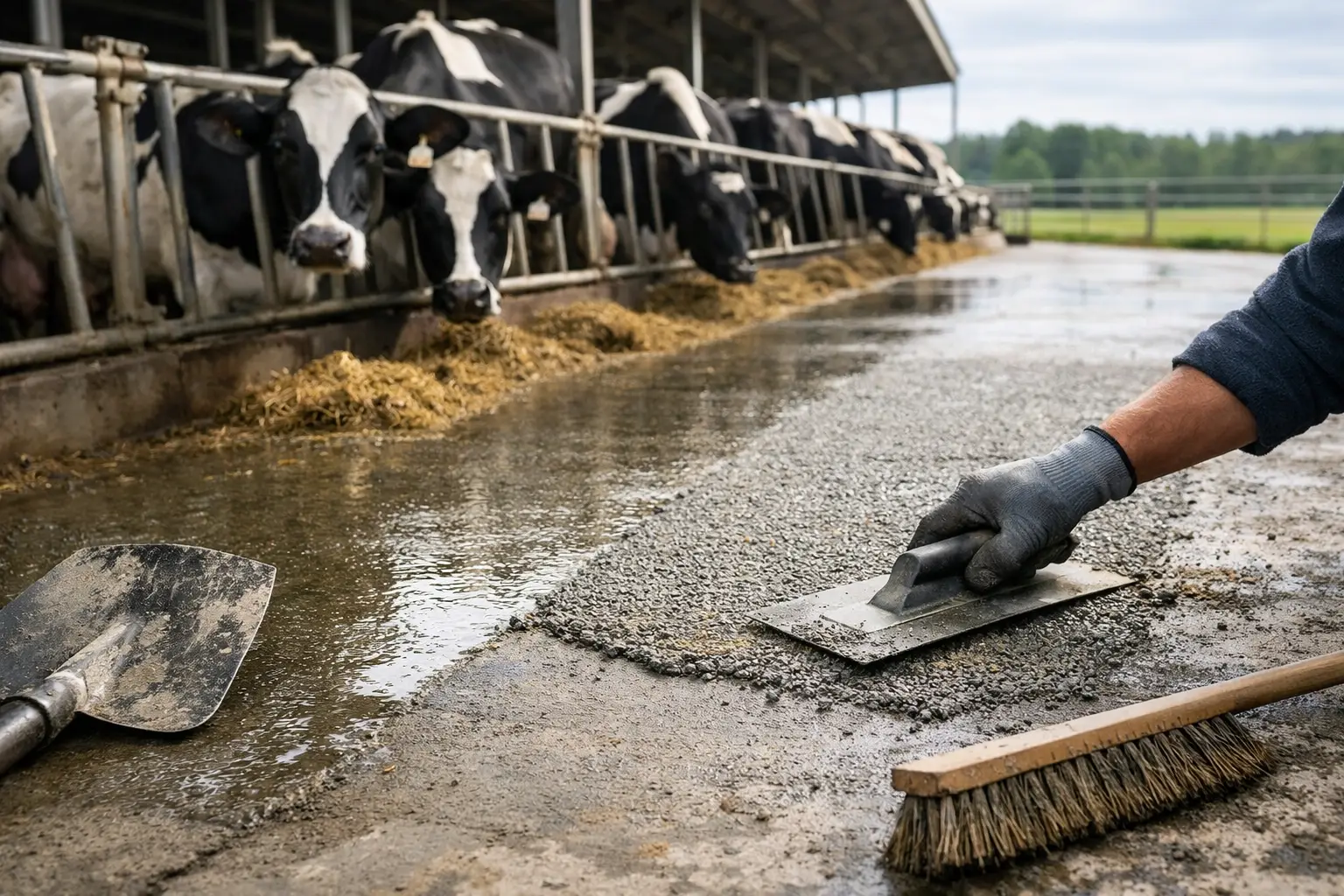
A feed pad can look sound from the gate and still be creating a daily slip risk. Once concrete becomes polished by hooves, coated in feed residue or holds water after wash-down, cattle lose confidence in their footing. That hesitation can quickly become rushing, falls, bruising, hoof damage and avoidable lameness.
Knowing how to fix slippery feed pads starts with finding out why the surface is slick. Cleaning may be enough for a recently affected area. On older or heavily trafficked pads, however, the concrete itself may need a purpose-built traction treatment. The right fix protects livestock, makes work safer for staff and helps the pad perform through wet weather and constant use.
Start by identifying what is making the feed pad slippery
Slippery concrete is rarely caused by one issue alone. Most feed pads develop reduced grip through a combination of contamination, water movement and surface wear. Treating only the visible problem can bring short-term improvement, but it will not prevent the same hazard returning.
Walk the pad after feeding, after rain and after it has been cleaned. Conditions can change significantly across a single day. Look closely at the areas where cattle turn, gather, enter and leave the pad. These high-pressure zones often show the first signs of polishing and loss of texture.
Four common causes are worth checking:
- Feed, silage effluent, manure and algae can form a slick film over otherwise sound concrete.
- Poor drainage allows water and waste to sit on the surface, particularly in low spots and near troughs.
- Repeated hoof traffic gradually polishes exposed aggregate, leaving concrete smooth and less grippy.
- Cracks, broken edges and uneven repairs can catch hooves or direct water into places where it should not sit.
A surface may feel reasonably safe under work boots yet still be unsuitable for cattle. Hooves need reliable grip when animals are carrying weight, turning sharply or moving in a group. Wet conditions reduce the margin for error even further.
How to fix slippery feed pads: deal with the cause first
Before adding texture to the concrete, remove the conditions that are masking or reducing traction. A thorough clean is the first practical step. Clear built-up feed and manure, then wash the pad using a method that lifts residue without damaging joints, drains or nearby surfaces.
If algae or biofilm is present, it needs to be properly treated rather than simply rinsed over the pad. It can return quickly where moisture remains. Keep cleaning products appropriate for stock areas and manage wash-down water so it does not create another slick section downstream.
Check drainage, slope and water sources
Standing water is not simply a housekeeping issue. It is a traction issue, a hoof-health issue and often a sign that the pad is not shedding water as it should. Check where water enters the area, including rainfall runoff, trough overflow, wash-down points and effluent movement.
Low spots may need local concrete repair to restore fall toward a drain. Blocked drains and damaged channels should be cleared or repaired promptly. Where the overall pad has insufficient fall, the long-term solution may involve drainage improvements alongside surface treatment.
Do not assume that roughening the concrete alone will solve a drainage problem. Textured concrete offers better grip, but persistent pools of water and waste will still compromise footing and make cleaning harder. The best result comes from a surface that drains well and provides dependable traction once it is wet.
Repair damage before texturing
Cracked concrete, spalled sections and failed patch repairs should be assessed before any grooving or mechanical texturing begins. Loose or deteriorated areas will not hold up under traffic, and surface treatment cannot restore structurally unsound concrete.
Small repairs may be enough where damage is isolated. Larger sections may require removal and replacement, especially where the base has moved or the pad has settled. This is also the time to correct abrupt lips and rough repair edges that can cause cattle to stumble.
Choose a traction treatment that suits the pad
Once the pad is clean, draining and structurally sound, assess whether its existing finish still provides adequate grip. A concrete feed pad is a working surface, not a showroom slab. It needs texture that stands up to hooves, tyres, cleaning and feed activity without becoming so aggressive that it causes unnecessary hoof wear or is difficult to maintain.
Concrete grooving for controlled hoof grip
Concrete grooving cuts consistent channels into the existing slab. Done correctly, the groove pattern is designed around livestock movement, the pad layout and drainage direction. It gives hooves edges to grip, particularly when cattle are walking through wet or contaminated areas.
Grooving is often a strong option for sound concrete that has become polished with age. It is durable because the traction is cut into the slab rather than applied as a thin surface layer. Pattern, spacing and depth matter. Random or poorly placed cuts can hold waste, create cleaning problems or provide less benefit in turning areas.
Grooves should be planned to suit the direction cattle travel. Feed pads often have different traffic patterns from yards, races and dairy exits, so copying a pattern from another part of the farm is not always the right answer.
Bush hammering for a textured finish
Bush hammering mechanically roughens the concrete surface to expose a more textured profile. It can be effective where broad-area grip is needed and the slab is in good condition. Unlike a grooved pattern, it creates more uniform texture across the treated area.
The trade-off is that surface texture must be matched carefully to the job. Too little texture will wear smooth again sooner than expected. Too aggressive a finish can be harder to clean and may be unsuitable for areas where cattle spend extended periods standing. A specialist assessment helps determine whether bush hammering, grooving or a combination of both is the better fit.
Be cautious with coatings and quick fixes
Paints, sealers and resin coatings can appear to offer a fast answer, but many are not designed for the abrasion, moisture, effluent and concentrated hoof traffic found on feed pads. Some products become slippery as they wear, chip at edges or fail where the concrete is damp.
Temporary measures can be useful while repairs are being organised, particularly where a hazard needs to be isolated. They should not replace a durable solution. If cattle are already slipping, restrict access to the worst section where practical, slow movement through the area and avoid forcing stock around tight turns until the surface is made safe.
Prioritise the highest-risk areas
You may not need to treat every square metre of the pad at once. Focus first on the places where cattle have the least control over their footing: entry and exit points, trough surrounds, corners, gates, narrow transitions and locations where animals turn back from feed.
Watch the herd rather than relying only on a visual inspection. Signs of poor traction include shortened strides, splayed legs, reluctance to move forward, bunching at an entrance or animals taking a wide path around a particular spot. Fresh scuff marks, manure smears and repeated slipping near a drain are also useful clues.
Targeted work can reduce disruption and deliver a strong safety improvement quickly. However, if the entire feed pad is polished or water is ponding across a broad area, piecemeal treatment may simply move the risk from one place to another. The scale of repair should match the scale of the problem.
Plan the work around stock flow
Feed pads are central to daily routines, so downtime needs to be managed properly. Arrange work for a period when cattle can be redirected safely and machinery can access the area without creating additional pressure on the herd. For busy operations, after-hours concrete work can reduce interruption to feeding and stock movement.
Allow for cleaning before treatment and appropriate curing time after any concrete repairs. Rushing cattle back onto a repaired surface too soon can damage the work and create a fresh safety issue. A clear plan for temporary feeding, access routes and wash-down will keep the job controlled.
Keep traction performing after the repair
A treated surface lasts longer when routine maintenance supports it. Remove feed build-up before it compacts, keep drains clear and inspect high-traffic sections after prolonged wet weather. Regular checks also make it easier to catch small cracks or worn patches before they become a larger concrete repair.
Record where slips occur and when. If incidents cluster after wash-down, around a trough or in one turning area, that information points directly to the next maintenance priority. It is a practical way to make flooring decisions based on what the stock are experiencing, not just what the concrete looks like.
A feed pad should give cattle the confidence to walk, feed and turn without losing their footing. Address the drainage, repair the slab and restore the right surface texture, and the pad becomes a safer, harder-working part of the farm rather than a daily risk underfoot.