A slippery dairy yard, feed pad or shed exit does not become less risky simply because the concrete is old. In many cases, the question is not whether the slab is new or aged, but whether it is sound enough to hold a consistent non-slip pattern. So, is grooving suitable for old concrete? Often, yes. But the concrete needs a proper assessment first.
For livestock, traction is not a cosmetic improvement. Cows, cattle and sheep need confidence underfoot when turning, walking down a race, leaving the dairy or moving through wet areas. A worn smooth surface can contribute to slips, hoof wear, stress and lameness. Grooving can restore grip without the cost and disruption of replacing an entire concrete area, provided the existing slab still has the strength to do the job.
When grooving old concrete is a good option
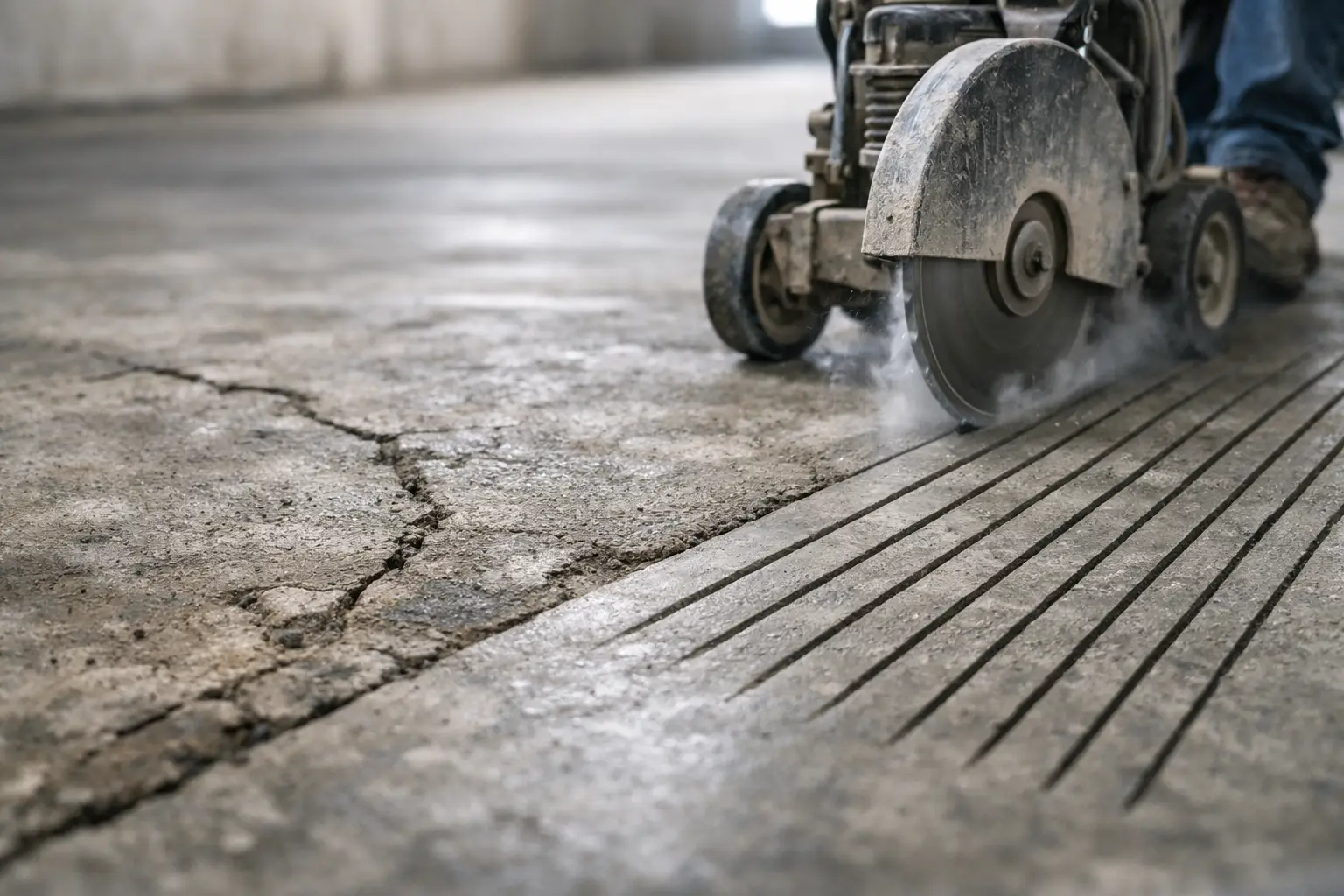
Old concrete can be an excellent candidate for grooving when its main problem is surface wear rather than structural failure. Years of hoof traffic, slurry, washing and machinery can polish a once-textured surface until it becomes slick, especially when wet. Cutting grooves into that surface gives hooves edges to grip, helping livestock move more securely.
A slab that is generally level, solid and well bonded is usually worth considering. Hairline cracking or minor surface marks do not automatically rule it out. Many farm floors carry these signs of age while remaining structurally sound. The key question is whether the concrete can be cut cleanly to the required depth and spacing without breaking away around the grooves.
Grooving is particularly useful in high-traffic areas where animals slow, turn or bunch together. This commonly includes dairy exits, holding yards, feed lanes, collection yards, ramps and the approach to a milking platform. These locations can become slippery long before the whole yard needs major concrete work.
The outcome is practical: better footing can reduce slipping incidents, support more natural movement and help protect hoof health. It also gives staff a safer surface to work around during milking, wash-down and stock movement.
Is grooving suitable for old concrete with cracks?
Cracks need context. A few stable, narrow cracks in an otherwise solid slab are different from sections that are moving, sinking or breaking apart. Grooving through concrete that is actively failing will not fix the underlying issue. In fact, it can leave weak areas more exposed to damage under stock and vehicle traffic.
Before cutting begins, the surface should be checked for the cause and extent of cracking. Common warning signs include wide or widening cracks, loose edges, hollow-sounding areas, significant spalling, exposed aggregate, slabs that have dropped out of level, and water sitting where it should drain away.
If these issues are localised, repairs may be completed before grooving. A damaged patch can be removed and reinstated, failed joints can be addressed, and low areas may need a more considered solution. Once the repaired concrete has reached suitable strength, the wider area can be assessed for a matching traction treatment.
Where the slab has widespread failure, replacement may be the more economical long-term decision. It can be tempting to cut grooves into every slippery surface, but a traction pattern cannot compensate for a base that is unstable or drainage that continually undermines the concrete.
What a proper site assessment should cover
Old concrete is never assessed by age alone. A 20-year-old dairy yard that has been well built, drained and maintained can be a better grooving candidate than a much newer slab with poor finishing or ongoing water issues.
A farm-focused assessment looks at how the area performs under real working conditions. That includes the concrete thickness where known, visible cracking, surface hardness, aggregate exposure, existing repairs, drainage lines, slope and the direction livestock travel. It should also consider where slurry and wash water collect, and whether machinery crosses the same area.
The condition below the surface matters as much as the top. If water is getting under slabs, if the sub-base has moved, or if a race has been repeatedly damaged by heavy equipment, the right fix may involve repair work before any traction treatment. Cutting grooves into a sound slab is controlled, effective work. Cutting into loose, thin or delaminated concrete is not.
At Happy Hoof, this practical assessment is part of recommending a solution that suits the farm rather than applying the same pattern to every surface. Groove direction, spacing and coverage should reflect stock flow, slope and the job the area needs to do.
Grooving, bush hammering or repairs?
Grooving is not the only way to improve traction on old concrete. The best treatment depends on the condition of the surface and the movement of stock across it.
Grooving creates defined channels in the slab. It is often a strong option for worn but sound concrete where reliable grip is needed through a known travel path. The pattern must be cut accurately so it supports hoof traction without creating an overly aggressive surface that may contribute to unnecessary hoof wear.
Bush hammering roughens the concrete surface more broadly. It can suit areas where a uniform textured finish is needed, particularly where cutting a groove pattern is less appropriate. As with grooving, the concrete must be in suitable condition before work starts.
Repairs come first when concrete is breaking down. Patching loose sections, rebuilding damaged edges or dealing with failed areas protects the investment in any later surface treatment. In some yards, the right answer is a combination: repair the weak spots, groove the solid traffic lanes, and leave sound low-risk areas untouched.
Drainage can decide whether the result lasts
A well-grooved surface still needs water to get away. Persistent pooling mixes with manure and feed residue, creating a slippery film that works against traction. It also keeps hooves wet for longer, which is not ideal for hoof condition.
When assessing older concrete, look for ponding after wash-down and rainfall. Check whether channels are blocked, whether a slab has settled, and whether traffic routes force stock through the wettest part of the yard. Sometimes a drainage correction or a targeted repair provides as much safety benefit as the traction work itself.
This is where a whole-floor view matters. The aim is not simply to make concrete rougher. It is to create a surface that lets livestock move confidently, sheds water effectively and stands up to daily farm use.
Planning the work around farm operations
Concrete grooving can usually be completed with far less disruption than replacement, but livestock movement still needs planning. The area must be clear, and the work should be scheduled around milking, feeding and stock handling requirements. For busy dairy operations, night concrete grooving may be a practical option to keep daytime routines moving.
The surface should also be cleaned well enough for an accurate inspection and cut. A professional contractor will manage dust control, work boundaries and the cut pattern, then leave the area ready for its intended use once it is safe to return stock.
Avoid treating grooving as a quick fix for every slippery patch. The best results come from identifying why the area became hazardous in the first place. Was it polishing from traffic? Poor drainage? A failed repair? A slope where cattle turn sharply? The answer shapes the right scope of work.
Make the call before the next wet spell
If old concrete is smooth but solid, grooving can be one of the most cost-effective ways to improve footing and extend the useful life of a farm floor. If it is cracked, unstable or poorly drained, deal with those problems first and protect the result for longer.
A close inspection now can prevent a slippery exit, a lame cow or a staff accident becoming the issue that forces urgent work later. Give the surface the same attention you give gates, races and animal handling equipment: it is part of how safely your farm operates every day.