A shed floor usually only gets attention after something goes wrong – cows slipping at the backing gate, sheep baulking on a polished patch, or hoof wear showing up where traffic is heaviest. A proper livestock shed flooring selection guide helps you make the call before those issues start costing time, treatment, and production.
On working farms, flooring is not just a building choice. It affects animal flow, confidence, drainage, cleaning time, injury risk, and how long the surface stands up under pressure. The right answer depends on stock type, shed layout, moisture levels, and whether you are building new, upgrading old concrete, or fixing a problem area that has become too risky to ignore.
What good livestock shed flooring needs to do
A livestock shed floor has to balance grip, durability, drainage, and hoof comfort. Push too hard in one direction and you can create a different problem somewhere else. A rough surface may improve traction, for example, but if it is overly aggressive or poorly finished it can increase hoof wear and make cleaning harder.
For dairy sheds, collecting yards, feed pads, race entrances, and covered holding areas, slip resistance is usually the first priority. Wet concrete, manure, wash-down water, and constant traffic make smooth surfaces dangerous very quickly. Beef and sheep operations face similar issues, especially in high-traffic points where animals turn, stop, bunch, or hesitate.
The floor also has to drain properly. Even the best-textured surface will struggle if water and effluent sit on top of it. Poor slope, blocked channels, or low spots can turn a decent floor into a slick one. That is why flooring selection should never be separated from drainage and shed design.
Livestock shed flooring selection guide for real farm use
The biggest mistake is choosing flooring based on upfront cost alone. Cheap surfaces often become expensive once repairs, lameness, reduced confidence, and lost labour are added in. A better approach is to assess where livestock walk, how often they turn, where they queue, and how wet the area stays through a normal week.
If you are working with existing concrete, the question is often whether the slab is structurally sound enough to keep and improve. In many cases, it is. Concrete grooving, bush hammering, cutting, patching, and localised repairs can restore grip and extend service life without the cost and downtime of a full replacement. That matters on busy farms where operations cannot stop for long.
If you are planning a new shed, the floor should be designed around stock movement from the start. That means getting the surface texture, fall, channel placement, and traffic flow right before concrete is poured. It is easier and more cost-effective to build in performance than to correct poor decisions later.
Common flooring options and where they suit
Plain concrete
Concrete remains the standard base for most livestock sheds because it is strong, durable, and capable of handling heavy use. The problem is not concrete itself. The problem is smooth or worn concrete. Once the surface polishes over, grip drops away fast, especially in wet conditions.
Well-finished concrete with the right texture can perform very well, but it needs to be matched to the job. In low-traffic dry areas, a simpler finish may be enough. In wet yards and high-pressure movement zones, additional surface treatment is often the smarter option.
Grooved concrete
Grooving is one of the most effective ways to improve traction on livestock concrete. It creates consistent channels that help animals hold their footing while still allowing waste and water to move away. For dairy settings in particular, grooving is often the practical middle ground between safety, durability, and cleanability.
The detail matters. Groove depth, spacing, and pattern all affect performance. Too shallow and the benefit is limited. Too aggressive and the surface may become harder on hooves or harder to maintain. This is where specialist assessment matters more than guesswork.
Bush-hammered concrete
Bush hammering roughens the surface by mechanically texturing the top layer of concrete. It can be a strong option where existing concrete has become polished and slippery, especially in areas that need broader surface grip rather than a grooved pattern.
It is not a one-size-fits-all answer. Some areas suit bush hammering better than grooving, and some benefit from combining treatments across different traffic zones. Entry points, corners, and waiting areas often behave differently from straight walking lanes.
Rubber and mat systems
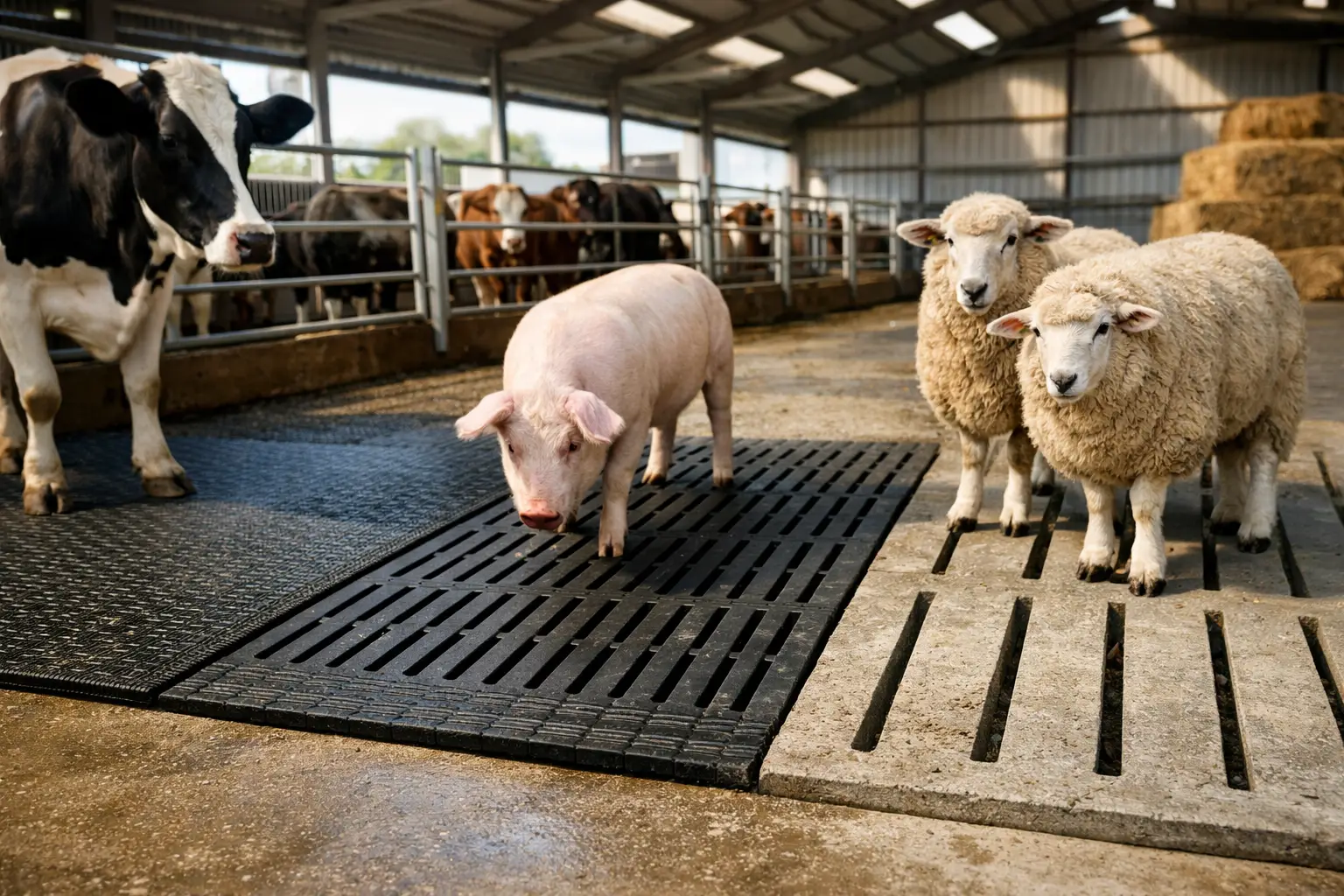
Rubber can improve comfort in some livestock environments, particularly where animals stand for long periods. It may reduce impact and provide softer footing, but it also comes with trade-offs. Poorly installed mats can move, trap moisture underneath, or become difficult to clean. In some setups, they wear faster than expected under heavy stock traffic and machinery.
For many sheds, rubber works best as a targeted solution rather than a whole-of-shed answer. It can be useful in selected standing zones, but it does not replace the need for a stable, well-drained, slip-resistant base.
Matching the floor to the livestock
Dairy cattle
Dairy cows are particularly sensitive to poor footing because they move frequently through wet environments and spend a lot of time on concrete. If a cow lacks confidence on the floor, she shortens her stride, shifts weight unnaturally, and becomes harder to move through the shed. Over time that affects hoof health, lameness risk, and production.
In dairy systems, focus on the collecting yard, entry and exit lanes, backing gate zones, and any area where cows bunch or turn. These are usually the highest-risk sections and often the best places to start improvements.
Beef cattle
Beef animals still need grip, but movement patterns can differ depending on housing, feeding, and handling systems. Heavy animals on wet smooth concrete can do serious damage quickly, both to themselves and to the floor. Durability becomes especially important in feed and handling areas where repeated weight loading is high.
Sheep
Sheep require good traction as much as larger stock do, especially on ramps, covered yards, and areas where they crowd or pivot. Their lighter weight does not remove the need for texture. In fact, they can be quick to baulk or slip on surfaces that look acceptable but feel uncertain underfoot.
Don’t ignore drainage and slope
A floor can have the right texture and still underperform if drainage is poor. Standing water, wash-down residue, and manure build-up all reduce traction. Low spots create repeat problem areas, and they rarely improve on their own.
When reviewing flooring, look at where liquid sits after cleaning, where animals hesitate, and where slurry tends to collect. These signs tell you as much as the surface itself. Sometimes the best flooring decision is not a new material but correcting fall, drainage channels, or damaged sections that are holding water.
Repair or replace?
This is where many farm owners overspend. If the slab is fundamentally sound, replacement is not always necessary. Surface treatments and concrete repairs can often restore safety and performance at a lower cost and with less downtime.
Replacement makes more sense when the concrete is failing structurally, drainage is impossible to correct within the existing slab, or patching would only postpone a larger issue. The right choice comes down to the condition of the floor, not just its age.
A specialist inspection helps separate cosmetic wear from genuine risk. That is especially valuable when the shed has several trouble spots but not every section is equally bad.
How to make the right call
A good livestock shed flooring selection guide should leave you with a practical decision, not more confusion. Start with the areas where animals are slipping, slowing down, or showing hoof stress. Then assess the surface condition, drainage, traffic patterns, and whether the existing concrete can be improved.
If you are unsure, get advice from someone who understands both concrete behaviour and livestock movement. That is the difference between a construction fix and a farm-ready flooring solution. Happy Hoof approaches flooring that way – as part of safer handling, healthier hooves, and better daily flow through the shed.
The best floor is the one that keeps stock moving confidently on a wet morning, cleans up properly at the end of the day, and still performs after years of hard use.