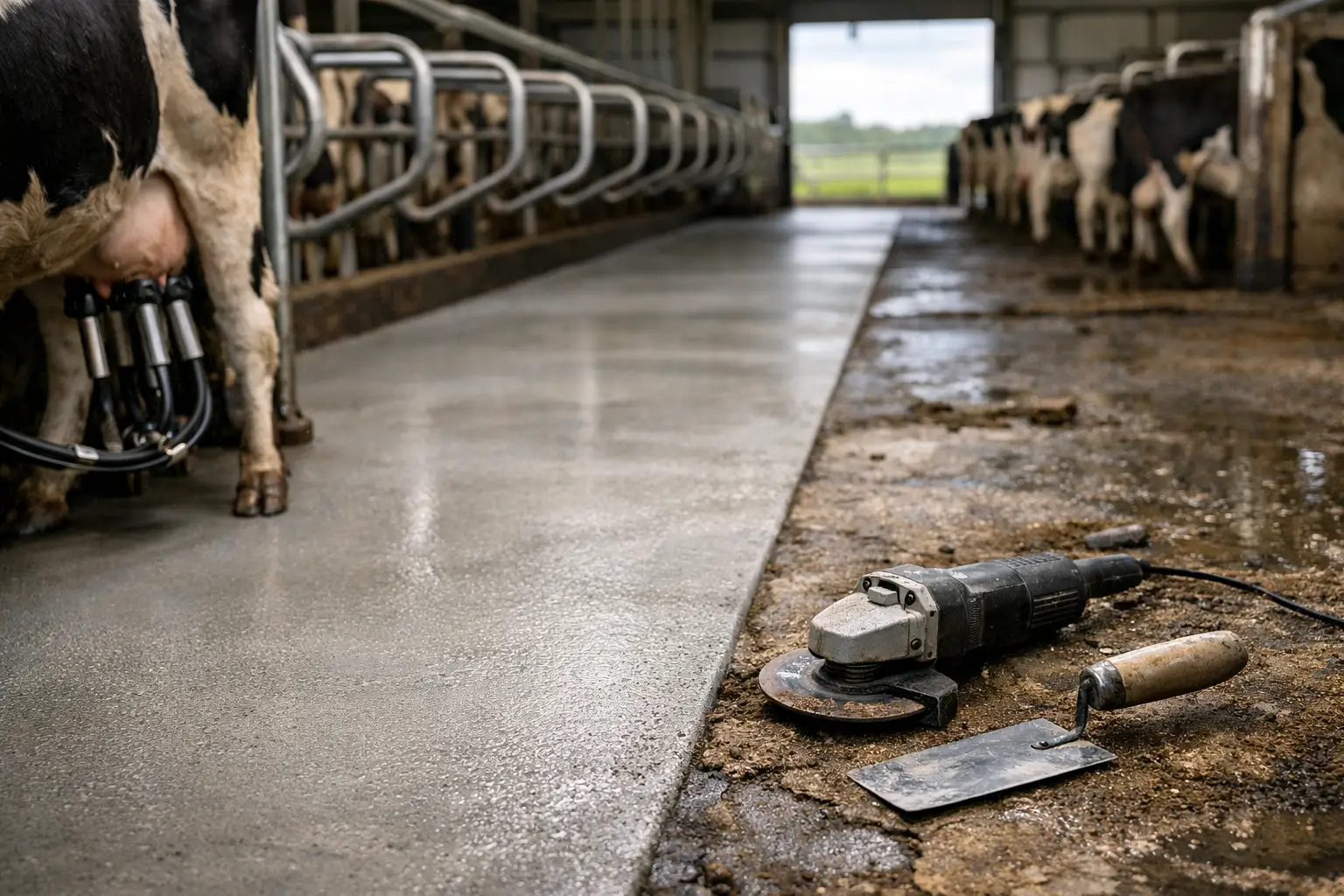
A dairy shed floor can look serviceable while creating daily risk. Polished traffic lanes, worn holding areas, ponding water and broken edges all change how cows walk, turn and stand. This guide to dairy shed floor rehabilitation helps you assess what is happening underfoot, choose the right treatment and plan work around a working farm.
Floor rehabilitation is not simply about making old concrete look better. The right surface improves cow confidence, supports healthier hoof movement, lowers the risk of slips and helps keep staff safer through busy milking periods. It can also extend the life of existing concrete, avoiding the cost and disruption of unnecessary replacement.
Start with the areas cows use hardest
Not every part of a dairy shed wears at the same rate. Cows put the greatest pressure on surfaces where they stop, turn, bunch up or travel repeatedly over wet concrete. Start your inspection at the yard entrance, collecting yard, backing gate area, milking platform exits, feed lanes and return races.
Look for a change in the concrete’s texture. A surface that was once grippy may have become smooth from hoof traffic, scraping, wash-down and slurry. In wet weather, this loss of texture is often more obvious. Watch cattle moving through the shed rather than judging the floor only when it is dry and empty. Hesitation, short steps, slipping at turns and reluctance to move forward are useful warning signs.
Also check for cracking, spalling, uneven joins and worn drainage channels. Small defects can become hoof-catching points, while low spots hold water and effluent. The problem is rarely one issue in isolation. A smooth surface combined with poor drainage and a sharp turn is far more likely to cause trouble than any one factor on its own.
Decide whether the floor needs treatment, repair or replacement
A sound slab with worn traction usually responds well to surface rehabilitation. Concrete grooving or bush hammering can restore a slip-resistant finish without removing and replacing the whole floor. This is often the most practical option where the concrete remains structurally sound and levels are still suitable for drainage.
Grooving creates a controlled pattern in the concrete to give hooves more purchase, particularly in travel routes and areas exposed to regular wash-down. The pattern, spacing and depth need to suit how stock move through the area. Work that is too shallow may wear quickly. Work that is too aggressive can be uncomfortable for cattle, harder to clean or damaging to the remaining slab.
Bush hammering roughens the existing surface across a wider area. It can be effective where a floor has become polished and needs consistent texture rather than defined grooves. The best option depends on the condition of the concrete, the grade of the floor, cleaning method, animal flow and the type of traffic using the shed.
Repairs are needed when the slab has broken edges, open cracks, potholes or failed sections. These defects should be repaired before a traction treatment is applied. Grooving over loose or deteriorating concrete does not solve the underlying problem. If the slab has widespread structural failure, major movement or drainage falls that cannot be corrected locally, replacement of affected areas may be the better long-term decision.
Treat drainage as part of the rehabilitation
Water and effluent on concrete reduce traction, even on a textured surface. Rehabilitation should therefore include a close look at drainage, not just the finish underfoot. Walk the shed during wash-down if possible. This shows where water actually sits, where it travels and whether channels are carrying material away as intended.
Check that drains are clear, channel edges are intact and falls still direct liquid away from high-traffic areas. A floor may have been built with a workable slope, but years of patching, settlement or worn drainage points can change how it performs. Ponding around the exit or backing gate adds risk at precisely the point where cattle are often moving closely together.
There is a balance to strike. Steep grades can encourage drainage but make footing less secure, especially for cows turning or moving down a slope. A specialist assessment should consider surface texture and slope together, rather than treating them as separate jobs.
Plan the work around milkings and stock flow
Dairy shed downtime costs money, so good planning is part of a successful rehabilitation project. Before work begins, map the sections to be treated and confirm how cows, people, plant and wash-down activities will move around the site. A staged programme can keep essential areas operating while work is completed in manageable sections.
Night concrete grooving may be a practical option for farms that need to protect normal milking routines. It is not right for every job, as access, lighting, noise and site safety need to be considered, but after-hours work can reduce disruption where conditions allow.
Make sure the contractor understands the daily rhythm of the farm. They should know when the yard is busiest, where cows queue, which gates must remain usable and how the shed is cleaned. Concrete dust, cutting slurry, equipment leads and temporary access changes all need to be controlled carefully around livestock and workers.
Before reopening an area, remove all cutting residue and confirm that repaired sections have cured as required. Cows should return to a clean surface with safe access, not be pushed over an unfinished transition or around equipment left in a travel lane.
Choose traction that supports hoof health
More texture is not automatically better. The goal is dependable grip without creating a surface that is excessively abrasive or difficult to maintain. Cows need a floor that supports natural movement, particularly when they are carrying weight, turning or walking in wet conditions.
A well-designed rehabilitation plan considers the whole route. For example, a tight exit turn may need more attention than a straight race with lower pressure. Older cows, freshly calved animals and lame cows can be especially affected by poor footing. Addressing problem areas helps reduce the forces that contribute to slips, strains and reluctance to walk.
Take note of machinery use as well. Scrapers, tractors and other equipment can wear or damage poorly selected surface treatments. The finish needs to work for livestock first, but it must also stand up to the cleaning and maintenance practices used on your farm.
Set up a practical maintenance routine
Rehabilitated concrete still needs regular attention. Keep drains and channels clear, clean up material that changes footing, and inspect high-pressure areas after busy periods. Promptly repair chips and cracks before they turn into larger failures or create sharp edges.
It is worth reviewing the floor after seasonal changes as well. Wet conditions can expose drainage and traction issues that are less obvious in dry weather. Ask staff to report locations where cattle baulk, slip or move unevenly. Their day-to-day observations are often the earliest indication that a surface is changing.
Avoid assuming the same treatment will suit every shed. Concrete age, aggregate, existing damage, herd size, cleaning systems and cow flow all affect the recommendation. A targeted approach can deliver a better result than treating a large area with one generic finish.
Get the assessment right before cutting begins
The best rehabilitation projects begin with a site inspection that focuses on livestock movement and floor performance, not just the concrete’s appearance. A specialist should assess the slab condition, drainage, slope, traffic routes and areas of repeated animal pressure before recommending grooving, bush hammering, repairs or replacement.
For dairy operators, the return is measured in safer movement, fewer avoidable slips, healthier hooves and a shed that keeps working under daily pressure. Happy Hoof approaches floor rehabilitation with those outcomes in mind, helping farms turn worn concrete into a safer, more reliable surface for both people and livestock.
If a floor is becoming slick, holding water or showing damage at key movement points, address it before it becomes the reason a cow loses confidence on her feet. Early rehabilitation is usually simpler, less disruptive and more cost-effective than waiting for small surface issues to become a major shed problem.